Consumer spending and business investment powered the U.S. economy in the first quarter, according to the final estimate from the Bureau of Economic Analysis.
The January–March GDP growth rate came in at 2.1 percent.
The initial estimate was 2 percent, then revised downward to 1.6 percent in the second projection.
Data show that consumer spending and business investment contributed significantly to the last quarter’s expansion.
In the first three months of 2026, consumer spending rose 0.5 percent.
Despite war-driven inflationary pressures, shoppers are still opening their wallets, and this is not entirely due to higher gasoline prices.
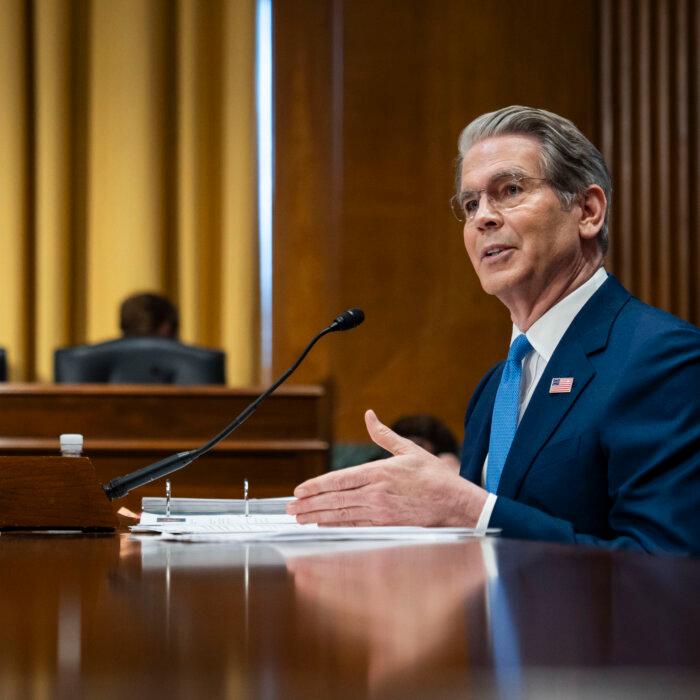
Excluding gasoline and automotive dealers, retail sales have been resilient. Additionally, Bank of America debit and credit card spending has been robust throughout much of the Iranian conflict.
“Consumer spending momentum is remarkably robust,” Bank of America strategists said in their latest Consumer Checkpoint report.
“Growth isn’t just gasoline-driven—underlying spending remains firm across both goods and services.”
Economic observers have attributed this to solid household balance sheets and a strong labor market, which are keeping consumers confident enough to spend.
But this might not persist, warn economists at RBC Economics.
“Despite headline resilience, the energy shock, coupled with persistent non-energy prices, have weakened the U.S. consumer and their capacity to absorb further price pressures,” they wrote in a June 24 research note.
“That’s not enough to break our cautiously optimistic U.S. narrative. The K-shape and ultra-resilient high income consumer is still in play, so too is a tight labor market that will keep Americans employed.”
Until then, forecasts for the second quarter suggest the consumer is doing some of the heavy lifting.
Capital expenditures on artificial intelligence (AI) infrastructure buildouts have also played a sizable role in the U.S. economy in recent quarters.
The bureau reported gross private domestic investment advanced almost 8 percent, with nonresidential fixed investment surging more than 10 percent.
Capex among the leading AI hyperscalers—Alphabet, Amazon, Meta Platforms, Microsoft, and Oracle—is expected to reach $1 trillion this year.
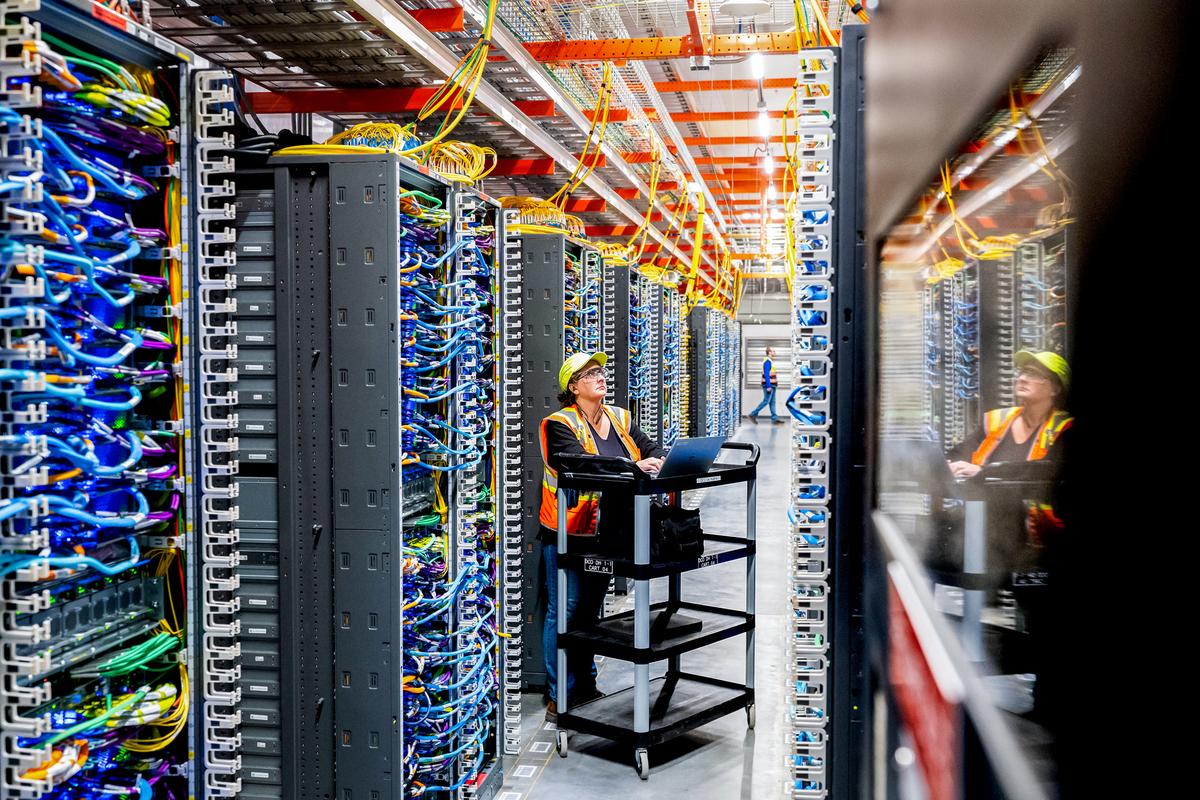
Businesses are investing in data centers, robotics, semiconductors, and other components critical to AI infrastructure.
While the near-term questions consist of how quickly the AI capex boom is monetized, the long-term effects will be profitable, says Cullen Rogers, portfolio manager at IVES ETF.
“Long term, five to ten years out, this is going to be one of the largest infrastructure buildouts we’ve ever seen, and the end result will be a significant number of very profitable companies,” Rogers said in a note emailed to The Epoch Times.
Elsewhere in the first-quarter GDP report, exports popped nearly 11 percent, and imports surged close to 12 percent. Government consumption expenditures and gross investment rose 4.4 percent, with federal spending accounting for most of the growth.
Outlook Is Strong
Looking ahead to the second quarter, GDP growth is anticipated to be 3 percent, again driven primarily by consumer and capital investment, according to the Atlanta Federal Reserve’s widely watched GDPNow Model.
The administration thinks this momentum can carry forward throughout the rest of the year.
In a June 24 interview with CNBC’s “Squawk Box,” Treasury Secretary Scott Bessent believes the U.S. economy can return to 3 percent growth as the war in Iran concludes.
“I think we’re going to have a high GDP economy without the traditional inflation seeping in,” Bessent said.
“We can have something with a three in front of it this year. The underlying economy has been strong.”
Monetary policymakers still see annual growth at around 2 percent.
Updates to the Summary of Economic Projections—a quarterly outlook by Fed officials on the economy and policy—show the median GDP growth rate at 2.2 percent this year and 2.3 percent in 2027.
Private-sector economists forecast similar numbers.
S&P Global believes the world’s largest economy will grow around 2 percent over the next three years.
“The U.S. growth resilience does not come as a surprise to us,” S&P Global economists said in a June 24 research note.
“The AI buildout continues to provide a substantial tailwind to growth and is fostering an upswing in the manufacturing sector. At the same time, larger tax refunds and the recent strengthening in the labor market have provided much needed support to households.”