Big banks are reporting big profits in the thick of the third-quarter earnings season, adding another layer to the record Wall Street rally.
A few years ago, investor expectations for the major banks were modest, says Macrae Sykes, portfolio manager and research analyst at Gabelli Funds. The situation has changed despite multiple headwinds.
“Today premium valuations ... strong markets, steeper yield curve, and high expectations,” Sykes said in a note emailed to The Epoch Times. “Strong fundamental results from major banks with consensus beats.”

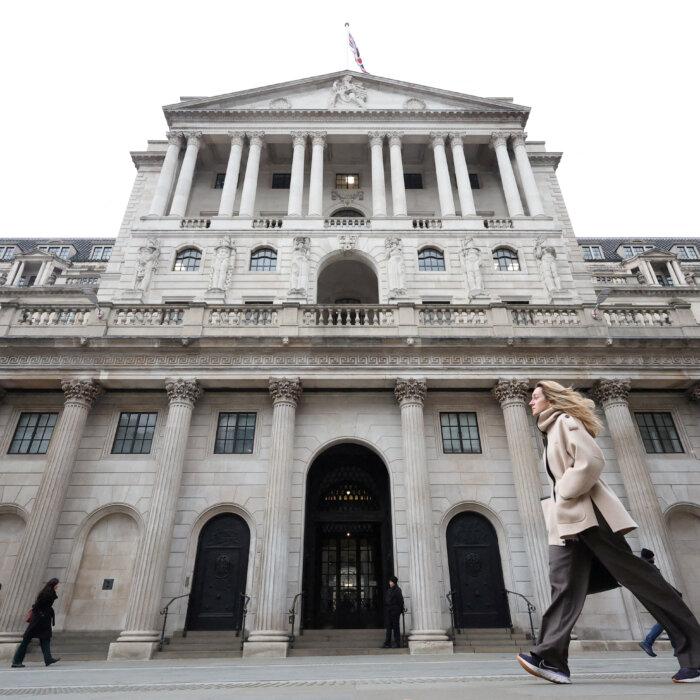
The better-than-expected results have also sent bank stocks soaring, giving Wall Street another boost beyond artificial intelligence-fueled ebullience.
Shares of Bank America and Morgan Stanley rose by more than 5 percent during the Oct. 15 trading session. Wells Fargo reached an all-time high, JPMorgan Chase stock rose by about 3 percent, and Goldman Sachs shares ticked up by about 1 percent.
The leading U.S. stock market benchmark indexes advanced in the middle of the trading week, shrugging off U.S.–China trade tensions and the two-week government shutdown.
How the Country Is Doing
But while the earnings season spotlighted the health of the U.S. financial sector, it has also provided insights into the state of the U.S. economy.“While some economic uncertainty remains, the U.S. economy has been resilient and the financial health of our clients and customers remains strong,” Scharf said.
Bank of America CEO Brian Moynihan said in the earnings release that the company has seen “strong loan and deposit growth.”
“With continued organic growth, every line of business reported top and bottom-line improvements,” Moynihan said. “Strong loan and deposit growth, coupled with effective balance sheet positioning, resulted in record net interest income.”
Additionally, there is a fierce appetite for trading and investing.
Investment banking fees surged 43 percent year over year to $2 billion, while revenues from equities trading increased 14 percent to $2.3 billion, Bank of America reported.
Looking ahead, the federal government’s reforms and deregulatory push could further benefit the big banks next year, Sykes notes.
“Government is working quickly to improve and simplify capital rules, which will be a tailwind in ‘26,” he said.
A risk facing the big banks is deteriorating employment conditions—a development that could threaten credit conditions.
JPMorgan Chase CEO Jamie Dimon flagged some “softening” in the U.S. labor market as a potential macro risk and warned about the “heightened degree of uncertainty” in the U.S. economy.
“There continues to be a heightened degree of uncertainty stemming from complex geopolitical conditions, tariffs and trade uncertainty, elevated asset prices and the risk of sticky inflation.”
Because of the U.S. government shutdown, the Department of Labor has been unable to release key economic data, including the September jobs report and the weekly jobless claims. Prior to the closure, the nonfarm payrolls report showcased a slowing jobs picture, and policymakers say the private-sector alternatives reaffirm this trend.
Federal Reserve Gov. Stephen Miran, appearing at a CNBC event on Oct. 15, stated that the change in the balance of risks makes it even more imperative for the central bank to arrive at a neutral rate quickly.
“I wouldn’t say that I want even lower rates now than I did a week or a month ago. However, with the change to the balance of risks, I think it becomes even more urgent that we get to a more neutral place in policy quickly.”
A neutral policy rate is when interest rates are neither restrictive nor stimulative.
The Federal Reserve is expected to reduce the benchmark federal funds rate—a key rate that influences borrowing costs for businesses and consumers—by a quarter-point, lowering the target range to 3.75 percent to 4 percent.