Major European pension funds are increasingly wary of holding American assets amid rising geopolitical tensions and concerns about U.S. government finances, industry leaders say, as the Trump administration dismissed speculation that Europe could dump U.S. Treasurys over Washington’s push to acquire Greenland.
Pension fund executives from Finland, Sweden, and Denmark said uncertainty around U.S. foreign policy—alongside worries about White House debt levels—has raised the risk premium attached to U.S. holdings, pressuring the dollar and heightening bond-market volatility.
“We’re having a lot of discussions [with clients] around [whether] it is time to tilt away from U.S. assets,” said Van Luu, global head of solutions strategy for fixed income and foreign exchange at Russell Investments.
“About 50 percent of them are considering whether they should do something about it,” especially Northern European clients, including in Scandinavia and the Netherlands, he said.
Pension Funds Reassess US Exposure
The Nordic region is home to some of Europe’s largest pension funds by assets, and their unusually public discussion of U.S. exposure signals a broader debate among institutional investors about whether the world’s biggest market still deserves an automatic allocation.U.S. stocks are trading near record highs, but policy uncertainty has pressured the dollar, which fell 10 percent against major currencies last year amid tariff hikes and other policies.
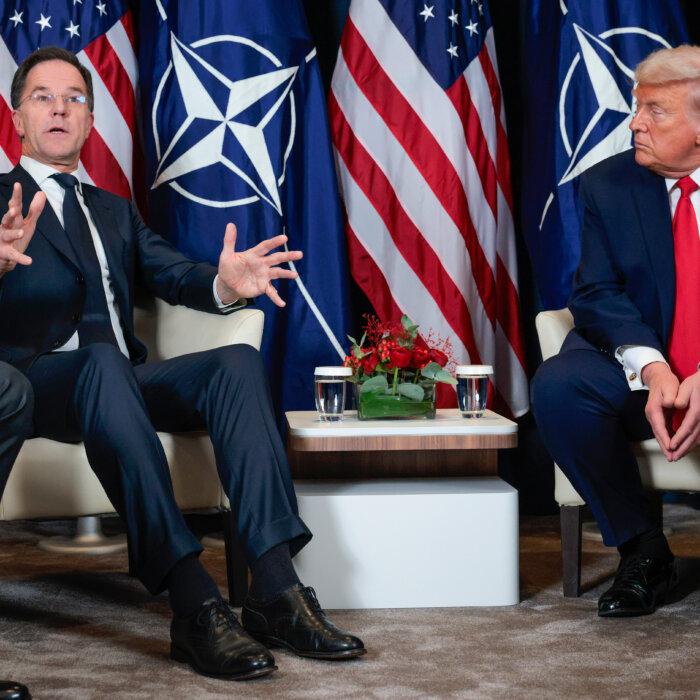
This week, Sweden’s Alecta and Denmark’s AkademikerPension said this week that they had sold, or were in the process of selling, their U.S. Treasury holdings. The moves were not linked to current events, the funds said, but U.S. President Donald Trump’s pursuit of a U.S. acquisition of Greenland has revived speculation that Europe could respond with financial protectionism.
Alecta said it sold most of its U.S. bond holdings because the risk tied to U.S. Treasurys and the dollar had increased. AkademikerPension said it would divest by month-end, citing weak U.S. finances.
AkademikerPension said the move was not intended as a political statement linked to tensions between Denmark and the United States over Greenland.
Industry leaders said that pension investors were assessing risks, not pursuing political goals.
“All of this turmoil is raising some questions about how exposed you should be to the U.S. ... That is what our members are professionally assessing,” said Tom Vile Jensen, deputy director of trade body Insurance and Pensions Denmark. “There is certainly no weaponization of capital. It is not the job of our sector to do that.”
Bessent Rejects Retaliation Talk
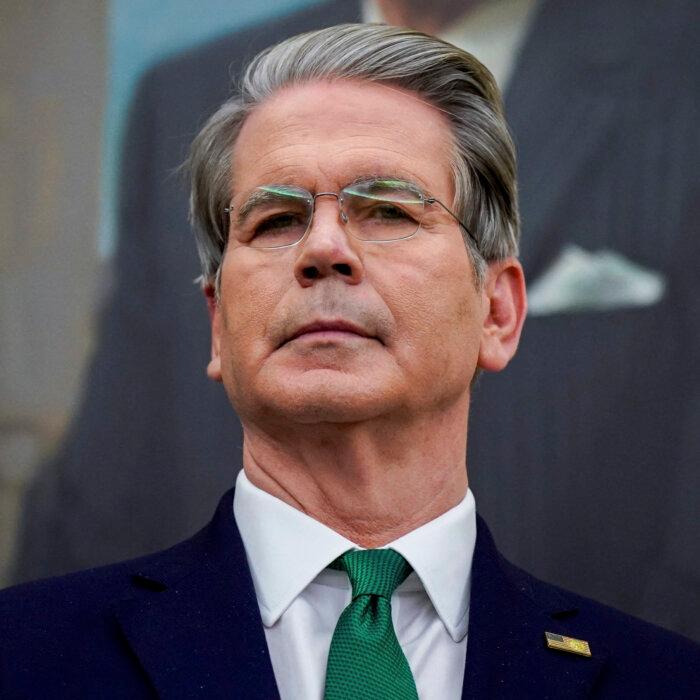
Earlier in the week, markets were unsettled by rumors that Europe could seek to leverage its large U.S. asset holdings in retaliation for the Trump administration’s moves to seize Greenland, a semi-autonomous Arctic island controlled by Denmark.“Well, I just want to say this is a false narrative ... there is no talk in European governments,” Bessent said on the sidelines of the World Economic Forum in Davos on Jan. 20.
“The media has latched on to this. I think it is a completely false narrative. It defies any logic. And I could not disagree more strongly on that.”

Bessent described the roughly $30 trillion U.S. Treasury market as the anchor of global liquidity and pricing.
“It is the basis for all financial transactions, and I am sure that the European governments will continue holding it,” he said, urging allies to “not listen to the media who are hysterical.”
When asked on Jan. 21 whether he was concerned about any Treasurys sell-off linked to Trump’s tariff threats against European allies opposing the Greenland effort, Bessent said he was not.
“I’m not concerned at all. Again, as Treasury Secretary, I see our Treasury auctions,“ he said. ”We’ve had record foreign investment.”
Europe’s Nordic investors said the United States remains a core market, even as policy unpredictability complicates the investment picture.
Annika Ekman, executive vice president of investments at Finland’s Ilmarinen, which manages just over $76 billion, said that the United States remains investable but that its risk premium has “continued to rise.”
Finnish pension provider Veritas said it wasn’t making any changes to its investment mandates but flagged U.S. policy uncertainty as a risk for the dollar.
“The higher the unpredictability, then that is a more difficult environment,” Veritas CIO Laura Wickstrom said.
Sweden’s Folksam said it sold U.S. Treasurys in 2024, partly to reduce risk ahead of the U.S. election. Others urged restraint.
“There is a lot of talk right now, but for the time being, I believe one should keep a cool head,” AP3 CIO Jonas Thulin said.
AP3, the third Swedish national pension fund, manages around $61 billion in pension assets.