If a firm creates paintbrushes in the Philippines from bristle heads and metals imported from China and brush handles produced in the Philippines, is it “made in the Philippines” or “made in China”?
The issue of transshipment has been at the core of the Trump administration’s trade agenda, as it involves a widespread tactic some countries use to circumvent higher tariff rates. Exporters may redirect shipments through third-party countries and have them repackaged or relabeled to obscure the actual origin of goods—experts call it “origin washing”—effectively avoiding specific tariff regimes.
There is a substantive difference between a 19 percent levy on exports from Malaysia and a 39 percent tariff on made-in-Switzerland shipments.
Earlier this month, President Donald Trump imposed a 40 percent levy on transshipped goods, effective Aug. 7.
If China were to sell its goods through items exported by the Philippines to the United States, the Philippines would be subjected to a 40 percent tariff on top of existing levies.
Rules of Origin
Authorities rely on established legal parameters known as rules of origin, a set of rules applied to facilitate accurate labeling, enforce trade agreements, and determine applicable tariffs.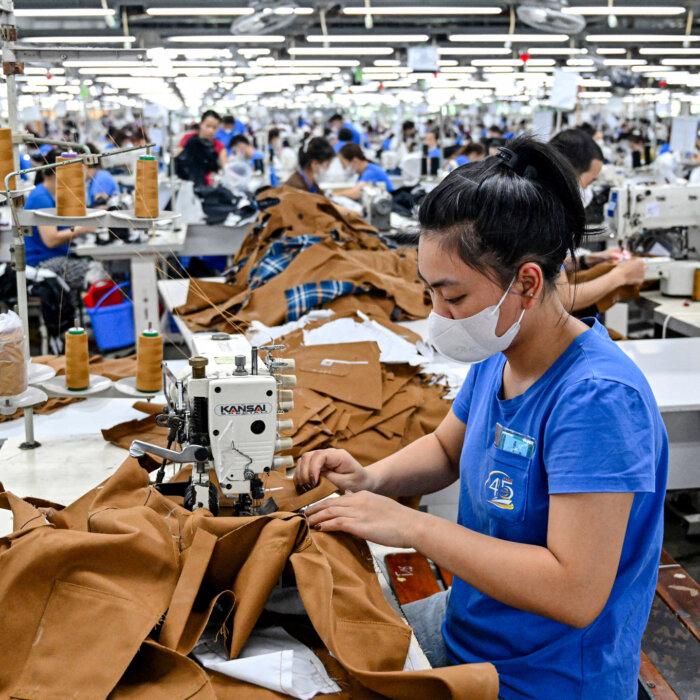
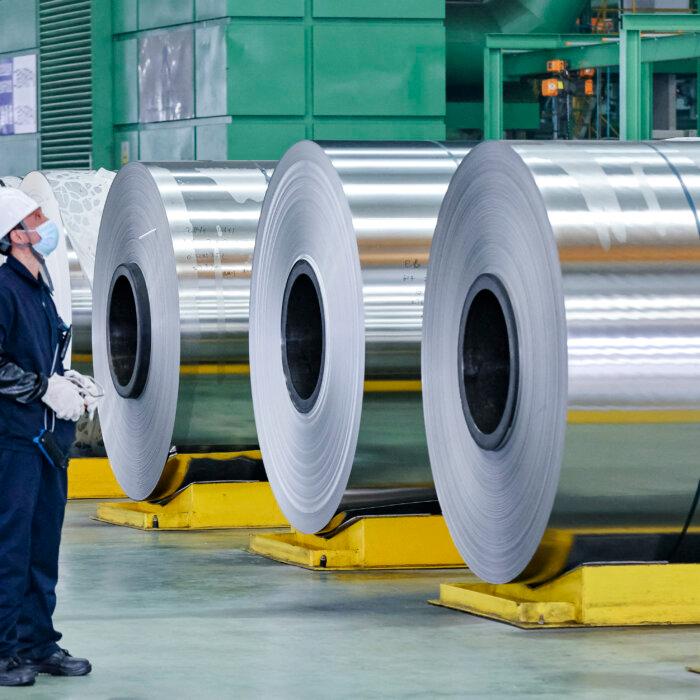
U.S. officials typically use three methods to determine a product’s origin.
The first is relatively straightforward: If an import is entirely manufactured, grown, or assembled within a single country, its origin is clearly established.
Finally, depending on the terms of a trade deal, some items may require a minimum percentage of the product’s content to be added in the nation claiming origin.
Agents can rely on a slew of strategies, from using artificial intelligence applications to following the trail of paperwork. They can also use whistleblowers—often local merchants or industry trade groups combating egregious dumping efforts—to find out about transshipped goods.
At the end of the arduous process, if the product’s actual origin remains unclear, companies can submit a claim and receive a final ruling from U.S. Customs and Border Protection (CBP).
In the coming years, the outlined rules will become increasingly crucial in preventing the transshipment of goods. While the United States is cracking down on the practice, other countries, such as Vietnam, have committed to tightening controls and devising enforcement plans to avoid higher tariffs.

U.S. Trade Representative Jamieson Greer has said that his office will monitor trading partners and ensure that they fulfill their commitments.
“If they don’t, the president has his tariff authority,” Greer said in an Aug. 1 interview with Bloomberg Television.
Transshipments Everywhere
Just how ubiquitous are transshipped goods?Senior administration officials estimate that $5 of every $15 in Vietnamese exports to the United States is for Chinese goods disguised as Vietnamese.
Experts have said that regional imports from China have accelerated since February.
“Transshipment appears to be playing some role in increasing imports of machinery and electronics to India, Vietnam and Malaysia, plastic products to Vietnam, chemicals to Indonesia, and electronics to Thailand,” they said in the report.
ING economist Lynn Song also unpacked the export data between China and Vietnam, determining that a recent surge in trade activity between the two countries “reflects significant shipment activity.”
Although transshipments are mainly associated with tariff evasion initiatives, they can also serve various global logistics purposes.
Large containers might be split and rerouted to different destinations. Smaller shipments could be combined with larger ones. A destination may not be connected by a single carrier, requiring transfers at intermediate ports.
These details add further complexities to the issue, especially as billions of packages are shipped to the United States annually.
For now, the White House has stated that it will release further plans on how the United States will target transshipments. Until then, CBP agents and U.S. trading partners will grapple with a vast global network of imports and exports.