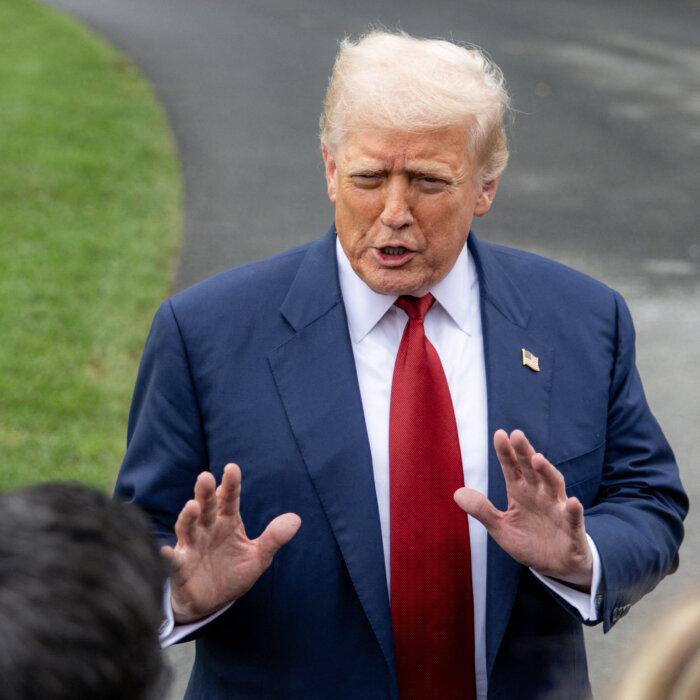
Speaking to bank executives at the World Economic Forum in January, Trump said, “I hope you start opening your bank to conservatives, because many conservatives complain that the banks are not allowing them to do business within the bank, and that included a place called Bank of America.”
Many conservative groups expressed support for this executive order.
“Everyone needs access to basic financial services,” Brian Knight, senior counsel at the Alliance Defending Freedom, a leading advocate against ideological debanking, told The Epoch Times. “No American should have to worry that they could lose their bank account or have a payment declined because of their religious or political beliefs.”
Banks have denied taking part in political debanking.
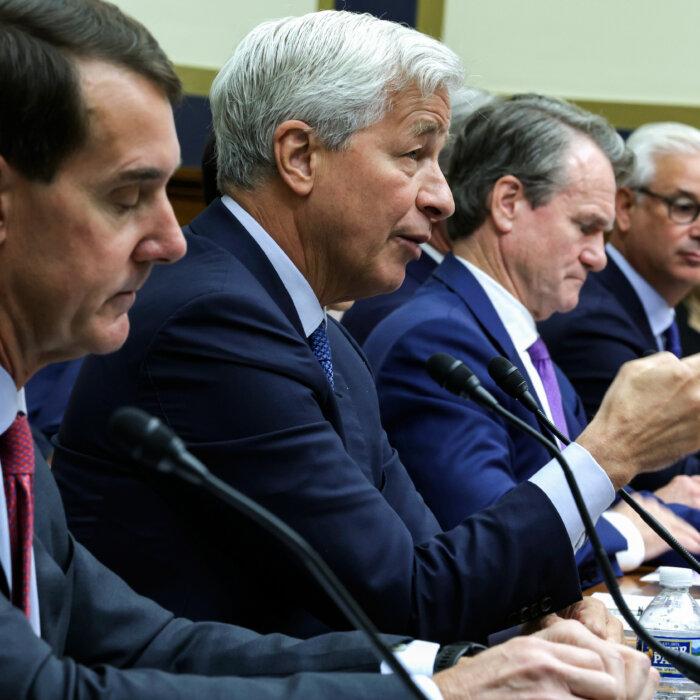
“We don’t close accounts for political reasons, and we agree with President Trump that regulatory change is desperately needed,” Patricia Wexler, a spokesperson for JPMorgan Chase, told The Epoch Times in a statement. “We commend the White House for addressing this issue and look forward to working with them to get this right.”
A Bank of America spokesperson told The Epoch Times in January: “We serve more than 70 million clients and we welcome conservatives. We are required to follow extensive government rules and regulations that sometimes result in decisions to exit client relationships. We never close accounts for political reasons and don’t have a political litmus test.”
Trump’s executive order seeks to reorient federal regulators and law enforcement officials away from practices that may have supported political debanking and toward actions that will actively oppose it.
Regulators Drop ‘Reputational Risk’
The order directs federal regulators to stop using criteria such as “reputational risk,” which some banks say have been used to pressure them to cancel customers whose political or religious views government officials don’t like.Some concerned shareholders say that banks that consider political views in deciding who they will serve also create risks. One case in point, says Jerry Bowyer, CEO of Bowyer Research and an advocate for shareholders and customers who oppose political debanking, is Trump’s allegation that several banks closed his accounts following the Jan. 6, 2021, riots at the Capitol.
“Just think about that—you debanked someone who might be the President of the United States,” Bowyer told The Epoch Times. “That doesn’t sound like risk management to me; that sounds like courting risk.”
“Turns out that it was,” he said.
Investigations of Unlawful Debanking to Commence
The executive order requires federal banking regulators to investigate complaints of political debanking and pass any cases on to the U.S. attorney general’s office. Penalties for violations could include fines and consent decrees, as well as the reinstatement of any customers who were unlawfully debanked.This could include not only individuals but also companies that have been refused service for ideological reasons.
Financial Privacy Also a Focus
Trump’s executive order also urges a federal investigation into alleged warrantless data mining of customers’ accounts by Bank of America (BOA) for the purpose of providing to law enforcement information regarding customers who traveled to Washington D.C. around the time of the 2021 Capitol breach, shopped at sporting goods stores that sell guns, such as Bass Pro Shops or Cabela’s, or expressed conservative political views.SBA to Reinstate Religious Organizations
Trump’s executive order also instructs the Small Business Administration (SBA) to reinstate clients who have been denied loans or other services for political reasons.Previously, the SBA had prohibited any group that was “principally engaged in teaching, instructing, counseling, or indoctrinating religion” from applying for Economic Injury Disaster Loans.
State ‘Fair Access’ Laws
Several states have recently passed “fair access” banking laws that prohibit banks, insurance companies, and other financial institutions from denying financial services on political or religious grounds. Florida enacted such a law in 2023, and Tennessee did so in 2024.The firm stated that critics of laws against political debanking “see such initiatives as an attack on environmental, social, and corporate-governance (ESG) policies in the financial system.”