BlackBerry, iPhone Losing Market Share to Android

September 16, 2010 Updated: October 1, 2015

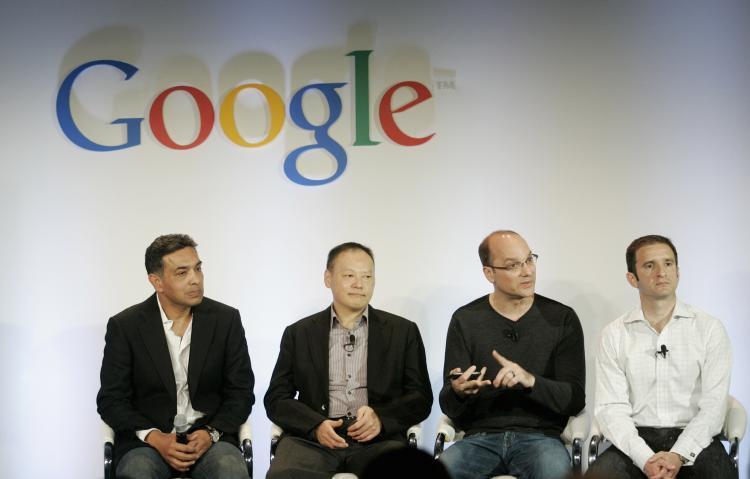
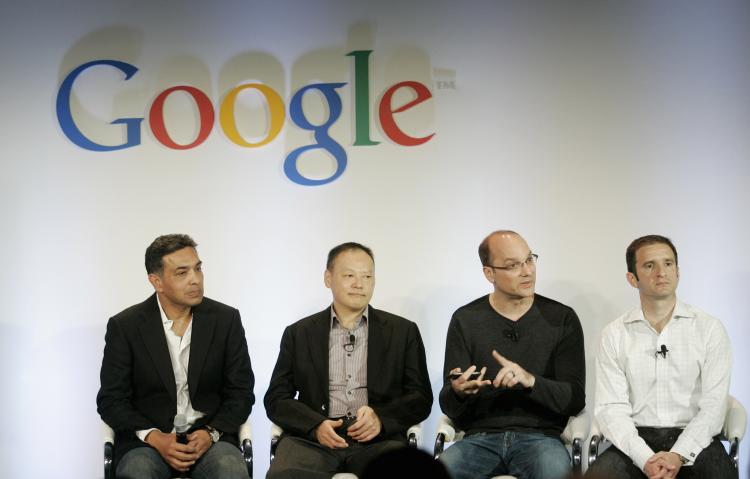
GOOGLE SUPPORTERS: Research shows BlackBerry and iPhone are losing market share to Google's Android. (L-R) Dr. Sanjay Jha, CEO of Motorola, Peter Chou, CEO of HTC, Andy Rubin, vice president of engineering for Google, and Mario Quieroz, vice president of product management for Google are seen at a conference in CA. (ROBERT GALBRAITH/AFP/Getty Images)
NEW YORK—Armed with a slew of supporting manufacturers, Google’s Android mobile operating system is quickly gaining ground on Research In Motion Ltd.'s BlackBerry and Apple Inc.'s iPhone.

Despite the newly released iPhone 4 and its brisk sales, market research firm comScore found that consumers’ usual vigor for Apple products wasn’t enough to keep Android from gaining market share from the iPhone.

ComScore found that Android increased its mobile operating system market share by 5 percent (from 12 to 17 percent) in the three months ending in July, while its competitors all lost ground —RIM lost 1.8 percent, Apple lost 1.3 percent, while Microsoft Windows Mobile lost 2.2 percent in market share.

Android benefits from having multiple manufacturers and multiple carrier support —its top hardware partners are Motorola, Samsung, and LG. Apple’s iPhone is only available on the AT&T Wireless network, and while BlackBerrys are available on all carriers, RIM is the only hardware manufacturer for its devices.

Actual phone sales were positive for Apple and Google, as the overall smartphone market grew by 11 percent during the period, the fastest growing mobile phone segment as consumers take advantage of faster network speeds for web-browsing, email, and streaming entertainment content.

Apple Stunted by Limited Availability

ComScore’s quarterly rankings have shown that Apple has lost market share all year. Though its June iPhone 4 release has been a relative success, it was hindered by controversy over the phone’s reception issues.

However, analysts say that Apple’s growth is stunted by its lack of availability due to its exclusive contracts in some markets.

Bernstein Research analysts Toni Sacconagh and Pierre Ferragu, in a research note this week, said that Android’s market share could overtake that of the iPhone in the next five quarters mainly because Apple only sells its phone on one carrier in some large markets—AT&T in the United States, T-Mobile in Germany, Softbank in Japan, and China Unicom in China, the world’s largest mobile market.

"We believe Apple needs to strike distribution deals with [other] carriers, even if it has to sacrifice some pricing power since doing so would still be accretive to company gross margins, and take away the strong foothold it currently provides to a potentially formidable competitor," Sacconagh and Ferragu said in the note according to a Barron’s report.

Microsoft Gears Up for Phone 7

Microsoft recently launched a new ad campaign for its upcoming Windows Phone 7 platform, titled "Revolution," in hopes of capturing consumers’ gadget appetites.

By all accounts, technology analysts believe Microsoft’s latest foray into the smartphone market is its best effort yet. But will its new operating system be strong enough to topple industry stalwarts RIM and Apple as the company hopes? Technology market research firm IDC doesn’t think so.

IDC’s latest Worldwide Quarterly Mobile Phone Tracker released on Sept. 9 predicts that Microsoft will gain market share from 6.8 percent in 2010 to 9.8 percent in 2014, but will remain stuck behind the market leaders.

That’s not a terrible position to be in, as the overall market for the phones will have expanded by then, if the forecasts prove to be correct.

"Despite uncertainty about the economy, the smartphone market is expected to increase 24.5 percent in 2011. However, smartphone growth will slow progressively over the course of IDC's five-year forecast period. In 2014, for example, the market is expected to rise by just 13.6 percent," IDC said in a statement.