US

Birthing Pains for Auckland Super City

September 10, 2009 20:45, Last Updated: October 1, 2015 21:25
By Diane Cordemans ,

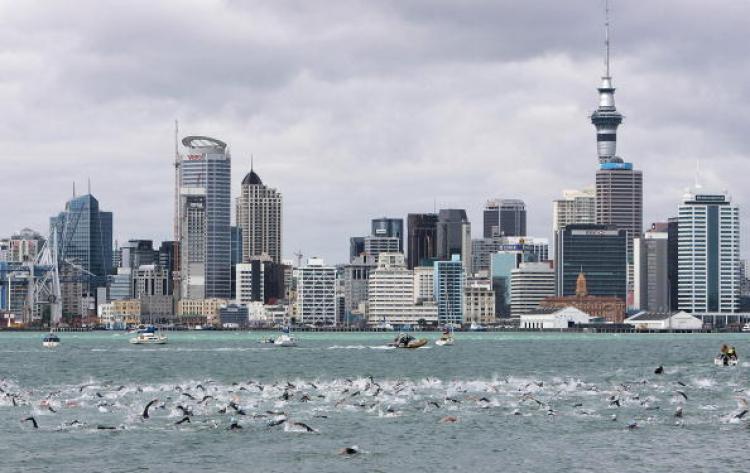
Swimmers make their way from Stanley Bay in Devonport on the North Shore across to the Viaduct Harbour in the city during the annual Auckland Harbour Crossing. (Phil Walter/Getty Images)
NEW ZEALAND—Auckland Mayors are disappointed at the lack of democracy in the Select Committee Process overseeing the formation of the future Auckland "super city".

The Select Committee's report was released by Local Government Minister, Rodney Hide and associate Minister John Carter, chair of the committee, last Friday.

Four city councils, three district councils and one regional council will be replaced by a governing body and 20 to 30 local boards.

Mayor Bob Harvey, Waitakere City, feels that the Government is simply going "through the motions" of a democratic process.

“The Government had made up its mind clearly what it wanted—shape, feel and style of the city—before the councils had a chance to listen and to respond.”

The Waitakere City Council had advocated unsuccessfully for Maori representation on the Auckland "super city" Council.

“In as much as we felt that Maori could be accommodated without trouble or without undue concern … we think that it's put back race relations in this country maybe 50 years,” he said.

Franklin District

The report proposes splitting Franklin District between Waikato District and Auckland to form the southern boundary.

This cuts right through the centre of Franklin District said District Mayor Mark Ball in a press release.

Mr. Ball said that the 85 percent of Franklin District residents, who did not want to become part of the "super city", had been ignored.

It was a "bitter pill to swallow", he said, more so as residents had no understanding as to how the splitting of Franklin District would benefit either the Franklin or Auckland City.

Rodney District

Rodney District will be carved up to form the northern boundary of Auckland City.

“Services and quality of life in the northern townships and settlements, and in rural areas will decline. Some of the coast’s exceptional natural beauty will be lost,” said Auckland Regional Councillor (ARC), Christine Rose.

“The northern boundary was never placed before people for consideration. Most Rodney residents never had a say on the issue.

“Such unilateral decisions by central government over local government are an abuse of power," she said.

“It will have dangerous effects on Rodney’s rural character, growth management, ecology, and the quality of landscapes and water.”

The ARC had put $3.3 million into catchment protection, says Cr Rose.

The Kaipara District and Northern Regional Councils do not have Auckland's "revenue or management growth expertise" to invest in the sustainability of the local eco systems.

Manukau City

“It's been a bit of a mixed bag,” said Manukau Mayor, Len Brown, commenting on the Select Committee process.

The committee had listened to submissions regarding "at large" as opposed to "ward based" elections and to the preferred number of local boards.

However, it was disappointing that the question of Maori seats had been the subject of separate discussions before the Select Committee had even made its recommendations.

Manukau City had advocated for only 12 to 17 local boards, he said.

“The worry is that the local boards—there's so many of them and they are so small—that they have very little power as against the Auckland Council … and they won't be able to deliver anything meaningful to the local community by way of local democracy.”

Mayor Brown said the local communites had to be supported and strengthened while the new council was being built.

Ensuring democracy at a local level is vital when you have a "very, very large council", he stressed.

With an estimated 1.4 million people, Auckland "super city" will become the largest city in either Australia or New Zealand.

View on theepochtimes.com
SHARE