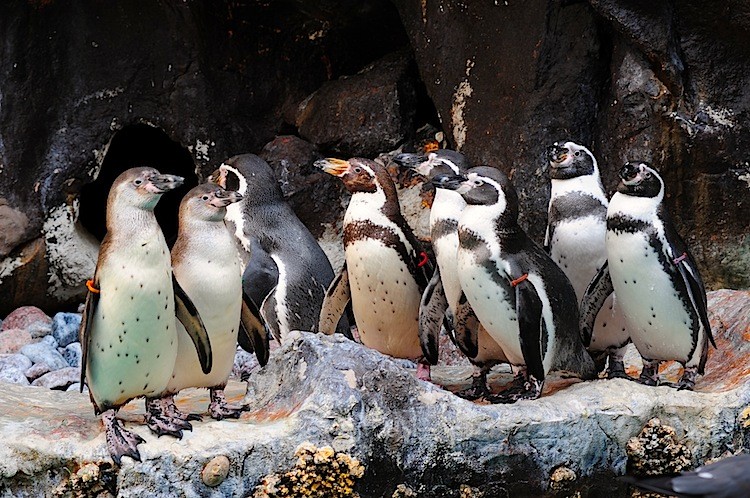
A team of U.S. researchers found that Humboldt penguins (Spheniscus humboldti) could be using a smell mechanism to recognize whether they are related to potential mates.
The research is the first of its kind to provide evidence for odor-based kin discrimination in birds.
"Smell is likely the primary mechanism for kin recognition to avoid inbreeding within the colony," said lead author Heather Coffin at the University of Chicago in a press release.
As penguins normally live in large colonies, they make ideal study subjects. They form monogamous pairs with mates, taking turns to rear the chick while the other forages in the ocean for fish. Yet birds can still locate their partners in a bustling community after being at sea for extended periods.
Previous research on other sea bird species has shown that smell helps birds to forage and also return to their territories, probably in conjunction with visual cues. According to olfactory experts, this study yields significant insights into how birds’ sense of smell influences social behavior.
"The work by the research group is truly groundbreaking in that it shows for the first time ever in birds how the olfactory sense of captive penguins is both informative and functional in a behaviorally critical context: namely the recognition of friends from foes in general, and relatives from non-relatives in particular," said Mark E. Hauber, a specialist in bird social recognition at Hunter College, in the release.
The study was conducted at Brookfield Zoo by transferring oil secreted from penguins’ preen glands to the inside of dog kennels used to resemble their nesting enclosures. Upon release, the penguins spent more time in the kennels imbued with familiar smells from birds that they already knew.
The team also discovered that birds exposed to the smell of unfamiliar kin and unfamiliar non-kin, spent more time in those kennels steeped with unfamiliar non-kin odors. This finding suggests that the penguins can smell which birds they are related to and are more curious to experience novel odors.
This ability could help prevent the penguins from mating with relatives, which could aid breeding programs in captivity and also in the wild.
"It could also be true that birds may be able to help zoo ‘matchmakers’ in determining potential mates," said co-author Jason Watters from the Chicago Zoological Society in the release.
"You could imagine that if you were trying to reintroduce birds to an area, you could first treat the area with an odor the birds were familiar with," Watters added. "That would make them more likely to stay."