Berlin has lowered its emissions of soot by 50 percent in the past five years—more than any other surveyed city in Western Europe—a recent study shows.
The study, conducted by Friends of the Earth Germany (BUND) and the European Environmental Bureau, evaluated the success of measures taken in 17 big west European cities between 2005 and 2010 to reduce soot emissions and improve air quality.
The main reason for Berlin's dramatic reduction of soot was the introduction of a low-emission zone (LEZ) of 34 square miles in 2008.
LEZ are zones within a city that allow only vehicles that follow strict emission standards to enter. In Berlin "thanks to close monitoring and strict enforcement, the LEZ had led to significant emission reductions," the report states.
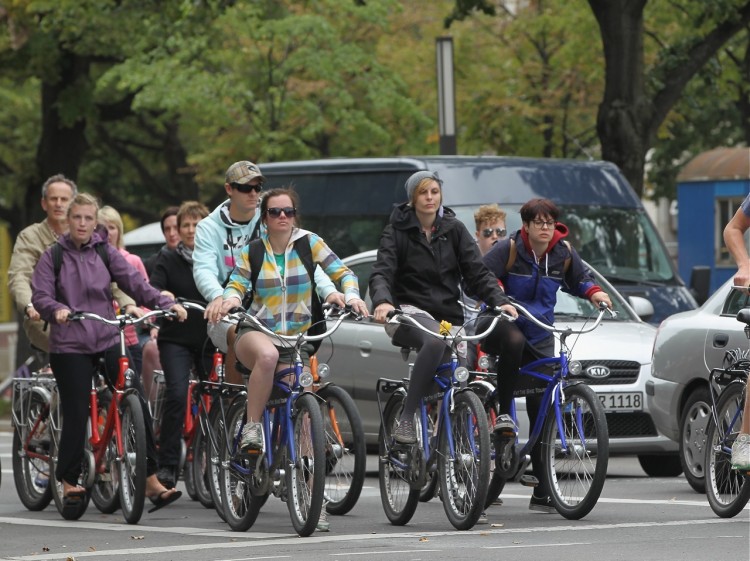
Another reason for the improved air quality was a promotion campaign to replace short car trips with walking or cycling. Thus, over the last decade car traffic in Berlin has decreased by 6 percent, while cycling has doubled.
However, the city of 3.5 million still has room for improvement. In Stockholm, which ranks second along with Copenhagen, half of all trips are made via public transport. In Berlin, the figure stands at 30 percent, said BUND transport expert, Werner Reh, in a statement.
Soot emissions mainly come from diesel cars, which are believed to contribute to global warming, while adversely affecting people’s health. Half a million premature deaths occur each year in the European Union due to air pollution, according to the report.