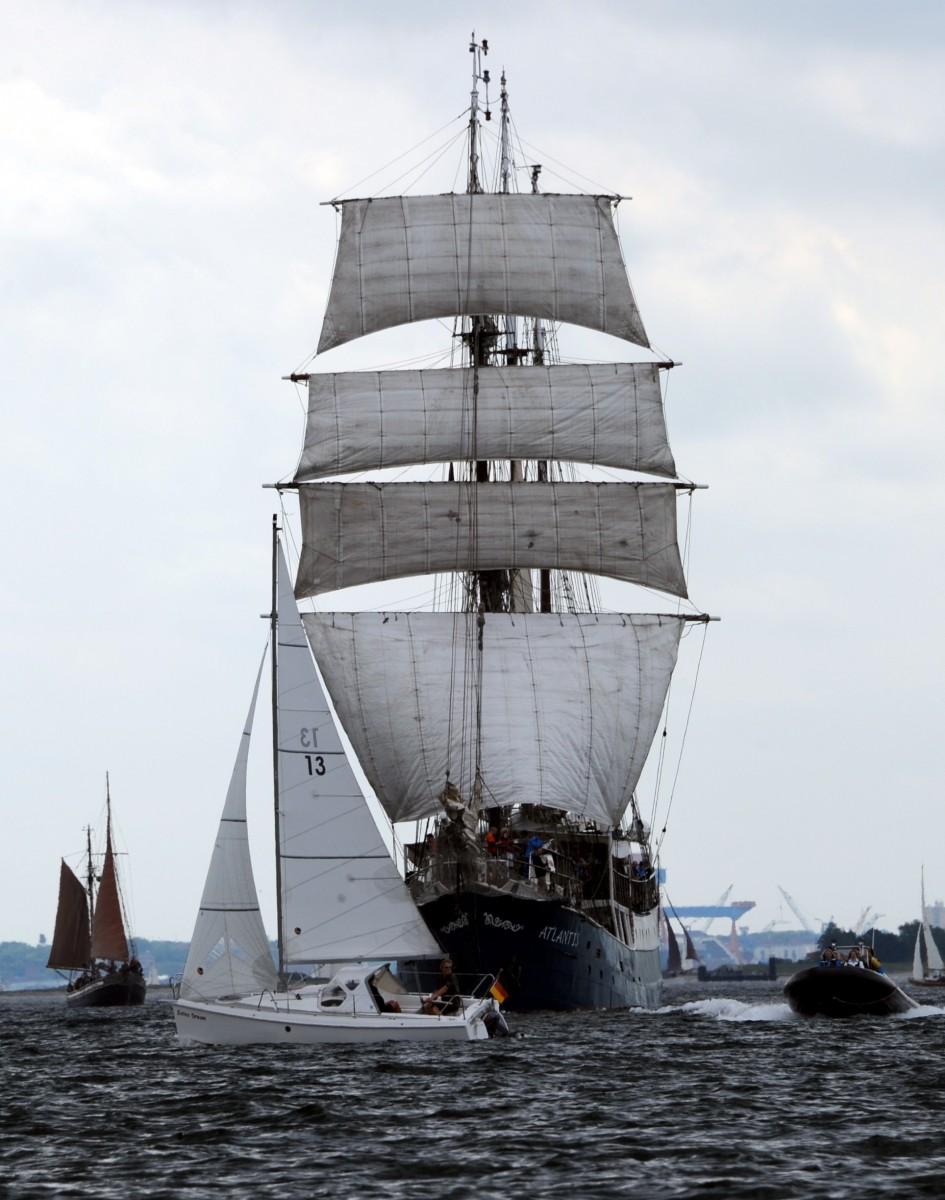
HELSINGBORG, Sweden—The Baltic Sea, one of the world’s busiest waterways, is also one of the most polluted. Excessive nutrients in the water causing algal blooms (a rapid increase in algae population) continue to be a major problem, but shipping, pollution, and fishing also contribute to the poor environment.
Cargo and container transport in the Baltic Sea is projected to increase. Shipping affects the Baltic Sea in many ways, including the addition of a continuous supply of carbon dioxide and sulfur dioxide to the water, says Ellen Bruno, marine policy officer for the Swedish Society for Nature Conservation (SSNC).
With more ships sailing in the Baltic Sea, the risk of accidents has also increased.
“A massive oil spill in an area with wintering birds could have devastating consequences for a long time,” says Bruno.
According to the Finnish Environment Institute, 200–800 oil spills have been observed annually in the Baltic Sea region, though many believe the number of spills is higher.
Now the port of Helsingborg, along with seven other ports around the Baltic, have come together to investigate the feasibility of building an infrastructure to provide gas-fueled ships to help improve the environmental condition of the sea.
“Shipping is in focus in terms of possibilities to reduce sulfur and carbon dioxide emissions,” says P.O. Jansson, former port director and coordinator of the project.
If the project succeeds, sulfur emissions are projected to be reduced by 95 percent.
The project is part of what is called Motorways of the Sea in the European Union.
All participating ports have jointly applied for money to speed up the project. The EU is spending nearly $4.28 million, so the ports involved in the project can investigate the feasibility of hosting refueling stations.
Besides Helsingborg Harbor the ports of Arhus, Helsinki, Riga, Malmo/Copenhagen, Stockholm, Tallinn, and Abo are included in this project and the results will be reported to the EU in the autumn of 2014.
For the Port of Helsingborg, this project could be crucial for its future competition, as more and more ports around the world are preparing for the transition from heavy oil to alternative fuels for shipping.
The port of Helsingborg is pleased with the opportunity to coordinate such a large-scale project. They will be the ones to distribute funds to the rest of the participants, and they are responsible for reporting back to the EU how the project known as Sulfur Reduction of shipping in the Baltic is progressing.
The Epoch Times publishes in 35 countries and in 19 languages. Subscribe to our e-newsletter.