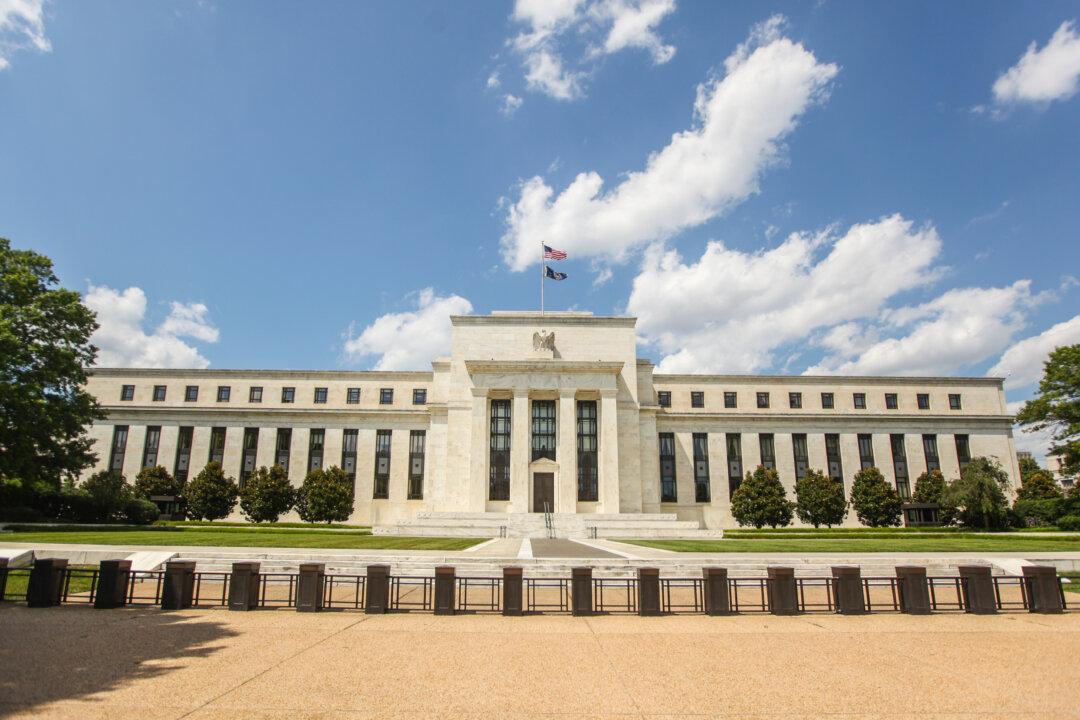
NEW YORK—Capping a lengthy and politically charged search, President Barack Obama nominated Janet Yellen, the Federal Reserve’s vice chair, to be chairman of the nation’s powerful central bank.
If confirmed by the Senate, Yellen would be the first woman in U.S. history to head the central bank.
She also would be the first Democrat chosen to lead the Fed since Paul Volcker was picked by President Jimmy Carter in 1979.
Obama made the announcement Wednesday with Yellen and Bernanke at his side in the White House’s ornate East Room.
Bernanke, 59, will serve until his term ends Jan. 31, completing an eight-year tenure in which the U.S. economy experienced the worst financial crisis and recession since the 1930s. His legacy of quantitative easing (QE) and other unconventional policy tools saved the financial system from collapse.
Yellen, 67, emerged as the top candidate after Lawrence Summers, a former Treasury secretary and White House favorite for the job, withdrew from consideration last month in the face of rising opposition.
Continuity
A close ally of the chairman, Yellen has been a key architect of the Fed’s efforts under Bernanke to keep interest rates near record lows to support the economy, and she likely would continue steering Fed policy in the same direction as Bernanke.
Carlos Abadi, president of the New York-based investment bank ACGM always had his money on Yellen. “She shares much of Bernanke’s views, so it would provide continuity to the policy direction,” he said. “I think the main driver of Yellen’s [nomination] is her competency. She is super qualified for the job. You happen to have a person that can provide continuity and is at the same time extremely qualified.”
Sen. Tim Johnson (D-S.D.), who heads the Senate Banking Committee, which must approve Yellen’s nomination, said he would work with the panel’s members to advance her confirmation quickly.
“She has a depth of experience that is second to none, and I have no doubt she will be an excellent Federal Reserve chairman,” Johnson stated.
Summers Versus Yellen
The search for a successor to Bernanke grew unusually public when Summers and Yellen emerged as the top two contenders. Through August and into September, Yellen and Summers kept low profiles, but their warring camps waged a fight that stirred up Congress.
Yellen drew outspoken support from Senate Democrats, a third of whom signed a letter this summer urging Obama to choose her. This month, more than 350 economists signed a letter to Obama urging him to nominate Yellen.
“Republicans don’t love Summers, but the left really hates him, because he was really responsible for the deregulation of the ’90s,” said Dan Oliver, principal at Myrmikan Capital, a New York-based hedge fund.
Easy Money to Continue
At the Fed, Yellen has built a reputation as a “dove”—someone who is typically more concerned about keeping interest rates low to reduce unemployment than about raising them to avert high inflation.
Sen. Bob Corker (R-Tenn.), a member of the Senate Banking Committee, said he voted against her for vice chair in 2010 because of her dovish policies. “I am not aware of anything that demonstrates her views have changed,” he said.
Oliver agrees, “Is [she] going to preside over rates going through the roof, kill the economy, I don’t think so.” He also cautions that Yellen might have a tougher job than her predecessor.
“Bernanke had the luxury to have a position to decide: ‘Do we do QE now or later.’ The relative stability afforded him the luxury of options. When the ridges of the economy fly off like in 2008, you react, and at some point that’s going to happen again.”
On the record Yellen has said that when the economy begins growing faster and rates need to be raised to prevent high inflation, she will move in that direction.
According to John Williams, publisher of ShadowStats, however, easy money is going to continue: “All this talk about tapering is political. A big part of the Fed’s program is preventing deflation by debasing the currency. [Bernanke] mentioned the policy tools in a speech in 2002. The first tool is jawboning.”
“That’s what the taper is all about. There are critics saying we are going to have an inflation problem here. Then the chorus gets stronger and stronger and the Fed says: ‘We are going to look at some tapering here and we’ll back off really easy, assuming that the economy is strong enough.’ There is a caveat there. They manipulate how the markets view it.”
Making Her Mark
Harry Edelson, a venture capitalist investor and Wall Street veteran, also thinks Yellen might want to prove a point and slow QE a little.
“She’ll want to be a little bit more of an activist. She is the first very high-level woman in the United States, so she is going to want to make a name for herself. So she may do a surprising thing early on to sort of say: ‘Hey I’m running the Federal Reserve right now.’”
He sees a slight reduction in QE, but nothing “drastic.”
“If she wants to make her mark, she’ll cut it back instead of letting it go. She’ll say, ‘We’re cutting it back 10 percent a month now—cumulative—; it’s going to end in a year.’ That’s the kind of thing I would expect from someone new, she’ll make her mark.”
As a result, it could lead to a correction in the stock market at the beginning of Yellen’s term. “The consequences will be short-term, it will be over in a month, but the short-term effects will be sharp.”
The Associated Press contributed to this report.