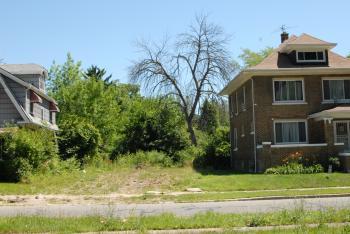
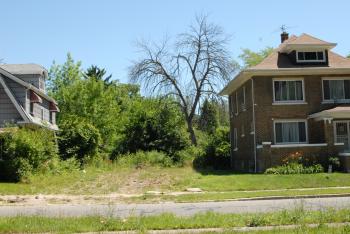
MICHIGAN—With over 30,000 acres of vacant land, it’s hard to drive down a Detroit street without seeing overgrown lots and abandoned, sometimes decomposing, buildings. Arson and crime are a continuing problem, and unemployment is at more than 25 percent, well over the nation’s average of about 10 percent.
Unlike in most big American cities where land is an asset, in Detroit it can be a liability. There are opportunities to buy a foreclosed house for as little as $1 in Detroit.
Mayor Dave Bing is currently moving forward with a plan to demolish 10,000 vacant houses and “shrink” the Motor City to match a population that has shrunk to about half of what was in 1950, when the American auto industry was thriving.
“We got trapped by our own success, now we have to reinvent ourselves,” said John Hantz, one of the few multi-millionaires left within Detroit’s city limits.
A few years ago, Hantz decided it was time to invest in his city of 20 years. He hatched a plan to use $30 million of his own money to buy up a large quantity of Detroit’s cheap land and farm it for everything its worth—an unprecedented feat.
Though delayed for about a year, Hantz estimates that he will start with 250 to 280 acres by spring 2011, making it the largest urban farm in the world. First crops will include apples, tomatoes, lettuce, and even wood—trees will help in purifying the soil, and the long-term cost-benefit of wood is viable, according to Hantz.
How It Started
While driving to his office in the suburbs of Detroit (the reverse route of most local commuters) about two years ago, Hantz realized that if he really wanted Detroit to change for the better, he would have to stop looking to others.
“I was thinking, well someone needs to do something, and then I had that hated dreadful feeling that someone might be, like, me,” Hantz said.
He then decided that what Detroit needs is scarcity of land.
Unlike in most big American cities where land is an asset, in Detroit it can be a liability. There are opportunities to buy a foreclosed house for as little as $1 in Detroit.
Mayor Dave Bing is currently moving forward with a plan to demolish 10,000 vacant houses and “shrink” the Motor City to match a population that has shrunk to about half of what was in 1950, when the American auto industry was thriving.
“We got trapped by our own success, now we have to reinvent ourselves,” said John Hantz, one of the few multi-millionaires left within Detroit’s city limits.
A few years ago, Hantz decided it was time to invest in his city of 20 years. He hatched a plan to use $30 million of his own money to buy up a large quantity of Detroit’s cheap land and farm it for everything its worth—an unprecedented feat.
Though delayed for about a year, Hantz estimates that he will start with 250 to 280 acres by spring 2011, making it the largest urban farm in the world. First crops will include apples, tomatoes, lettuce, and even wood—trees will help in purifying the soil, and the long-term cost-benefit of wood is viable, according to Hantz.
How It Started
While driving to his office in the suburbs of Detroit (the reverse route of most local commuters) about two years ago, Hantz realized that if he really wanted Detroit to change for the better, he would have to stop looking to others.
“I was thinking, well someone needs to do something, and then I had that hated dreadful feeling that someone might be, like, me,” Hantz said.
He then decided that what Detroit needs is scarcity of land.