

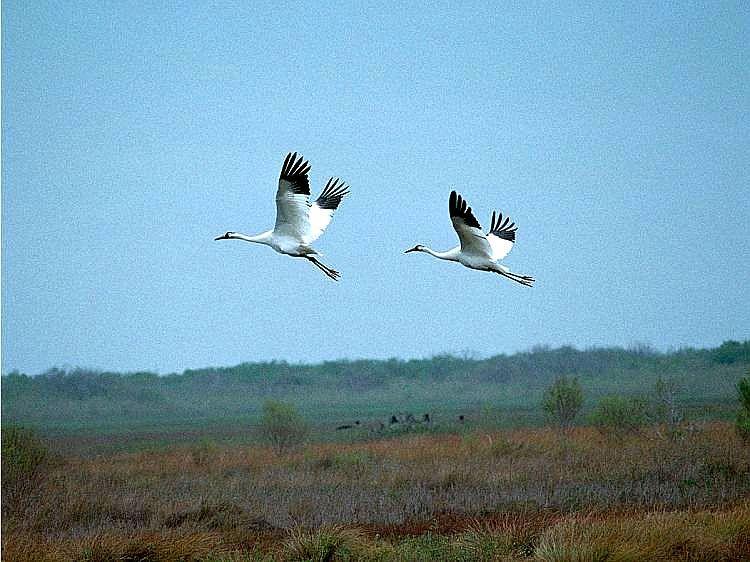
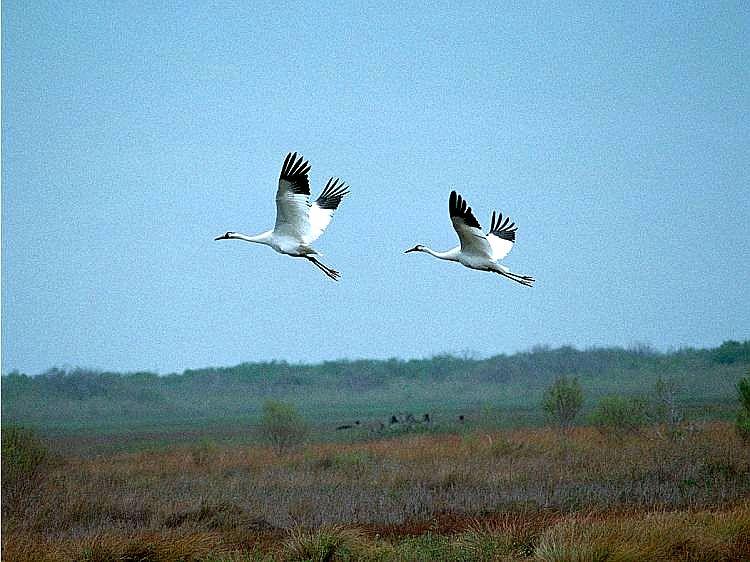
Wild migratory whooping cranes successfully hatched in the wild near central Wisconsin and were monitored by conservationist partnership organizations: U.S. Fish and Wildlife Services, Necedah National Wildlife Refuge, and the Whooping Crane Eastern Partnership. The hatching marks one more major step toward the return of these birds to an ecosystem from which they have long been absent.
The successful hatching yielded three crane chicks at the Necedah Refuge in Wisconsin this past week. The successful reintroduction is a generational bonus to conservationists as the first of the chicks born this week was the offspring of a chick hatched in 2006 at the refuge. The parent was the first wild offspring born in the project.
Unfortunately, scientists believe the first chick born this season may have fallen victim to a predator as no sign of the chick has been found since its birth.
“Although we are disappointed by the potential loss of the first chick, we are encouraged by this first successful nesting and hatching of a wild-born chick, from a wild-born parent. Refuge staff is committed to working toward the ultimate goal of a self-sustaining eastern flock of migratory whooping cranes and actively monitors additional nests of whooping crane pairs on the refuge,” said Necedah National Wildlife Refuge Manager Doug Staller in a recent U.S. Fish and Wildlife Services press release.
The remaining two chicks were born from wild nesting pairs and are being tracked. A total of 105 whooping cranes inhabit the eastern migratory population. Among those are 20 nesting pairs. The project was started in 2001 and has since fledged three chicks in the wild in addition to the chicks born last week.
“The Whooping Crane Eastern Partnership’s focus over the next five years is successful reproduction in the wild flock, and the recently hatched chicks, in addition to the three previously fledged wild-hatched chicks, are a very promising start to achieving this goal,” said Joel Trick, acting project leader for the Service’s Green Bay Ecological Services Field Office and WCEP representative in a recent U.S. Fish and Wildlife Services press release.
One of the challenges these scientists face during reintroduction of this species is nest failure. These men and women work hard to find the factors that inhibit reproduction and use captive-reared releases into the wild to help jump-start reintroduction.
However, with the birth of the three chicks this past week, efforts have shifted from depending on captive reared releases to egg production, hatching, and fledging in the wild.
Whooping cranes haven’t been a part of the upper Midwest since the late 19th century. The partnership organizations still have a lot of work and study ahead of them in order to continue successful reintroduction.


