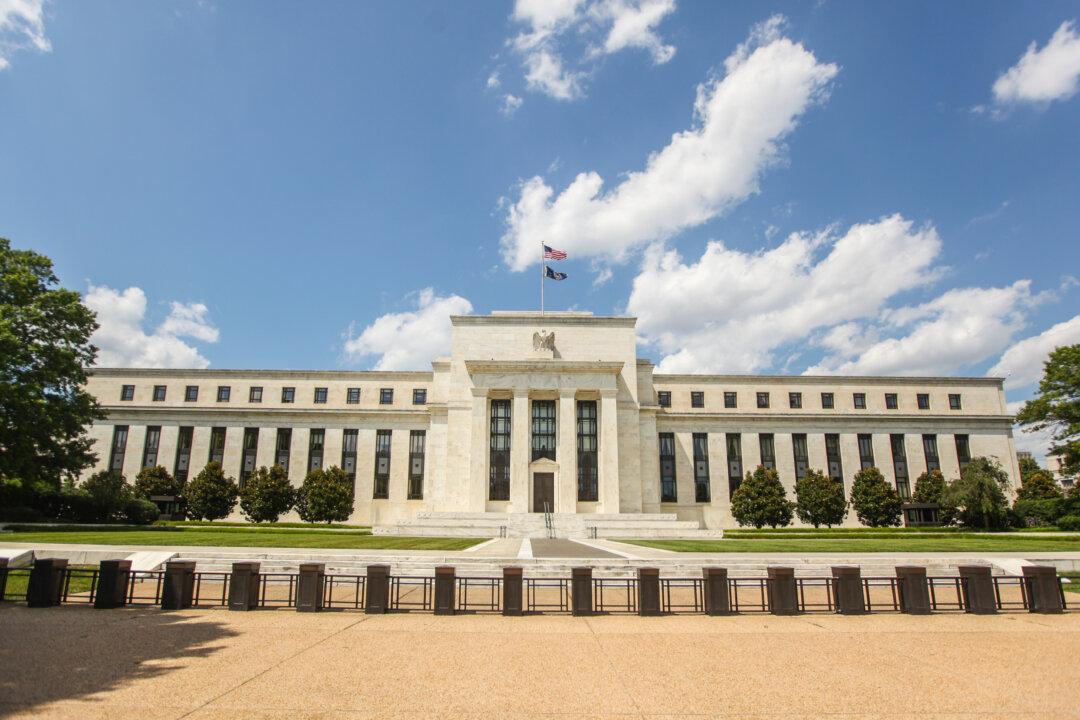
Just one month after the election of Donald Trump, in December 2016, The Economist published a cover story titled ”The Mighty Dollar.” It said higher interest rates would lead to an even stronger dollar. Part of the magazine’s prediction came true—the Federal Reserve did raise rates—but the trade weighted U.S. dollar index is down 7.5 percent since the beginning of 2017. What happened?
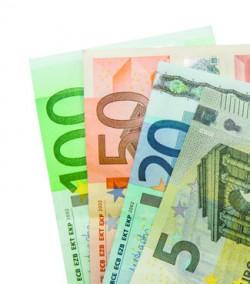
“You have to go back to before the German reunification for interest rates compared to Germany to be wider. That is now reversing. They have gotten to an extreme and they are going back,” said Sean Corrigan, principal at Cantillon Consulting. The euro makes up the biggest part of the trade weighted dollar index, and it’s up 11 percent against the dollar this year, trading at $1.16.
Normally, money goes where it can earn the best risk-adjusted returns, and government bonds are the biggest market. The 10-year U.S. Treasury thus looks good at a yield of 2.2 percent, compared to its German counterpart at 0.5 percent.
However, the future counts more than the present in currency trading. Traders are betting that German rates will rise faster than U.S. rates as the European Central Bank (ECB) starts paring down its monetary stimulus, as hinted by ECB President Mario Draghi in June.