
West Nile Virus Found on Staten Island

The city’s Health Department announced that West Nile Virus was detected in some mosquitoes in the neighborhoods of New Dorp Beach and Bull’s Head on Staten Island Tuesday.
West Nile Virus Found on Staten Island
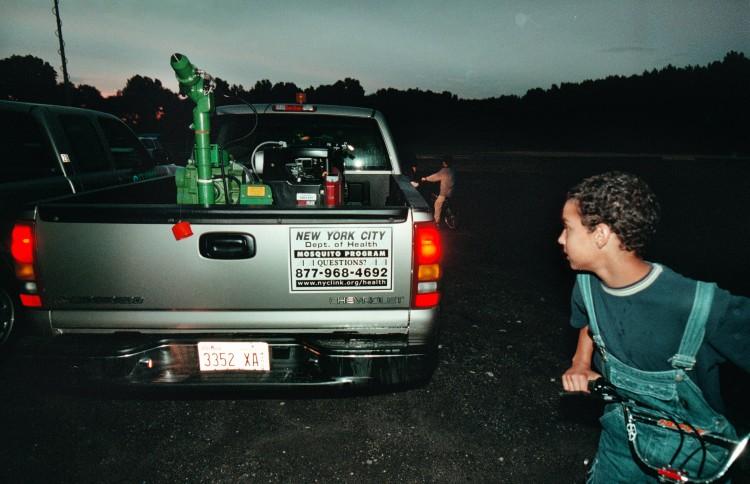
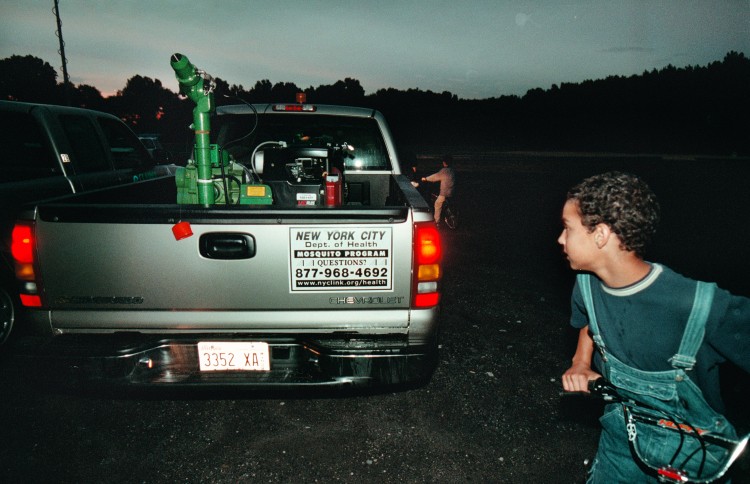
Vinny Damilo of Staten Island looks over a mosquito sprayer in this file photo from 2000 on Staten Island, N.Y. The Health Department has been spraying throughout the city as the mosquito population grows and West Nile Virus becomes more prevalent. Chris Hondros/Newsmakers
Zachary Stieber
Zachary Stieber
Senior Reporter
|Updated:
<a><img class="wp-image-1785061" title="Insecticide Spraying In Staten Island" src="https://www.theepochtimes.com/assets/uploads/2015/09/6694671.jpg" alt="Vinny Damilo of Staten Island looks over a mosquito sprayer in this file photo from 2000 on Staten Island, N.Y. The Health Department has been spraying throughout the city as the mosquito population grows and West Nile Virus becomes more prevalent. (Chris Hondros/Newsmakers) " width="354" height="229"/></a>
Vinny Damilo of Staten Island looks over a mosquito sprayer in this file photo from 2000 on Staten Island, N.Y. The Health Department has been spraying throughout the city as the mosquito population grows and West Nile Virus becomes more prevalent. (Chris Hondros/Newsmakers)

NEW YORK—The city’s Health Department announced that West Nile Virus was detected in some mosquitoes in the neighborhoods of New Dorp Beach and Bull’s Head on Staten Island Tuesday.

West Nile Virus first appeared in the United States in New York City in 1999.

Birds can carry the virus, but based on research, mosquitoes, which get the virus from birds, are responsible for much of the spread of the virus across the United States.

The find on Tuesday came as trucks were in the process of spraying liquid insecticide in areas where mosquitoes are most active around the city—aiming to kill adult mosquitoes. At the same time, helicopters were spraying larvicide on nonresidential areas such as marshes—aiming to kill mosquito larvae before they grow and leave the water.

Yet spraying chemicals is not a solution, said Jay Torres, operations manager for Gateway Pest Management in Queens. “The solution would be to find out where water seems to collect more than any other places, and to treat those stagnant places and water pools. It’s a lot of work, for sure,” Torres said.

Zachary Stieber
Zachary Stieber
Senior Reporter
Zachary Stieber is a senior reporter for The Epoch Times based in Maryland. He covers U.S. and world news. Contact Zachary at [email protected]
twitter
truth
Related Topics