Decades-long concerns over energy and mining development proposals near a UNESCO World Heritage Site on the Canada-U.S. border have prompted the agency to launch a fact-finding mission to investigate potential threats to the region.
UNESCO’s 21-member World Heritage Committee voted unanimously last week for a mission to evaluate and recommend requirements to protect Waterton-Glacier International Peace Park .
The committee noted that potential coal mining and coalbed methane extraction within the unprotected Flathead Valley in British Columbia, which lies west adjacent to Waterton-Glacier, could threaten water supplies and the broader ecosystem spanning the area.
“This ecosystem has the highest density of grizzly bears in the interior of North America, the highest diversity of plant species, with over 1,000 flowering plants alone. It’s one of the most important grizzly bear and carnivore habitats in the Rocky Mountains,” said Ryland Nelson, program coordinator with Wildsight, a southeastern B.C.-based conservation group.
Mr. Nelson attended the UNESCO meeting in Seville, Spain, representing an environmental coalition that comprises 12 U.S. and Canadian groups.
“We’ve been asking B.C. for over 30 years not to mine in the Flathead River Valley. We’re asking that B.C. change their land use plan so that it does not allow mining on the headwaters of a World Heritage Site,” he said.
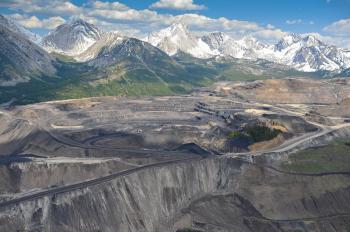
The mountaintop removal coal mining being proposed “would remove the large mountaintop and dump what’s not coal into the valley,” said Chloe O’Loughlin, executive director of the Canadian Parks and Wilderness Society’s B.C. chapter.
The open pit mine would send great amounts of heavy metals and runoff into the Flathead River and downstream into the neighbouring peace park, according to Mr. Nelson.
Flathead also falls under a conservation initiative covering the region from Yellowstone National Park to Yukon Territory, “protecting that area of the spine of the Rockies so that animals can go north-south to migrate,” Ms. O’Loughlin said.
The world’s first “international peace park,” Waterton-Glacier is a protected area formed in 1932 from a merger of Waterton Lakes National Park in Alberta and Glacier National Park in Montana. It serves as a symbol of peace and friendship between the two countries.
UNESCO designated both parks as biosphere reserves in the 1970s and the entire peace park a World Heritage Site in 1995.
The World Heritage Committee has also asked Canada and the U.S. to prepare a joint report on all Flathead resource development proposals as well as residential, industrial, tourism, and other developments in the area and their cumulative impacts.
‘Awe-inspiring photography’
A Flathead project to be undertaken later this month by a group of renowned conservation-minded photographers may serve to further efforts to protect the region.