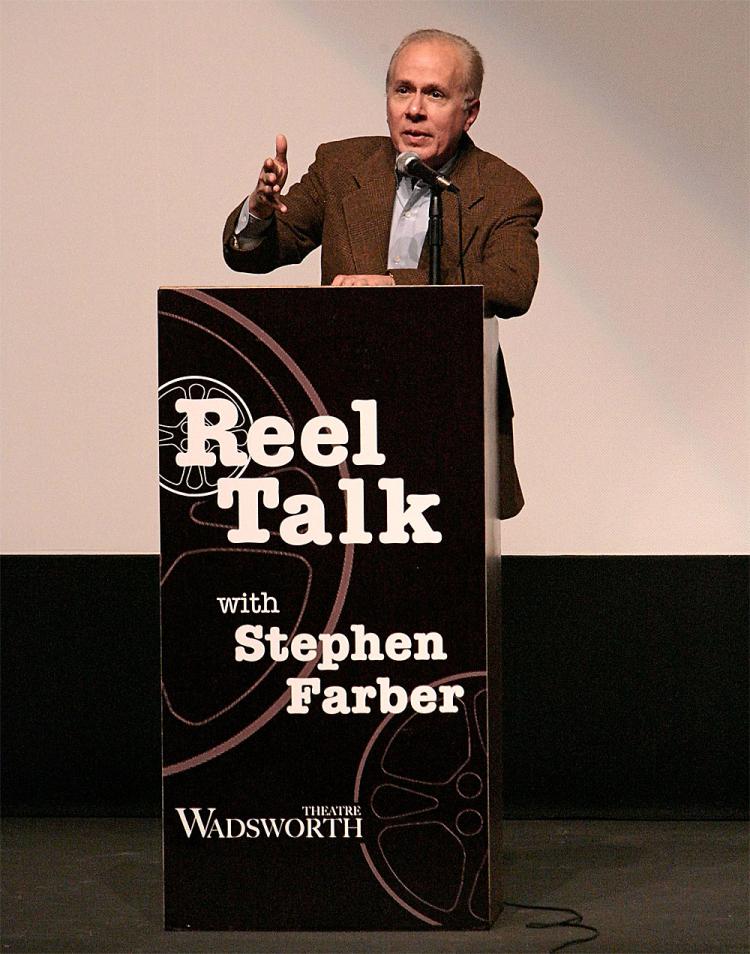
One of the great advantages of living in L.A., other than the mild weather, is the unique opportunity to see a huge variety of films, sometimes with the opportunity to hear directly from those who made them.
“ReelTalk,” hosted by one of the country’s leading film critics and historians, Stephen Farber, is a venue open to the public that features screenings and discussions of new movies, with their directors or stars in attendance.
The Epoch Times chatted with Farber, film critic for The Hollywood Reporter, about his favorite films and how he makes choices for the series ReelTalk.
“My audience likes to see films that are more in an independent vain, more thoughtful, provoking—that you can talk about, not the highest profile movies,” adding, “they are grateful to see something a little under the radar.”
“I’m not a fan of the big blockbuster, I like the more intelligent, independent adult films,” Farber admits.
Farber acknowledges that there are films designed for escape, specifically to take us away from ourselves. However, he says, “the most memorable give us insight into our lives—the movies that [offer] more insight, expose something about ourselves, [uncover a] painful, hard, truthful [view of] relationships or society, [display] the social ills and injustices we deal with, or in a personal way; [help us] find our place in the world” have the greatest impact.
Lawrence of Arabia was such a movie for Farber, though it may seem on the surface, he comments, to be remote from any personal experience. Aside from being “visually beautiful, and spectacular to watch, we see why some people perform heroic and courageous acts, not just heroic people, but driven by personal demons that people never come close to matching.”
“And what makes a hero?” Farber poses, “and what price does one pay for performing heroic actions?”
This film clearly influenced Farber’s long and dynamic career, as it showed him how much could be done with the medium, “and how far film could go, not only with dialogue, but with visual images, editing, and music—all coming together to insinuate profound emotional impact.”
This film became Farber’s “film education” as he put it, opening his eyes to a language unlike any other.
Slated this day for “ReelTalk,” was writer/director Nicole Holofcener who discussed her new film “Please Give” at the Wadsworth Theater, followed by a Q and A.
As Farber introduced the film Please Give, he said of women directors that “people expect intimate dramas about personal relationships,” adding that “in the past this has been true.”
Holofcener, casual in jeans and boots, certainly has, up until now, made films that focus on interesting women and their stories—“Friends with Money,” “Walking and Talking,” and “Lovely and Amazing.”
Starring in Please Give, as in her other films, Katherine Keener seems to be Holofcener’s muse, or as Farber suggests, “alter ego.” Keener plays Kate, a wife and mother and successful art/furniture dealer, struggling with an almost desperate need to give. This haunting empathy forces her to examine and question her lifestyle. Set in New York City, Kate tries to reconcile a world with so much excess and so much poverty.
“Is liberal guilt just another form of indulgence?” asks Farber, of the movies.
“ReelTalk”’s spring series runs March 15–May 24 at the Wadsworth Theater in Los Angeles.
“ReelTalk,” hosted by one of the country’s leading film critics and historians, Stephen Farber, is a venue open to the public that features screenings and discussions of new movies, with their directors or stars in attendance.
The Epoch Times chatted with Farber, film critic for The Hollywood Reporter, about his favorite films and how he makes choices for the series ReelTalk.
“My audience likes to see films that are more in an independent vain, more thoughtful, provoking—that you can talk about, not the highest profile movies,” adding, “they are grateful to see something a little under the radar.”
“I’m not a fan of the big blockbuster, I like the more intelligent, independent adult films,” Farber admits.
Farber acknowledges that there are films designed for escape, specifically to take us away from ourselves. However, he says, “the most memorable give us insight into our lives—the movies that [offer] more insight, expose something about ourselves, [uncover a] painful, hard, truthful [view of] relationships or society, [display] the social ills and injustices we deal with, or in a personal way; [help us] find our place in the world” have the greatest impact.
Lawrence of Arabia was such a movie for Farber, though it may seem on the surface, he comments, to be remote from any personal experience. Aside from being “visually beautiful, and spectacular to watch, we see why some people perform heroic and courageous acts, not just heroic people, but driven by personal demons that people never come close to matching.”
“And what makes a hero?” Farber poses, “and what price does one pay for performing heroic actions?”
This film clearly influenced Farber’s long and dynamic career, as it showed him how much could be done with the medium, “and how far film could go, not only with dialogue, but with visual images, editing, and music—all coming together to insinuate profound emotional impact.”
This film became Farber’s “film education” as he put it, opening his eyes to a language unlike any other.
Slated this day for “ReelTalk,” was writer/director Nicole Holofcener who discussed her new film “Please Give” at the Wadsworth Theater, followed by a Q and A.
As Farber introduced the film Please Give, he said of women directors that “people expect intimate dramas about personal relationships,” adding that “in the past this has been true.”
Holofcener, casual in jeans and boots, certainly has, up until now, made films that focus on interesting women and their stories—“Friends with Money,” “Walking and Talking,” and “Lovely and Amazing.”
Starring in Please Give, as in her other films, Katherine Keener seems to be Holofcener’s muse, or as Farber suggests, “alter ego.” Keener plays Kate, a wife and mother and successful art/furniture dealer, struggling with an almost desperate need to give. This haunting empathy forces her to examine and question her lifestyle. Set in New York City, Kate tries to reconcile a world with so much excess and so much poverty.
“Is liberal guilt just another form of indulgence?” asks Farber, of the movies.
“ReelTalk”’s spring series runs March 15–May 24 at the Wadsworth Theater in Los Angeles.