


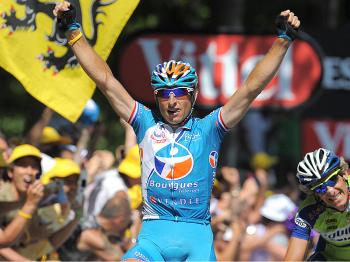
Fedrigo joined in the first counterattack right off the start, then stayed in the leading group over the two mountain climbs. The peloton made an effort to reel in the breakaway, but in the end, it came down to sprinting tactics and will, and Fedrigo won both contests.
Strategy in the Mountains
Stage Nine, 160.5 km from Saint-Gaudens to Tarbes, was short in length but not in altitude. The stage included the Category One Col d’Aspin for a warm-up, followed immediately by the heartbreaking climb up the Hors Categorie Col du Tourmalet, a 17-kilometer haul up a 7.4 percent grade. This climb goes on and on and up and up; any rider even a little tired from the past two days of climbing would start slipping back here.
The overall length, coupled with the fact that Monday would be a rest day, meant that some riders would be willing to spend themselves and charge down the long descent. With the final fifty km being flat and slightly downhill, it seemed likely that any big mountain attacks would be ridden down by the end.
Many of the teams which hoped to be competitive in the final week, realized that they needed to wear down Team Astana, which had dominated the peloton in every stage. This prompted attacks by big-name riders which otherwise would have been left to their lesser-known teammates.
When asked about whether Saxo Bank was trying to force the yellow onto Astana, to put more pressure on the team, Lance Armstrong replied: “That’s one theory; you never know what they’re thinking.


