Early on the morning of April 25, 1999, the Falun Gong (also known as Falun Dafa) practitioners began making their way through the fog covered streets of Beijing, heading for the Office of Letters and Appeals, which is nearby the living quarters and offices of the Chinese Communist Party’s (CCP) top leaders. By the time the fog lifted, more than 10,000 had gathered, lined up neatly in several rows on the sidewalks.
The practitioners had come to ask for the release of 45 of their fellow adherents who had been beaten and arrested in the nearby city of Tianjin and for the guarantee that Falun Gong could be practiced without interference from authorities.
Click www.ept.ms/ccp-crisis to read about the most recent developments in the ongoing power struggle within the Chinese communist regime. In this special topic, we provide readers with the necessary context to understand the situation. Get the RSS feed. Get the Timeline of Events. Who are the Major Players? 
This mass demonstration ended peacefully after then-Premier Zhu Rongji agreed to their requests. However, then-CCP head Jiang Zemin took the gathering as the occasion for calling for the suppression of Falun Gong in China. Three months later, Jiang launched a campaign to “eradicate” this spiritual practice.
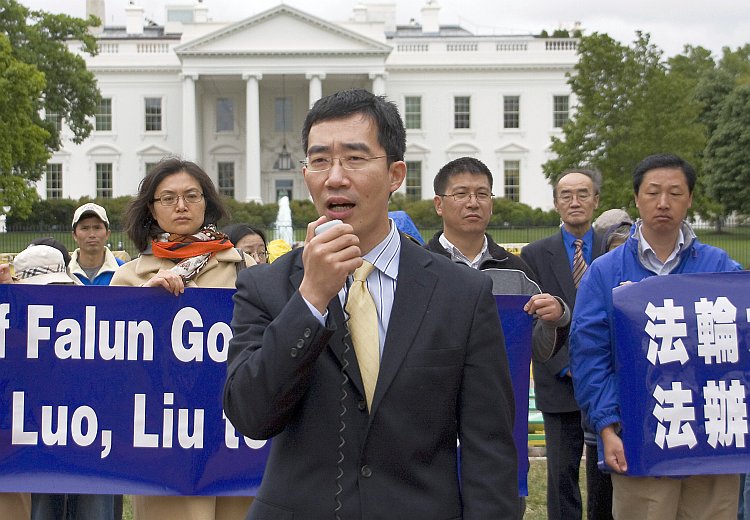
On Monday, April 23, the Washington, D.C., Falun Dafa Association held a press conference in front of the White House to look back at the events of 13 years ago in the light of the crisis gripping the Chinese regime today.
Character and Perseverance
Falun Gong involves doing five meditative exercises and improving one’s moral character by living according to the principles of truthfulness, compassion, and tolerance.
Terri Marsh of the Human Rights Legal Foundation (HRLF) sees the character of the practitioners as the key to the protest 13 years ago and the long campaign of peaceful resistance since.