

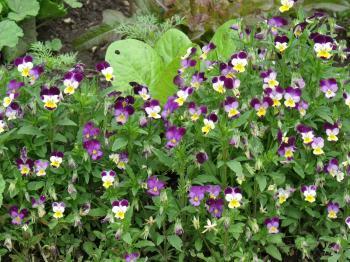
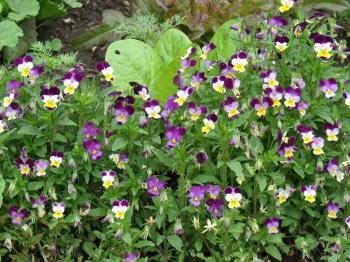
Instead of heading to the market for fruits, vegetables, and herbs, imagine they are instantly accessible, and planted in a lovely way throughout the yard around the house.
Edible landscaping is an age-old art undergoing a recent revival. But it has existed for as long as gardening itself.
While some homeowners are realizing the benefits—spending more time in nature, saving on grocery bills, and controlling what, if any, pesticides and herbicides are used on their foods—others connect with deeper principles, such as the approach of permaculture.
Chandra Hartman, of CFH Design Studio and Moonlight Micro-Farms, says, “Many people are just waking up to the idea that our food supply may not be as secure as we once believed.”
CFH Design Studio is an architectural design business that Hartman began in 2000, focusing on coastal residential design. Moonlight Micro-Farms sells heirloom seeds, organic sprouts, and offers permaculture design that is geared toward aesthetic beauty and reclaiming a piece of our natural heritage.
Hartman says her own interest in edible landscaping is rooted in a desire to be self- and community-reliant in a time when our freedoms are being challenged by corporate control and environmental degradation.
She considers herself more of an ecological designer than a landscaper, “someone who likes to think about the what-ifs.”
Some gardeners and landscapers describe how to begin the process: Walk the yard. Map out a plan on paper. Study the percentage of sun exposure in each part of the yard. Plan accordingly with proper plants and soil types.
Hartman says that when a client expresses interest in edible landscaping, she must first determine if the site offers an opportunity for growing food and the client’s level of participation in the garden. Based on these two factors, she will determine the type and level of edible landscaping appropriate.
Hartman earned a degree in Sustainable Community Development from Prescott College, where she became interested in permaculture. She says, “The first ethic of permaculture is to care for the earth. I am constantly observing my immediate environment and thinking of ways to interact with it that will be mutually beneficial.”
A small, yet valuable niche, according to Harman, is the market for wild edibles. She says free food and medicine grows all around us and we don’t even know it. “This is a lost art – gathering or foraging – that I believe is important for us to re-learn before we completely lose our connection with nature.”
Edible landscaping is an age-old art undergoing a recent revival. But it has existed for as long as gardening itself.
While some homeowners are realizing the benefits—spending more time in nature, saving on grocery bills, and controlling what, if any, pesticides and herbicides are used on their foods—others connect with deeper principles, such as the approach of permaculture.
Chandra Hartman, of CFH Design Studio and Moonlight Micro-Farms, says, “Many people are just waking up to the idea that our food supply may not be as secure as we once believed.”
CFH Design Studio is an architectural design business that Hartman began in 2000, focusing on coastal residential design. Moonlight Micro-Farms sells heirloom seeds, organic sprouts, and offers permaculture design that is geared toward aesthetic beauty and reclaiming a piece of our natural heritage.
Hartman says her own interest in edible landscaping is rooted in a desire to be self- and community-reliant in a time when our freedoms are being challenged by corporate control and environmental degradation.
She considers herself more of an ecological designer than a landscaper, “someone who likes to think about the what-ifs.”
The Essentials
Some gardeners and landscapers describe how to begin the process: Walk the yard. Map out a plan on paper. Study the percentage of sun exposure in each part of the yard. Plan accordingly with proper plants and soil types.
Hartman says that when a client expresses interest in edible landscaping, she must first determine if the site offers an opportunity for growing food and the client’s level of participation in the garden. Based on these two factors, she will determine the type and level of edible landscaping appropriate.
Hartman earned a degree in Sustainable Community Development from Prescott College, where she became interested in permaculture. She says, “The first ethic of permaculture is to care for the earth. I am constantly observing my immediate environment and thinking of ways to interact with it that will be mutually beneficial.”
A small, yet valuable niche, according to Harman, is the market for wild edibles. She says free food and medicine grows all around us and we don’t even know it. “This is a lost art – gathering or foraging – that I believe is important for us to re-learn before we completely lose our connection with nature.”


