It’s the first general election of Trump’s second term. Follow our live coverage here. Check out races to watch here.
Former Vice President Dick Cheney passed away at 84, his family announced. Read more here.
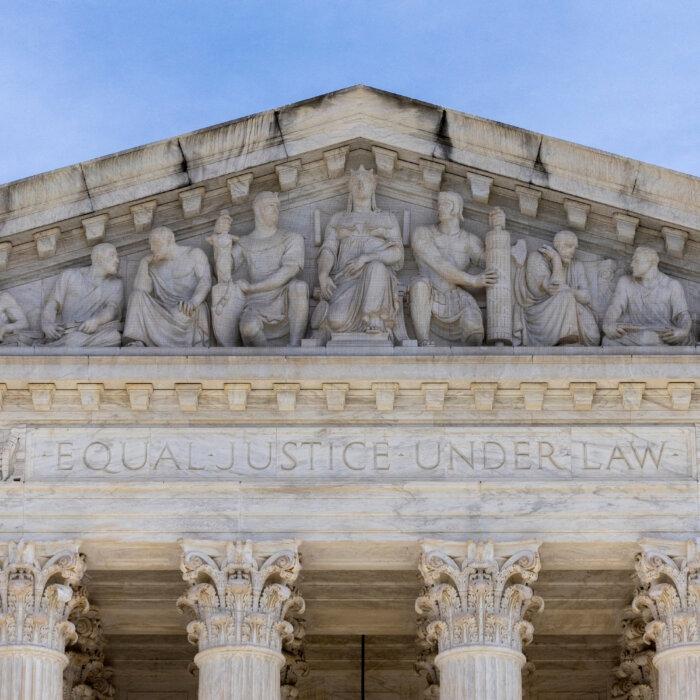
President Donald Trump’s tariffs are set to face a major test at the Supreme Court, which is hearing oral argument over the issue on Nov. 5.
The Supreme Court is considering whether Trump’s tariffs exceed the authority Congress granted presidents under the International Emergency Economic Powers Act. That law allows presidents to take a variety of actions, including regulating imports, during emergencies.
So far, multiple federal courts have said that the power to regulate imports under that law did not include the kind of sweeping tariffs that Trump has ordered. More specifically, this case focuses on his tariffs targeting trafficking from China, Canada, and Mexico, as well as the long list of “reciprocal tariffs” he imposed on countries across the world.
The Justice Department told the Supreme Court that the law clearly authorized tariffs since imposing them is part of regulating imports.
Stakes are high, and a ruling against Trump could make it more difficult for him to implement his trade agenda. So far, the Trump administration has reached trade deals with several countries, leading to more than $2 trillion in purchases and investment commitments in the United States.
The United States faces a trade deficit of more than $1 trillion, while the Congressional Budget Office has estimated that the tariffs will reduce federal deficits by $4 trillion.
Private companies have urged the Supreme Court to rule against the Trump administration, arguing that the tariffs represent hundreds of billions of dollars in new taxes. The Peterson Institute for International Economics said in September that U.S. businesses had absorbed much of the tariff costs through July, while consumers could see higher prices.
Given the economic implications, the case has prompted arguments about the Major Questions Doctrine, which is a legal doctrine that has been used by the Supreme Court to strike down large-scale executive actions like former President Joe Biden’s student loan forgiveness.
The doctrine says that administrative agencies need clear congressional authorization before making decisions of major economic or political importance. The U.S. Court of Appeals for the Federal Circuit said in August that, considering the magnitude of Trump’s tariffs, he would have needed clearer language from Congress authorizing the type of tariffs he imposed.
In defending the tariffs, the Trump administration has suggested that the major questions doctrine shouldn’t apply to this situation because of how much it implicates foreign affairs.
It pointed to a recent concurring opinion in which Justice Brett Kavanaugh said “the major questions canon has not been applied by this court in the national security or foreign policy contexts, because the [doctrine] does not reflect ordinary congressional intent in those areas. On the contrary, the usual understanding is that Congress intends to give the president substantial authority and flexibility to protect America and the American people.”
Similar to the Major Questions Doctrine, another consideration the court is expected to take up is: even if Congress did intend to give Trump that authority, did it violate the Constitution in doing so?
The Constitution specifies that Congress has the power to impose tariffs, but it’s questionable whether and how much it can delegate that authority to the president.
Another doctrine known as the “nondelegation doctrine” generally prevents Congress from delegating its legislative powers to other entities, but has some caveats. Congress can delegate authority, for example, if it provides some limits on how the president uses that authority.
Should the administration lose the case, Treasury Secretary Scott Bessent has said the government could invoke other authorities to implement tariffs, although they are “not as efficient, not as powerful.”
—Sam Dorman
BOOKMARKS
The U.S. Department of Agriculture (USDA) will pay out reduced food stamps for November using $5 billion from a pool of emergency cash previously appropriated by Congress. The funds can only pay half of the approximately $9 billion monthly cost of the Supplemental Nutrition Assistance Program (SNAP), so recipients may only receive about half as much aid.
Even though the government plans on tapping into some of its emergency cash to pay SNAP benefits for November, USDA deputy undersecretary for Food and Nutrition Services Patrick Penn insists it will not use funds reserved for school lunch programs. “Using billions of dollars from Child Nutrition for SNAP would leave an unprecedented gap in Child Nutrition funding that Congress has never had to fill with annual appropriations, and USDA cannot predict what Congress will do under these circumstances,” he wrote in a court filing.
Democratic Socialists are flexing their political muscle in two high-stakes mayoral races this week, as they look for wins in both New York City and Minneapolis. Find out the implications by reading Janice Hisle’s latest report.
The suspects who allegedly stole $102 million in jewels from the Louvre don’t appear to resemble elite master criminals depicted in movies, authorities say. Find out more about how they almost pulled it off in Rachel Roberts’ latest report.
Sens. Pete Ricketts (R-Neb.), Dave McCormick (R-Pa.), and Eric Schmitt (R-Mo.) introduced legislation last week to halt the trafficking of nitazene, a new form of synthetic opioid more potent than fentanyl. “It’s already killed thousands of Europeans, and it’s quickly making its way to our shores,” Ricketts said in a statement.
—Stacy Robinson