U.S. District Judge Jed S. Rakoff delivered a rare strike against one Wall Street culprit that thought itself above the law: Citigroup Global Markets Inc. The law community already worries that “if Judge Rakoff’s view prevails, it may affect the willingness of defendants to settle,” according to a recent article on the Consumer Law & Policy blog.
The crux of the matter was that Citigroup established a billion dollar fund, called “Class V Funding III,” a collateralized debt obligation comprised of suspect assets, which it unloaded on gullible investors, earning a $34 million fee and about $160 million in net profits. The Securities and Exchange Commission (SEC), in its Complaint Summary paragraph to the U.S. District Court, noted that it classified the Citigroup action as a securities fraud action.
However, Rakoff noted in his scathing Opinion and Order brief that “although this [the SEC charges] would appear to be tantamount to an allegation of knowing and fraudulent intent (”scienter,“ in the lingo of securities law), the S.E.C., for reasons of its own, chose to charge Citigroup only with negligence.”
Rejecting Sugar-Coated Deal
“The S.E.C., of all agencies, has a duty, inherent in its statutory mission, to see that the truth emerges; and if fails to do so, this Court must not, in the name of deference or convenience, grant judicial enforcement to the agency’s contrivances,” Rakoff said.
The Court rejected a sugar-coated deal between the SEC and Citigroup in a scathing Opinion and Order brief by Rakoff, filed at the U.S. District Court for the Southern District of New York on Nov. 28.
Rakoff noted that the SEC complaint was careful in its wording, using boilerplate language such as “without admitting or denying guilt,” language that has been around at the SEC for ages.
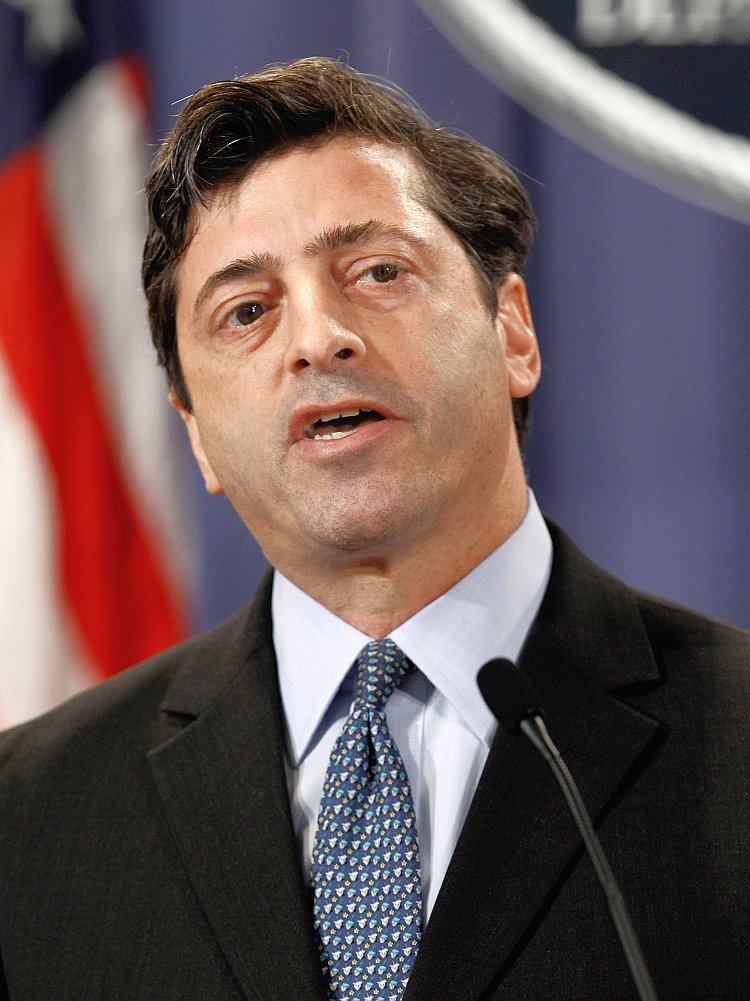
In a response to Rakoff’s opinion, which can be found on the SEC website, Robert Khuzami, director of the division of enforcement at the SEC, states: “Monetary penalties, and mandatory business reforms may significantly outweigh the absence of an admission [of guilt]. … The settlement provisions cited by the court have been included in settlements repeatedly approved for good reason by federal courts across the country.”
Publicity Driving Allegation
“It is harder to discern from the limited information before the Court what the S.E.C. is getting from this settlement other than a quick headline,” Rakoff said.
Rakoff rebuked the SEC further, accusing that the complaint was filled with innuendos and lacked any facts with which the court could decide on the merits or demerits of the complaint.
“An application of judicial power that does not rest on facts is worse than mindless, it is inherently dangerous. The injunctive power of the judiciary is not a free roving remedy to be invoked at the whim of a regulatory agency, even with the consent of the regulated,” Rakoff said.
Remedy Charged Is Pittance
“The Court concludes, regretfully, that the proposed Consent Judgment is neither fair, nor reasonable, nor adequate, nor in the public interest,” Rakoff stated.
The agreement between the SEC attorneys and Citigroup called for Citigroup to pay $285 million and allows Citigroup to plead guilty without admitting guilt. The total amount is divided into $160 million, which covers profits obtained by illegal or unethical acts, $30 million in prejudgment interest, and $95 million in civil penalty.
Within a few years of receiving a federal government bailout of $476.2 billion in cash and guarantees under a number of bailout funds, Citigroup reported for the third quarter of 2011 $3.8 billion in profits on $21 billion in gross revenues in mid-October, a 73 percent increase over earnings during the same period in 2010.
The judge called the remedy “a mild and modest cost of doing business,” as the total fine amounts to a mere 7.5 percent of Citigroup’s third quarter profits.
The public has been incensed since the government bailed out institutions considered too big to fail, including Citigroup, despite these institutions being the culprits that caused that economic upheaval in the first place.