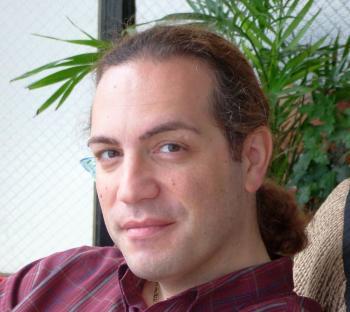
WASHINGTON—Ammar Abdulhamid’s views on modernizing Syria sound more like revolutionary solutions for most of the Arab world. Not surprisingly then, the activist, democracy spokesperson, and scholar hasn’t been allowed in his home country of Syria since 2005.
He was forced to leave after establishing the Tharwa Project with his wife in 2001. Though only 400 people strong and fueled by volunteer foreign interns, it became one of the most successful platforms for dialogue on modernization and democracy in the totalitarian state. Eventually Ammar and his wife were forced to relocate to Washington, D.C. The Syrian government, and President Bashar Al-Assad, apparently do not like to be criticized. The Tharwa Project continues in the U.S. capital, promoting democratic principles in Syria and throughout the Middle East.
In a forum at the Middle East Institute in Washington D.C. on July 20, and in a following interview, Abdulhamid spoke about how protests in Iran have globally affected the greater Arab world. He also spoke at length about Iran’s off-and-on ally, Syria.
Iranian Impact
Capturing the world’s attention for weeks, the pro-democratic outburst in Iran was unprecedented for the Arab Middle East. That the protests were unprecedented relates to the status quo in Arab countries, Ammar explained: “We do not see mass protests because people do not expect central authority to be present. In fact, when it is present it leads to problems. People want the central authority to be absent.”