This copy is for your personal, non-commercial use only. Distribution and use of this material are governed by our Subscriber Agreement and by copyright law. For non-personal use or to order multiple copies, please contact The Epoch Times Reprints.
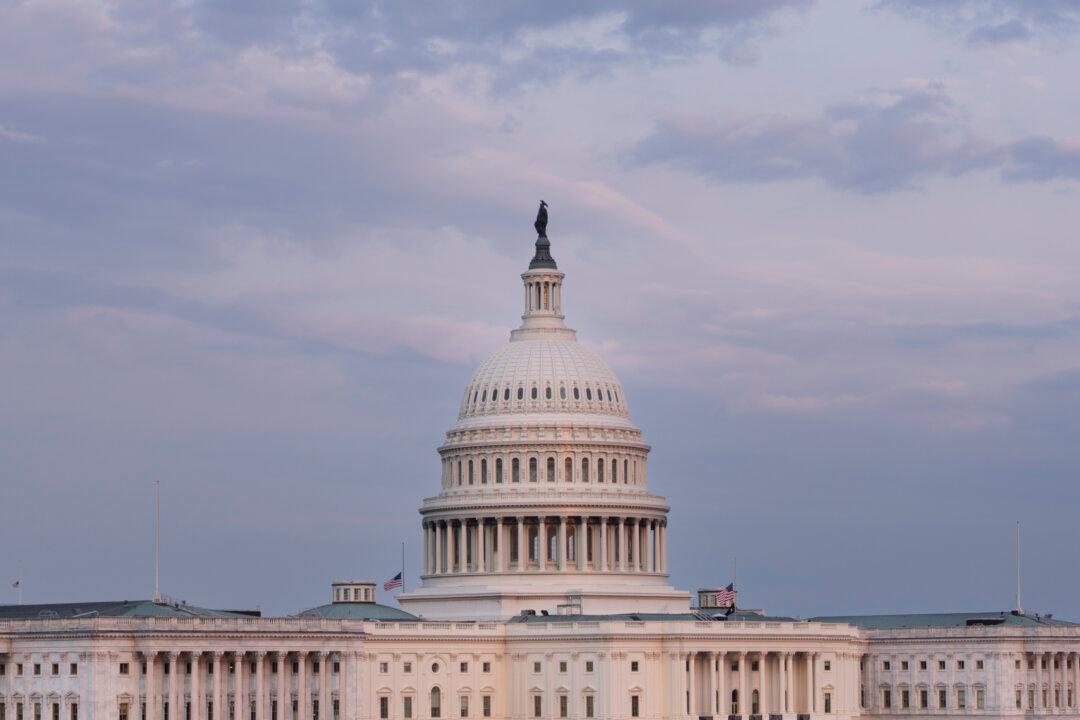
WASHINGTON—The U.S. Senate passed its version of the One Big Beautiful Bill Act at midday on July 1 after a “vote-a-rama” that began the previous day and continued through the night.
Vice President JD Vance broke a 50–50 tie to secure passage of the bill. The passage came 27 hours after an amendment voting session known as a “vote-a-rama.”
Sens. Rand Paul (R-Ky.), Thom Tillis (R-N.C.), and Susan Collins (R-Maine) voted in opposition.
Other holdouts, including Sens. Rick Scott (R-Fla.), Ron Johnson (R-Wis.), Josh Hawley (R-Mo.), and Lisa Murkowski (R-Alaska), ultimately supported the legislation despite misgivings.
Senate Republican leaders cut a deal with holdouts in the final hours before the vote, including boosting a rural hospital fund to $50 billion over five years and removing a tax on wind and solar projects that use components from China.
Moderate Republicans had been concerned that proposed cuts to Medicaid were too steep, while fiscal conservatives have criticized the bill for not cutting enough spending.
Through the night, Majority Leader John Thune (R-S.D.) labored to find agreement among the Republican caucus members, several of whom had submitted amendments to tailor the bill to their liking. The final Senate bill represents weeks of compromise and deal-making among Republicans, which culminated in this narrow victory.
The passage is a significant political win for President Donald Trump, enacting provisions for critical elements of his second-term agenda, including increased border security, the extension of the 2017 tax cuts, rescinding so-called green-energy tax credits, and no tax on tips or overtime.
The bill now moves to the House, where Speaker Mike Johnson (R-La.) now faces the difficult task of corralling both the conservatives and the moderates within his narrow majority in support of the bill.
Congress had been racing to pass the bill through both chambers by a self-imposed deadline of Independence Day, a goal that now seems in doubt as the legislation returns to the House for consideration. But Trump on July 1 suggested he was open to delaying the deadline.
The House is set to vote on the bill on Wednesday morning.
—Lawrence Wilson, Joseph Lord, Nathan Worcester, Jackson Richman
BOOKMARKS
The Supreme Court has kicked several cases, all related to transgender issues, back down to the lower courts for further review. The cases will have to be reconsidered in view of last Friday’s Supreme Court decision upholding Tennessee’s ban on gender-altering procedures for minors.
Donald Trump’s administration is suing Los Angeles over its sanctuary city policies, which Attorney General Pam Bondi says “were the driving cause of the violence, chaos, and attacks on law enforcement that Americans recently witnessed” in that city. Bondi accused the city of trying to thwart federal law, and “prioritizing illegal aliens over American citizens.”
The Democratic National Committee (DNC) is kicking off a new initiative this summer in a bid to gain ground ahead of elections later this year and in 2026. The plan, dubbed “Organizing Summer,” will feature protests, storytelling events, and visits to GOP lawmakers’ offices.
Rep. Donald John “Don” Bacon (R-Neb.) has decided not to seek reelection after representing the Cornhusker State since 2017. Bacon, who has been critical of some aspects of the Trump administration, said he would “like to find new ways to serve our great country.”
Trump signed an executive order lifting sanctions on Syria on Monday, making good on a promise he made last month. The move is designed to help Syria’s continued recovery following the fall of the Bashar al-Assad regime in 2024.