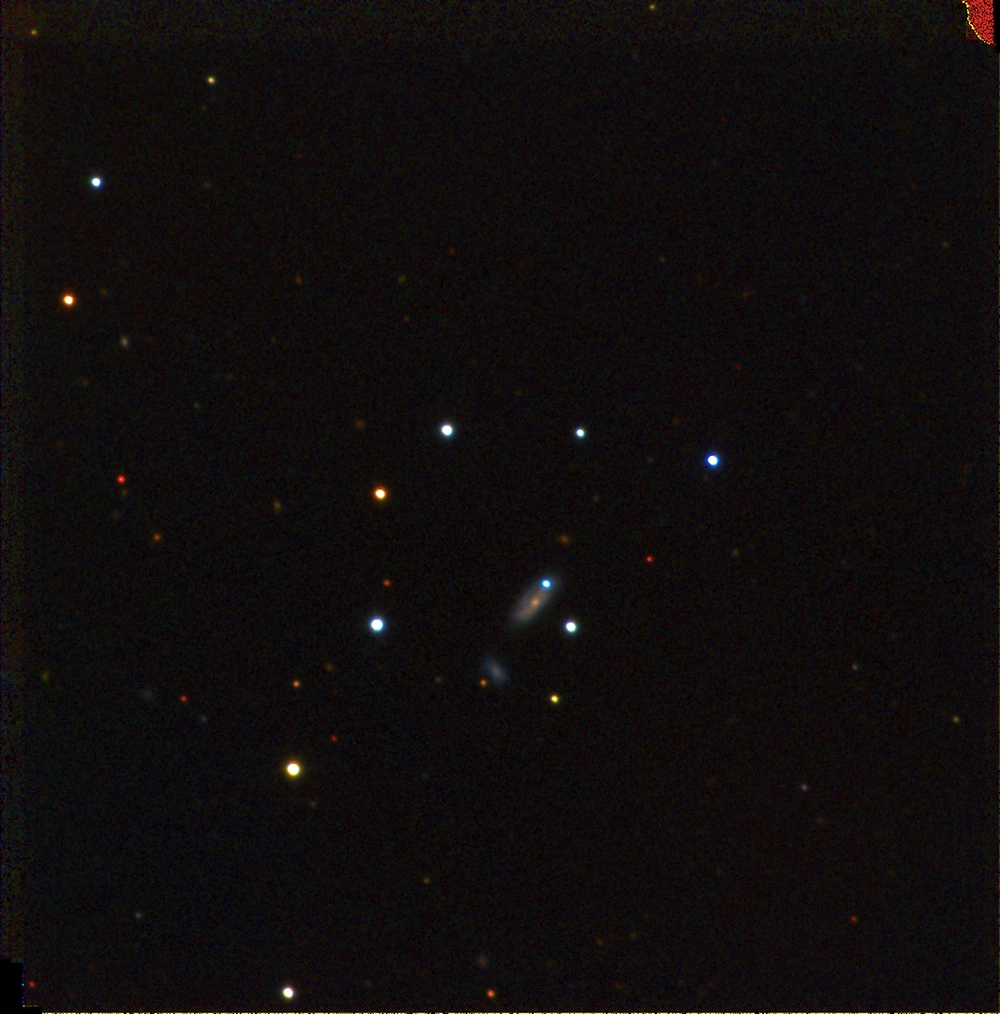
Despite looking alike, thermonuclear or Type Ia supernova explosions come from different types of stars with implications for our understanding of dark energy.
Previous evidence suggested they arose from the merger of two white dwarfs (small dense stars with burned-out cores comparable to our sun). However, the first-ever observations of a supernova progenitor system have shown that some come from recurrent novae—more frequent, weaker eruptions that do not destroy the star.
A multi-institutional research team at the Palomar Transient Factory (PTF) estimates that novae produce between one-tenth of a percent and 20 percent of all Type Ia supernovae.
The different progenitors could explain the variations seen in these so-called “standard candles,” that were used to calibrate our universe and measure dark energy.
In 2011, supernova PTF 11kx was discovered in a galaxy 600 million light-years away. It was surrounded by shells of gas, but the gas was moving too slowly for a supernova, and too fast for a typical stellar wind.
One hypothesis was that material from a previous nova decelerated when it collided with a red giant’s stellar wind. (Red giants are large stars with low mass in a late stage of stellar evolution).
Based on this theory, the fast-moving supernova material would eventually collide with the nova material, which did indeed happen two months after the supernova was observed.
“This was the most exciting supernova I’ve ever studied,” said research leader Ben Dilday at the University of California-Santa Barbara in a press release. “For several months, almost every new observation showed something we'd never seen before.”
Recent studies have shown Type Ia supernovae are not perfect standard candles as their brightness depends on their host galaxy, suggesting it is determined by whether it comes from a white dwarf merger or a nova.
“We don’t think this calls the presence of dark energy into question,” Dilday said. “But it does show that if we want to make progress understanding it, we need to understand supernovae better.”
The findings were published in Science on Aug. 24.
The Epoch Times publishes in 35 countries and in 19 languages. Subscribe to our e-newsletter.