


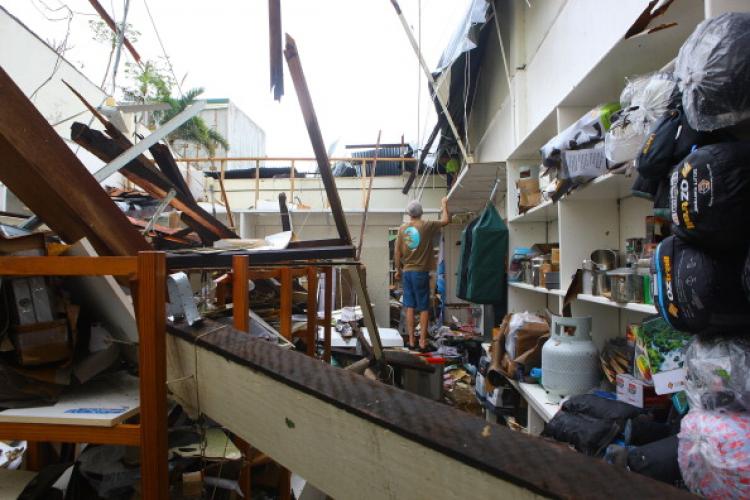
Officials and union leaders say Queensland’s recovery process will present opportunities to address the development of Australia’s infrastructure and preparedness for natural disasters.
Australian Worker’s Union President Paul Howes says investing in “resilient” regional Queensland communities will benefit the State, and the nation, in the future.
“We need a combined effort to rebuild Queensland in ways which take account of the increasing need to construct and build communities…with an eye to the new carbon-friendly economy. Queensland can be the state leading Australia into this new era,” Mr Howes said at a conference of the Property Council in Brisbane.
Experts advise that natural disasters will grow more intense as the climate changes, says Federal Attorney-General Robert McClelland, and accordingly, policymakers need to address the future development of communities.
“We need to adapt our policy framework, we need to adapt operationally and of, course, we need our communities...to be part of our overall strategy in developing resilience,” Mr McClelland told the Australian Strategic Policy Institute at a lunch on March 25.
Mr Howes says Queensland’s decentralised population is an advantage, as regional centres could become the new destination for city dwellers looking to relocate for a simpler life.
The main concern is rebuilding the infrastructure of the state, repairing nearly 1900km of affected state and local roads, as well as bridges and waterways strained by near-constant rainfall.
“I hope it is obvious to everyone that this rebuild cannot simply rely on the favourable attitude of insurance companies.
“The issue is now to ensure that there are processes in place to get the co-operation happening in the most creative way possible at all levels and as efficiently as possible,” said Mr Howes.
Eight weeks after the devastating Cyclone Yasi swept through Queensland, residents in Tully and other regional towns are just now able to start the recovery project, as the rains finally tapered off in mid-March.
Of Tully’s 4000 buildings, nearly 500 are marked for demolition and the lush green hills are now grey, as Yasi’s 257km winds stripped trees and vegetation.
Farmers grow about 2500 acres of bananas in the area and the industry remains under pressure, with prices now up to $10 per kilo versus last year’s $1 per kilo, says Cameron MacKay, president of the Banana Grower’s Association.
Only five years have passed since Cyclone Larry and the repeated disasters have had a long lasting and significant impact on the industry. But Mr MacKay says banana growers are a resilient group and already have recovery strategies in place, like staggered growing and reducing the area of crops.
With the many disasters that have struck not only Australia, but Asia-Pacific neighbours New Zealand and Japan, money for recovery will be tight. Locals expect that Tully will not see the same amount of assistance that Innisfail received after Cyclone Larry in 2006, says local business owner John Hughes.
Residents have taken an active approach while waiting for insurance company approvals. Local residents like Bron Reed, who lost two retail stores in town, says she counts her blessings – she is thankful that her home is undamaged, while many others have had to start anew. While waiting to start the rebuilding, she has been donating blankets and other supplies to the less fortunate members of the community.