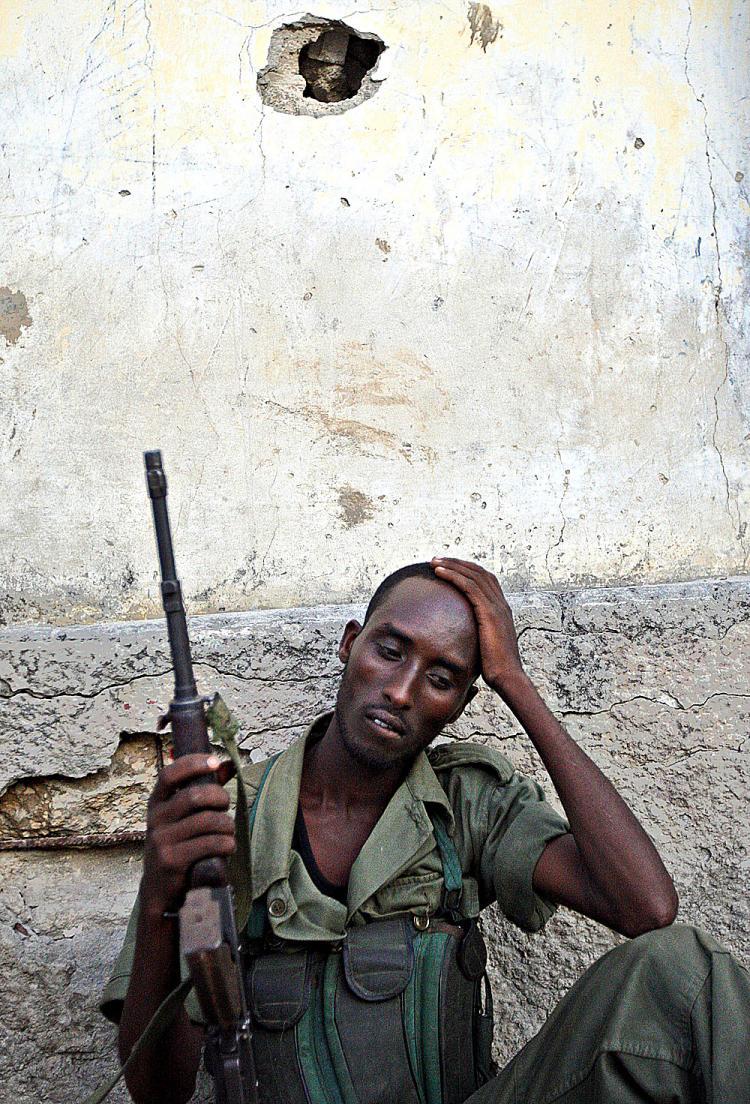
Fourteen private radio stations in the Somali capital of Mogadishu were forced to stop airing music on Tuesday, following orders from Hisbul Islamic insurgents.
The hard-line Islamic group that controls large parts of Somalia gave the stations a 10-day ultimatum to implement the ban, labeling the music as un-Islamic.
“Hizbul Islam officials telephoned some of the stations to remind them of the deadline and warning them of dire consequence should they fail to comply,” the National Union of Somali Journalists said in a statement.
The ban covers of all kinds of music, even commercial jingles, causing the stations to introduce their programs using alternative means, such as the sound of firing gunshots, the noise of a car engine, or animal sounds.
“Journalists working in these stations have in the past witnessed broad daylight assassination of their colleagues and have now been signaled that they would follow the same fate if they do not obey these oppressive orders,” said the Union’s representative Omar Faruk Osman.
The people in Mogadishu can still listen to music on two stations: government radio, protected by African Union peacekeepers, and a U.N.-funded station based in Kenya.
Practicing journalism is a very risky undertaking in Somalia. Last year was the deadliest period for journalists in the country. Nine reporters were killed and twelve more wounded, and four media houses closed down. Many journalists have received death threats, some on a daily basis.
The rival insurgent group in Somalia, al-Shabaab, closed down five BBC relay stations in southern Somalia last week and forbade local stations to retransmit programs produced by the British broadcaster or Voice of America. The militants accused the BBC of “making propaganda for the enemy of Muslims and the Christian agents.”
Somalia has not had a stable government for almost 20 years. Islamic insurgents are trying to topple the current U.N.-backed government, which controls only a small part of the Mogadishu capital.
The hard-line Islamic group that controls large parts of Somalia gave the stations a 10-day ultimatum to implement the ban, labeling the music as un-Islamic.
“Hizbul Islam officials telephoned some of the stations to remind them of the deadline and warning them of dire consequence should they fail to comply,” the National Union of Somali Journalists said in a statement.
The ban covers of all kinds of music, even commercial jingles, causing the stations to introduce their programs using alternative means, such as the sound of firing gunshots, the noise of a car engine, or animal sounds.
“Journalists working in these stations have in the past witnessed broad daylight assassination of their colleagues and have now been signaled that they would follow the same fate if they do not obey these oppressive orders,” said the Union’s representative Omar Faruk Osman.
The people in Mogadishu can still listen to music on two stations: government radio, protected by African Union peacekeepers, and a U.N.-funded station based in Kenya.
Practicing journalism is a very risky undertaking in Somalia. Last year was the deadliest period for journalists in the country. Nine reporters were killed and twelve more wounded, and four media houses closed down. Many journalists have received death threats, some on a daily basis.
The rival insurgent group in Somalia, al-Shabaab, closed down five BBC relay stations in southern Somalia last week and forbade local stations to retransmit programs produced by the British broadcaster or Voice of America. The militants accused the BBC of “making propaganda for the enemy of Muslims and the Christian agents.”
Somalia has not had a stable government for almost 20 years. Islamic insurgents are trying to topple the current U.N.-backed government, which controls only a small part of the Mogadishu capital.