
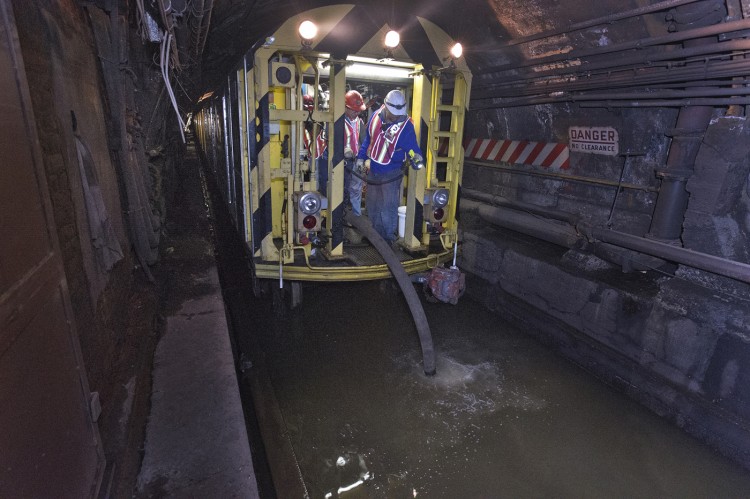
NEW YORK—The New York City subway system—built in large part in the early 1900s—has aged considerably over the years. Money for keeping up maintenance has been hard to find, not to mention protecting the valuable asset against any potential future storms.
“It is like an overcoat handed down through four generations and worn every day, yet never much more than patched when an elbow shows through,” said Projjal Dutta, the first director of sustainability for the MTA, in a Huffington Post op-ed.
“A system which went into service when the current riders’ grandparents were yet unborn, it needs a larger infusion of resources than transit in New York has ever had,” continued Dutta. “The scale of infusion requires political championing and popular consensus-building much beyond what an operating agency can muster.”
Interviews with experts and those directly involved with transit in New York City, and a review of about a dozen documents pertaining to sea level rise and flooding, show that the future of transit protection is as murky as the unprecedented amounts of corrosive saltwater that lingered in subway tunnels for days and weeks, disrupting millions of New Yorkers.