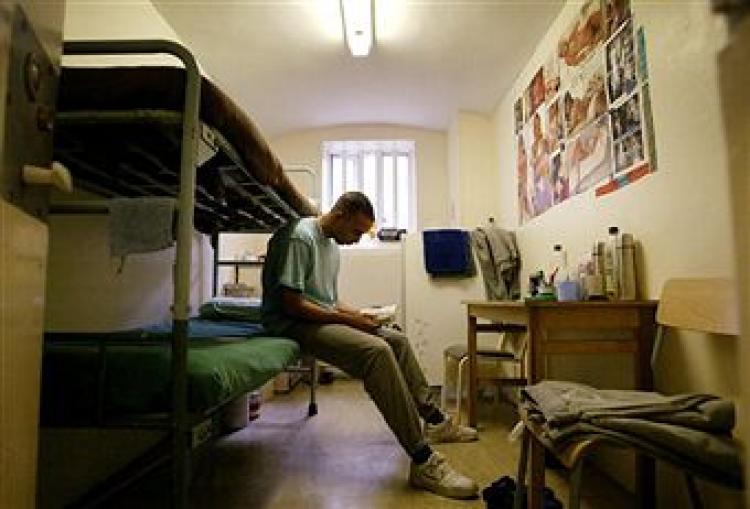
LONDON—The coming general election could be invalid because prisoners cannot vote, says a campaign group.
The group Barred from Voting has pointed out that a European Court ruling nearly five years ago has still not been complied with by the British Government.
Since October 2005, when the European Court of Human Rights (ECHR) passed its ruling against the UK’s ban, the Government has prevaricated with a two-stage consultation process, which has come to no practical conclusion.
Lord Ramsbotham, former chief inspector of prisons for England and Wales, said on BBC Radio on Monday that the Government’s “careful consideration has lasted for longer than World War II”.
In December last year, the Committee of Ministers of the Council of Europe expressed “serious concern as regards the substantial delay in implementing the judgment which creates a significant risk that the next United Kingdom general election, which must take place by June 2010, will be performed in a way that fails to comply with the Convention”.
The Ministry of Justice said last November that the Government believes the “removal of the right to vote from some convicted prisoners can be a proportionate and proper response following conviction and imprisonment”.
This disenfranchisement dates back to the Forfeiture Act 1870 when prisoners were said to lose their citizen rights and suffer “civic death”.
Prisoners on remand were given back their voting rights in an amendment to the Act in 2000.
UNLOCK, the National Association of Reformed Offenders, joined with the Prison Reform Trust to launch the Barred from Voting Campaign in 2005, just prior to the ECHR decision. It has the support of cross-party politicians, church and faith leaders, former offenders, human rights charities, and prison reformers.
The group Barred from Voting has pointed out that a European Court ruling nearly five years ago has still not been complied with by the British Government.
Since October 2005, when the European Court of Human Rights (ECHR) passed its ruling against the UK’s ban, the Government has prevaricated with a two-stage consultation process, which has come to no practical conclusion.
Lord Ramsbotham, former chief inspector of prisons for England and Wales, said on BBC Radio on Monday that the Government’s “careful consideration has lasted for longer than World War II”.
In December last year, the Committee of Ministers of the Council of Europe expressed “serious concern as regards the substantial delay in implementing the judgment which creates a significant risk that the next United Kingdom general election, which must take place by June 2010, will be performed in a way that fails to comply with the Convention”.
The Ministry of Justice said last November that the Government believes the “removal of the right to vote from some convicted prisoners can be a proportionate and proper response following conviction and imprisonment”.
This disenfranchisement dates back to the Forfeiture Act 1870 when prisoners were said to lose their citizen rights and suffer “civic death”.
Prisoners on remand were given back their voting rights in an amendment to the Act in 2000.
UNLOCK, the National Association of Reformed Offenders, joined with the Prison Reform Trust to launch the Barred from Voting Campaign in 2005, just prior to the ECHR decision. It has the support of cross-party politicians, church and faith leaders, former offenders, human rights charities, and prison reformers.