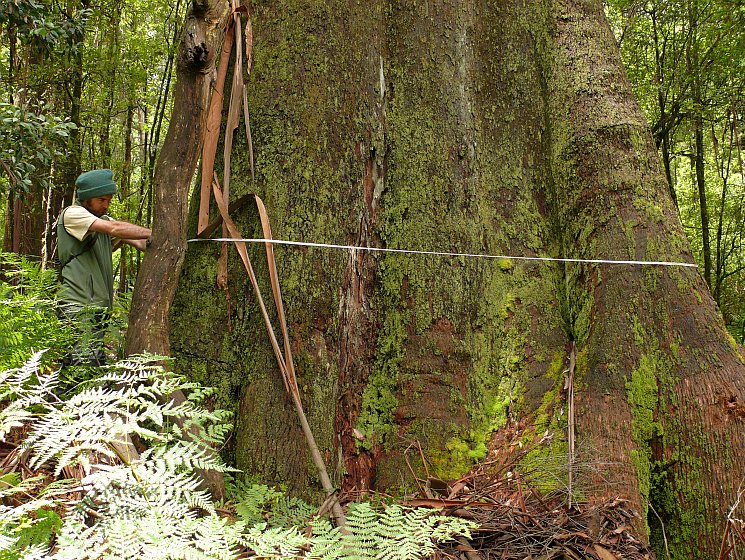
The world’s largest organisms—old-growth trees—are a “barometer of the health of our planet,” says Bill Laurance, professor of Conservation Biology at James Cook University in Australia.
“Their decline foretells a world where ancient behemoths are replaced by weedy, short-lived trees that can grow anywhere, where forests store less carbon and sustain fewer dependent animals,” says Laurance.
New research in Australia and the United States highlights an alarming trend: the decimation worldwide of the awe-inspiring giants—the manna gum, the Australian mountain ash, the giant redwood, and the giant sequoia.
The American poet, John Muir, whose love of the sequoia and other flora native to the United States drew him on frequent and lengthy wilderness sojourns, once wrote, “God has cared for these trees, saved them from drought, disease, avalanches, and a thousand tempests and floods. But he cannot save them from fools.”
According to Laurance, the number of large trees seems to be declining almost everywhere, with the biggest threats being forest fires, logging and land clearing, droughts, exotic weeds, pests, and climate change.