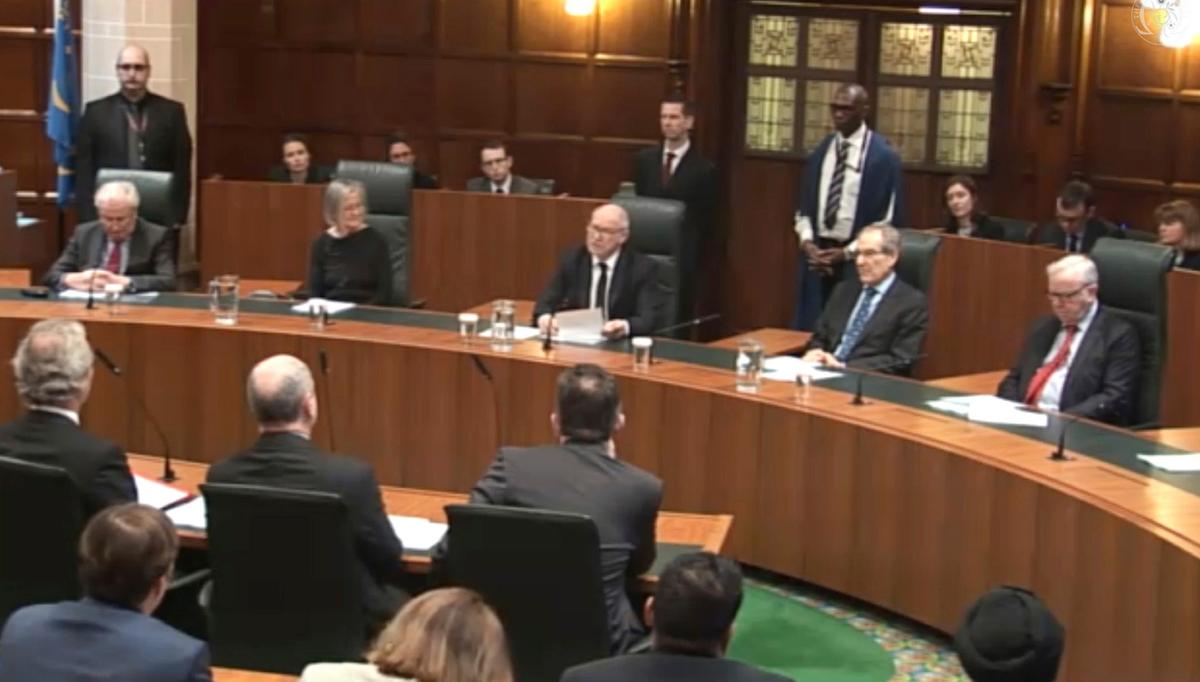
LONDON—Britain’s government must get parliamentary approval before starting the process of leaving the European Union, the Supreme Court ruled Tuesday, potentially delaying Prime Minister Theresa May’s plans to trigger exit negotiations by the end of March.
The 8-3 ruling from the judges forces the government to put a bill before Parliament, giving pro-EU politicians a chance to soften the terms of Brexit—Britain’s exit from the EU. “Leave” campaigners had objected, saying Parliament shouldn’t have the power to overrule the electorate, which voted to leave the bloc in a June 23 referendum.
The Supreme Court’s decision doesn’t mean that Britain will remain in the EU—but it could delay the process. Still, May’s Brexit secretary, David Davis, told the House of Commons on Tuesday that the government timetable remained on track, and that officials would introduce a bill within days.
“There can be no turning back,” Davis said. “The point of no return was passed on June 23 last year.”
May had said she would use centuries-old powers known as royal prerogative to invoke Article 50 of the EU treaty and launch two years of exit talks. The powers—traditionally held by the monarch—permit decisions about treaties and other issues to be made without a vote of Parliament.
“The referendum is of great political significance, but the act of Parliament which established it did not say what should happen as a result, so any change in the law to give effect to the referendum must be made in the only way permitted by the U.K. Constitution, namely by an act of Parliament,” the president of the Supreme Court David Neuberger said in reading the judgement.
“To proceed otherwise would be a breach of settled constitutional principles stretching back many centuries,” he said.
The case was considered the most important constitutional issue in a generation, clarifying who ultimately wields power in Britain’s system of government: the prime minister and her Cabinet, or Parliament.
Financial entrepreneur Gina Miller sued to force the government to seek Parliamentary approval before invoking Article 50. Leaving the EU will change the fundamental rights of citizens and this can’t be done without a vote of lawmakers, she argued.