SYDNEY, Australia—Governments and big business have a responsibility to address climate change, but that does not mean everyone else can wait and see what happens, says Natalie Isaacs, Australian environmental activist and mother of four.
“We have to be part of this. We cannot simply detach from it and say governments have to do it, it’s all big business,” she told the Australian Broadcasting Corporation. “People have a voice and people tell their politicians what to do, so we have incredible influence in this debate.”
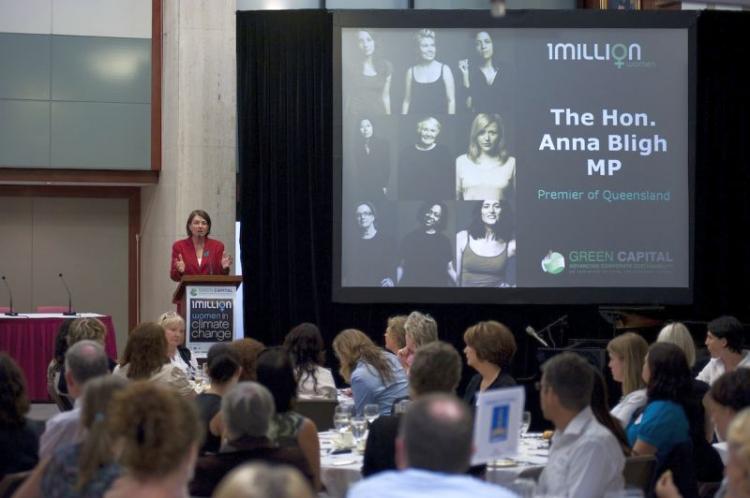
Ms. Isaacs is the initiator of a new campaign, One Million Women, which aims to spring women into action on climate change by getting one million women to sign up to reduce their individual carbon emissions by a ton over one year.
“The thing is, you can’t be part of the debate unless you are taking action yourself, so it doesn’t really matter if action becomes before educational awareness. Just start acting. Without a doubt, action is going to lead to you finding your voice and getting involved in this,” Ms. Isaacs said.
To participate, women are asked to sign up and then choose activities from six different categories: household, food, travel, shopping, flights, and renewable energy.
According to the website, cutting out red meat once a week for the year and replacing it with cereal and fruit can save 430 pounds of carbon dioxide and about 2,650 gallons of water, while saying “no” to wasteful packaging, plastic bags, and bottled water (when tap water is available) can save 330 pounds in carbon emissions.
Ms. Isaacs said women were chosen as the target not because of a feminist leaning, but because women exert enormous influence in today’s market place. Women currently make up 51 percent of voters, they are powerful networkers, and they make around 70 percent of household decisions that affect the size of the carbon footprint, she said.
“This is not about mopping up after men’s mess. We are simply trying to harness the unique strengths and influences of women,” she said.
While one million tons of carbon sounds like an awful lot, and it is (2.3 billion wheel barrels, in fact), Ms. Isaacs is under no illusion that the amount will make a dent in total global emissions. However, it is a “starting point,” she noted.
“You have to look beyond the million tons. Although a million tons is integral to this campaign, it is only the catalyst to empower people to take action on climate change,” she said. “It is taking you along the journey of empowerment in human bite size chunks.”
Judging by the response, women are keen to take these first steps. After only 25 weeks, the One Million Women campaign has already signed up around 13,500 members. Sponsors are serious players, too, and include the New South Wales and Queensland state governments, the Victorian Environmental Protection Agency, British Petrolium, Telstra, KPMG (global network of tax companies), and the World Wildlife Fund.
Listening to reports on the U.N.’s climate change conference in Copenhagen and looking back at the week in Australian politics when the government was unable to get its emissions trading scheme passed in Parliament, Ms. Isaacs said it’s time to act.
“It is enough to say grassroots programs like this are more important than ever. People just have to get involved and take action,” she said.
For more information, visit the One Million Women website at http://www.1millionwomen.com.au/.
“We have to be part of this. We cannot simply detach from it and say governments have to do it, it’s all big business,” she told the Australian Broadcasting Corporation. “People have a voice and people tell their politicians what to do, so we have incredible influence in this debate.”
Ms. Isaacs is the initiator of a new campaign, One Million Women, which aims to spring women into action on climate change by getting one million women to sign up to reduce their individual carbon emissions by a ton over one year.
“The thing is, you can’t be part of the debate unless you are taking action yourself, so it doesn’t really matter if action becomes before educational awareness. Just start acting. Without a doubt, action is going to lead to you finding your voice and getting involved in this,” Ms. Isaacs said.
To participate, women are asked to sign up and then choose activities from six different categories: household, food, travel, shopping, flights, and renewable energy.
According to the website, cutting out red meat once a week for the year and replacing it with cereal and fruit can save 430 pounds of carbon dioxide and about 2,650 gallons of water, while saying “no” to wasteful packaging, plastic bags, and bottled water (when tap water is available) can save 330 pounds in carbon emissions.
Ms. Isaacs said women were chosen as the target not because of a feminist leaning, but because women exert enormous influence in today’s market place. Women currently make up 51 percent of voters, they are powerful networkers, and they make around 70 percent of household decisions that affect the size of the carbon footprint, she said.
“This is not about mopping up after men’s mess. We are simply trying to harness the unique strengths and influences of women,” she said.
While one million tons of carbon sounds like an awful lot, and it is (2.3 billion wheel barrels, in fact), Ms. Isaacs is under no illusion that the amount will make a dent in total global emissions. However, it is a “starting point,” she noted.
“You have to look beyond the million tons. Although a million tons is integral to this campaign, it is only the catalyst to empower people to take action on climate change,” she said. “It is taking you along the journey of empowerment in human bite size chunks.”
Judging by the response, women are keen to take these first steps. After only 25 weeks, the One Million Women campaign has already signed up around 13,500 members. Sponsors are serious players, too, and include the New South Wales and Queensland state governments, the Victorian Environmental Protection Agency, British Petrolium, Telstra, KPMG (global network of tax companies), and the World Wildlife Fund.
Listening to reports on the U.N.’s climate change conference in Copenhagen and looking back at the week in Australian politics when the government was unable to get its emissions trading scheme passed in Parliament, Ms. Isaacs said it’s time to act.
“It is enough to say grassroots programs like this are more important than ever. People just have to get involved and take action,” she said.
For more information, visit the One Million Women website at http://www.1millionwomen.com.au/.