The Second Amendment to the U.S. Constitution guarantees what may be the most uniquely American of all rights. Those 27 words have inspired millions of words in thousands of debates over the Amendment’s meaning and what, if any, limits may apply.
There is no question that firearms played a pivotal role in the birth and growth of the United States of America.
From the Pilgrims’ matchlock muskets and the six shooters carried by cowboys, to the modern semiautomatic rifles wielded by Korean business owners in the Los Angeles riots of 1992, guns are an integral part of American culture.
The right to keep and bear arms is unique, says Amy Swearer, a senior legal fellow with Advancing American Freedom and Second Amendment scholar.
“It’s an incredibly short list [of countries that recognize the right to own guns], and there are none of them have anything in theory or practice that is what I would say [is] a true equivalent of the American right to keep and bear arms,” Swearer told The Epoch Times.
Based on sales data, permit applications, background checks and other factors, there are an estimated 400 million to 500 million firearms in civilian hands in the United States, according to the Sixguns Fraternity. This is an average of two firearms for every person over age 18.
Yet, while America celebrates 250 years as a society that honors the individual right to keep and bear arms, gun ownership remains one of the nation’s most divisive issues.
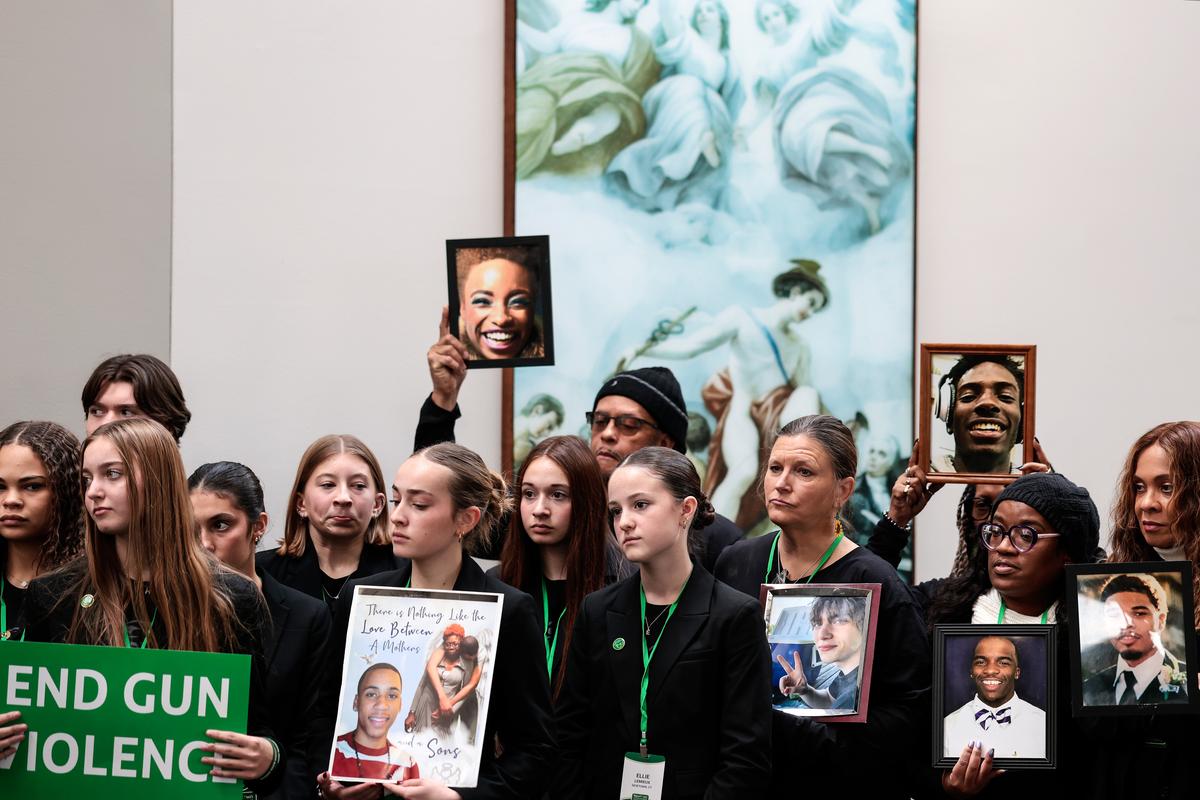
Gun control groups did not respond to emails seeking comment for this article, but many have posted their concerns online. Gun control advocates say violence intervention strategies, strict gun control—including bans—and tighter regulation of the firearms industry are elements of common-sense gun laws.
They point to high-profile stories of mass shootings, school shootings, and violent crime involving firearms.
“The gun homicide rate in the U.S. is 26 times higher than that of other developed countries, but research shows that common-sense public safety laws can reduce gun violence and save lives,” Everytown for Gun Safety, states on its website.

The group, along with others, say gunshots are the number one cause of death for American children.
“Unintentional injury deaths include a wide array of mechanisms, with the four most common being: poisoning, motor vehicle crashes, drowning, and falls,” Garnett wrote.
Second Amendment activists say gun control policies harm law abiding citizens rather than criminals. They say the data presented by gun control organizations are cherry-picked or manipulated to get the desired result.
Gun Owners of America says Everytown skews its data on children killed by firearms because it includes 18- and 19-year-olds. Generally, most data involving children only includes children aged 1 to 17, while 18- and 19-year-olds are considered adults.
Public safety has always played a role in American gun legislation, says Robert J. Spitzer, professor emeritus at the State University of New York, College at Cortland.
This includes laws on where and how guns could be carried, who could own them, and which arms are protected by the Second Amendment.
Spitzer has written extensively on the Second Amendment. In a 2017 article published by Duke University, “Gun Law History in the United States and Second Amendment Rights,” he describes gun laws from pre-Revolutionary times to the modern day.
He contends that while America has a “wild west” reputation, it has also worked to tame that reputation. Spitzer wrote that “stand-your-ground” laws, the unlicensed carry of firearms, allowing those younger than 21 to legally carry a gun in public, and similar policies, do not align with America’s tradition of gun regulation.
“[These] laws are not a return to the past. They are a refutation of America’s past, and a determined march away from America’s gun regulation tradition,” Spitzer wrote. “And these changes have nothing to do with improving safety or security in society, but everything to do with politics.”
So, what did the founders have to say? How did they view guns and their impact on public safety? And what route have the courts taken in trying to answer those questions?
Founding View of Guns
The founders appear to have considered the ability to defend oneself a responsibility as much as a right. As Englishmen and lawyers, they studied English Common Law. Most of them were familiar with the “Commentaries on the Laws of England,” by Sir William Blackstone.
Blackstone was an English jurist and legal scholar. His commentaries are considered an authoritative text when it comes to English law.
In the first chapter, Blackstone outlines the process for relief when a person’s rights are violated or they are violently attacked. The first avenue is the court and the law, according to Blackstone. If that fails, the next step is a petition to the King and Parliament, and “lastly to the right of having and using arms for self-preservation and defense.”
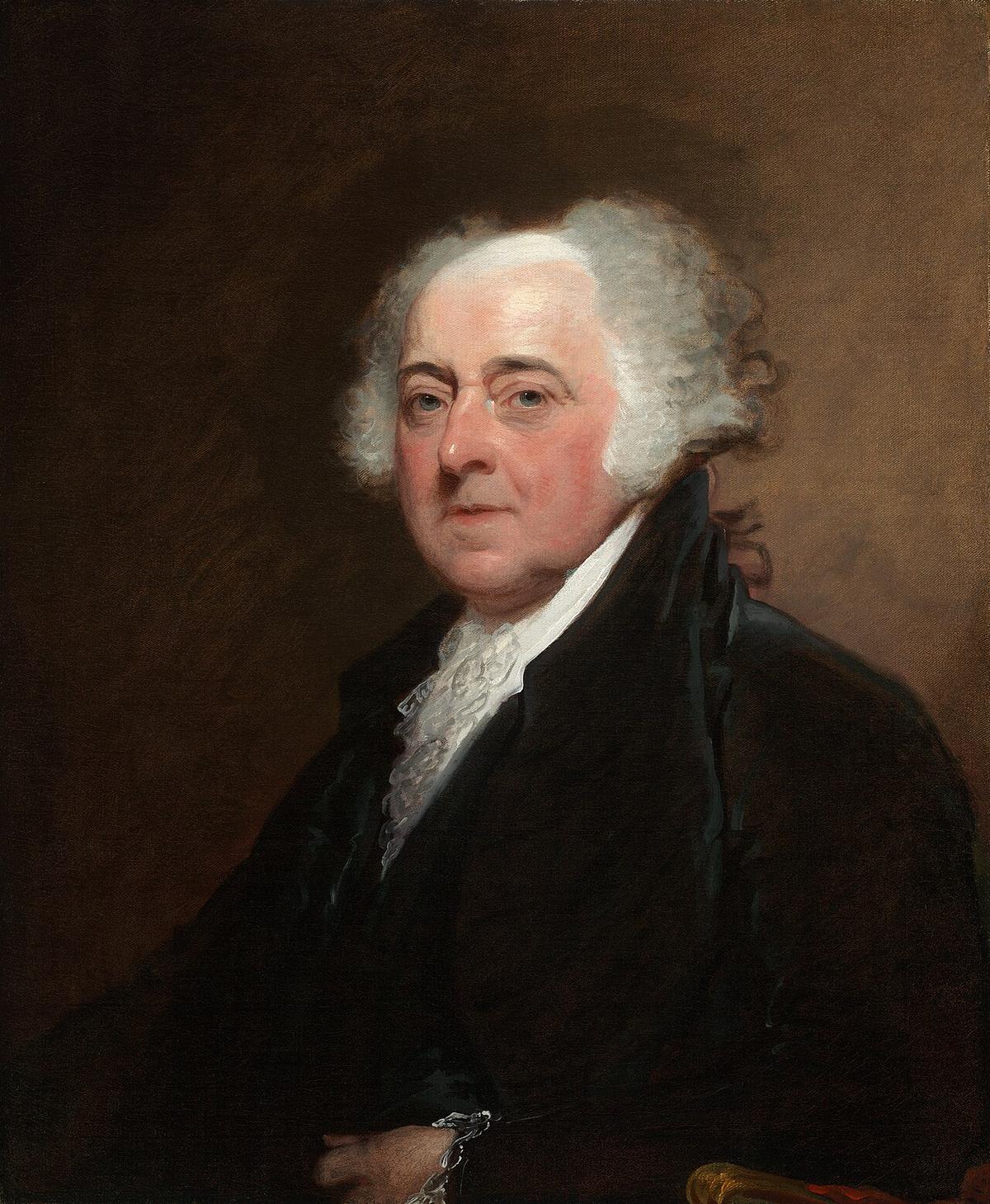
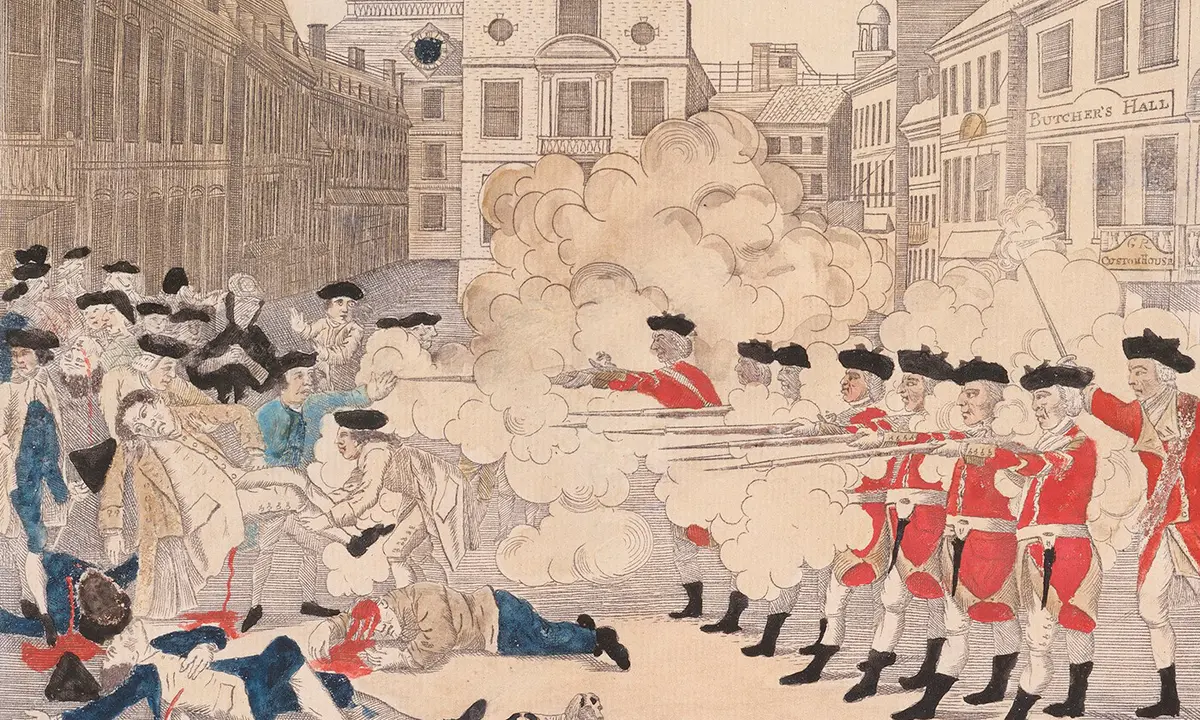
The right to be armed for self-defense underpinned legal arguments John Adams, Founding Father and second U.S. president, made when defending British soldiers charged with murder in the 1770 “Boston Massacre.” His argument, voiced before there was a second amendment, informs his, and other founders’, world view on the matter.
On March 5, 1770, a group of colonists was berating a British soldier guarding the Customs House in Boston. British Army Capt. Thomas Preston brought a squad of seven soldiers to support the lone guard.
As the situation grew tense, one of the soldiers fired his musket. Thinking the order to fire had been given, the others followed suit. Three colonists, including a black sailor named Crispus Attucks, were killed immediately. Two others died later.
Adams, Josiah Quincy Jr., and Robert Auchmuty, Jr., represented Preston in court. Adams argued that the soldiers had every reason to believe they were in danger.
“Here every private person is authorized to arm himself, and on the strength of this authority, I do not deny the inhabitants had a right to arm themselves at that time, for their defence, not for offence, that distinction is material and must be attended to,” Adams stated.
Preston was acquitted of his murder charges.
Civilian gun ownership is necessary for a “well-regulated militia,” according to Stephen Halbrook, a Fairfax, Virginia-based attorney and senior fellow with the Independent Institute.
“It was considered a duty,” Halbrook told The Epoch Times.
Halbrook pointed out that the first settlement at Jamestown, Virginia, almost failed partly because of conflict with Indians who were hostile to the colonists.
“You had a responsibility ... to have arms in your home and basically to carry them around with you. After the Constitution comes into being in 1792 the federal militia laws ... required, that every able-bodied white male citizen would have to provide arms for himself and enroll in the militia, and to go when called to duty,” Halbrook said.
This was outlined by Alexander Hamilton in Federalist Paper No. 29. Hamilton explained that the militia consists of armed residents prepared to defend themselves and their communities.
According to Hamilton, “well-regulated” means the members will “acquire the degree of proficiency in military functions which would be essential to their usefulness.” While Hamilton called on the federal government to support the militias, he stressed that they would operate under local authority.
“Reserving to the states respectively the appointment of the officers, and the authority of training the militia according to the discipline prescribed by Congress,” Hamilton wrote.
The federal government has a militia law, 10 U.S. Code § 246 - Militia: Composition and Classes, as do 45 states.
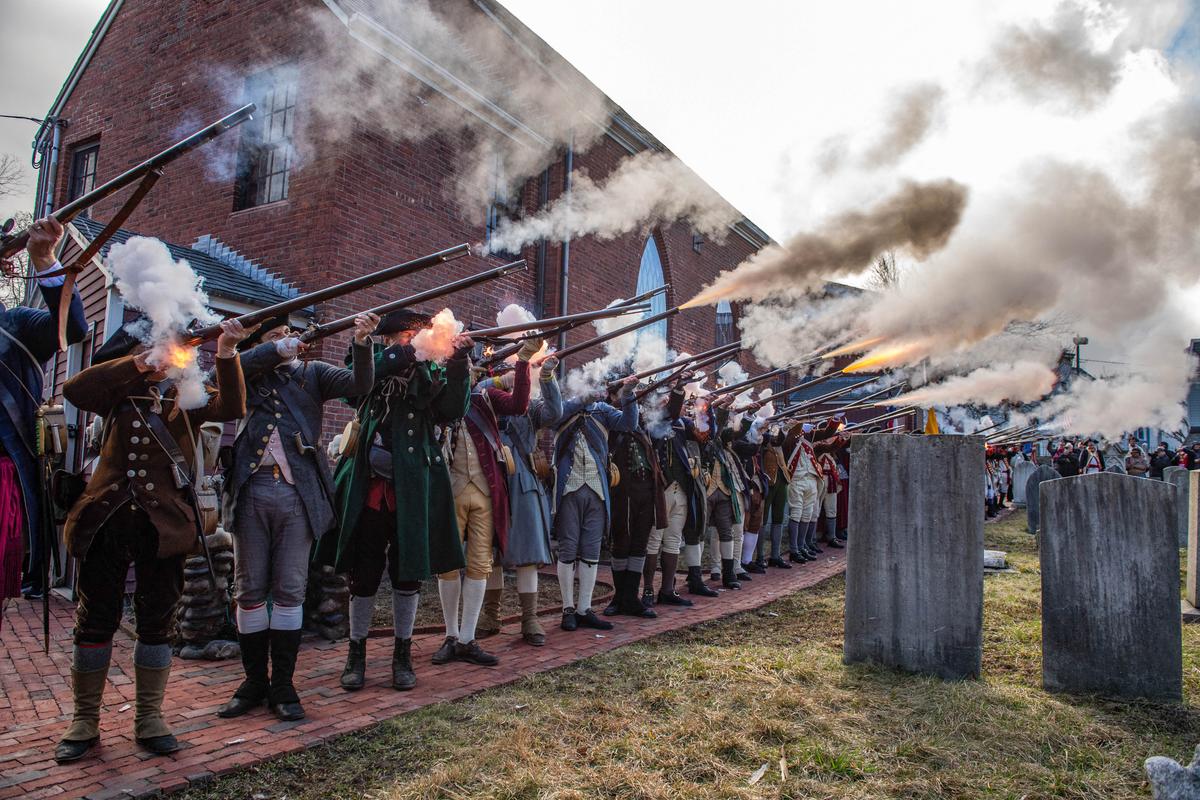
The federal law states that the unorganized militia is made up of all able-bodied males between the ages of 17 and 45 who are not members of the National Guard or Naval Militia, and females who are members of the National Guard and Naval Militia.
Nevada, Montana, Wyoming, North Dakota, and West Virginia do not have established militias. Twenty-two states have active militias, though Connecticut’s militia is ceremonial. The rest of the state militias are inactive unless they are called to service.
Self-Defense
Swearer said that America has drifted away from the original intent of the militias. But there have been militia-style actions.
During the 1992 Los Angeles riots that erupted after four police officers were acquitted of charges stemming from the March 3, 1991, beating of Rodney King, several Korean business and property owners took up arms to defend their homes and businesses.
As the riots spread into the area known as Koreatown, many business owners and residents noticed that police were standing by, watching. So, the Korean residents armed themselves, got on their roofs, and held off the rioters. They became known as the “Rooftop Koreans.”
“It is arguably a militia usage. It’s that same understanding of the people protecting themselves when the government fails to protect them,” Swearer said.

It was hardly the first time Americans armed themselves to defend their property. The United States was born in armed conflict.
Halbrook said that around the time of the Boston Massacre, the first gun control laws were passed. As Spitzer noted in his article, many of the laws were focused on public safety.
Firearms regulations from this era covered brandishing firearms, bans on certain types of weapons, carry restrictions, dueling, hunting, inspection of gun manufacturing facilities, and storage requirements, and the responsible discharge of firearms, among others.
There were also laws on who could possess guns. Halbrook said the main objective was to prevent certain groups from being armed.
For example, in his article, Spitzer points out that in 1619 the first General Assembly made it illegal to sell guns, powder, or shot, to Indians. A person convicted under the law faced hanging.
As part of a law requiring church attendance, the General Assembly included language requiring that “all such as bear arms shall bring their pieces, swords, powder and shot.” Though not specified in the law, the likely reason for this requirement is to defend the colonists gathered in the church.
These early gun prohibitions were not focused as much on the guns as who could carry them. And, like the colonial governments, America has prohibitions on who can keep and bear arms.
Today, as in those early days, the United States prevents felons, the mentally ill, and others who could be considered dangerous to society from legally owning firearms. This was upheld in the 1980 U.S. Supreme Court case, Lewis v. U.S.
In that case, the court ruled that under the Omnibus Crime Control and Safe Streets Act of 1968, “the fact of a felony conviction imposes firearm disability until the conviction is vacated or the felon is relieved of his disability by some affirmative action,” such as having his rights legally restored.
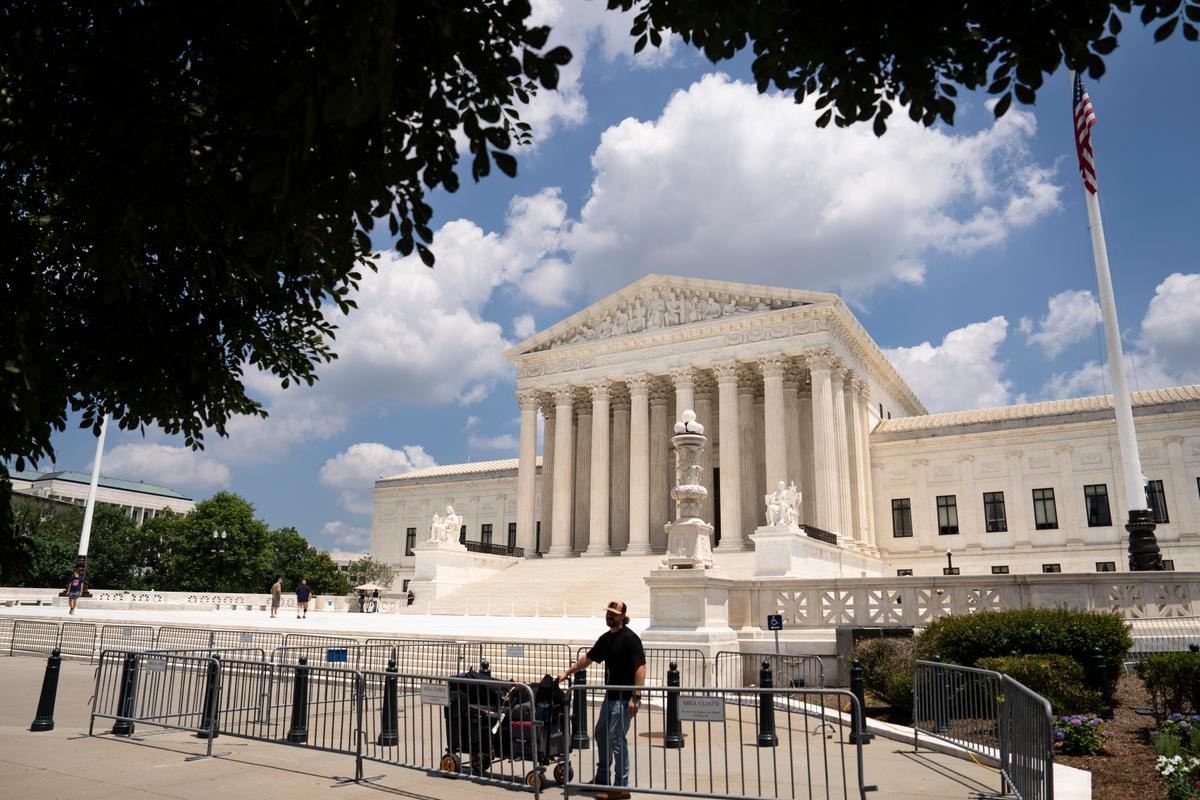
This legal concept was affirmed in the June 2024 decision in United States v. Rahimi, when the court ruled that disarming people deemed by a court to be dangerous aligns with the Second Amendment.
According to the court record, Zackey Rahimi, of Arlington, Texas, abused his girlfriend. Subsequently, she won a domestic violence restraining order against him. Rahimi was disarmed under 18 USC 922 (g) (8), the federal law that bars people under such an order from possessing or purchasing firearms.
After agreeing to the order, he assaulted another woman and was involved in at least five shootings. His firearms were confiscated because of the restraining order. Rahimi appealed the confiscation to the Court of Appeals for the Fifth Circuit, which found the law unconstitutional.
The Supreme Court reversed that.
“Since the Founding, the Nation’s firearm laws have included regulations to stop individuals who threaten physical harm to others from misusing firearms,” the decision states. “As applied to the facts here, Section 922(g)(8) fits within this tradition.”
In a subsequent case, United States v. Hemani, the court in June 2026 rejected the idea that the federal government could automatically strip someone of their right to bear arms based on the mere fact that they took drugs. Writing for the majority, Justice Neil Gorsuch indicated more consideration was needed over whether the individual had lost their capacity to reason.
Gentleman’s Honor
Halford said it wasn’t until the early 19th Century that the first laws resembling modern gun control were passed. He said that in 1813 Kentucky and Louisiana passed laws prohibiting the concealed carry of weapons, including knives and other weapons.
He pointed out that the first such laws were passed in the South, but it was years before northern states passed similar laws. Halbrook said the new law had more to do with the concept of a Southern gentleman’s honor.
“In Kentucky ... you had the code of dueling ... and it would be ungentlemanly to carry an arm concealed,” Halbrook said. “It was kind of a macho thing ... only a person with bad intentions would hide [his weapons].”

Prohibitions based on politics, race, and similar factors did not fare well with the judicial system.
In the 1857 Dred Scott decision, the Supreme Court found that slaves were not citizens and did not have Constitutional rights, including Second Amendment rights.
“It cannot be believed that the large slaveholding States regarded them as included in the word citizens ... to keep and carry arms wherever they went,” the decision reads in part.
In 1865, the Freedman’s Bureau was established to ensure that freed slaves enjoyed the same civil rights as other Americans, including their Second Amendment rights. Though there were subsequent attempts to deny black Americans their civil rights, the court has generally ruled those laws unconstitutional.
In the following decades, a variety of gun laws were passed with the objective of promoting safety or preventing crime. Three of the most notable are the National Firearms Act of 1934, the Gun Control Act of 1968, and the Firearms Owners Protection Act of 1986.
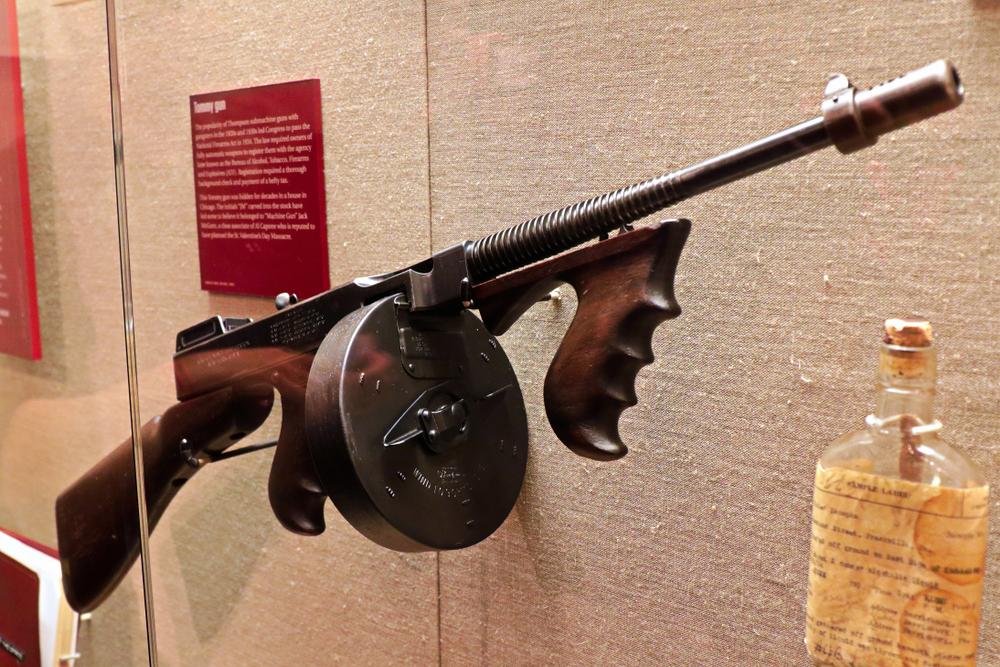
The National Firearms Act was a response to organized crime in the 1920s and 1930s. The law designated some weapons as dangerous or unusual. These included fully automatic machine guns, short-barreled rifles and shotguns, and silencers.
Backers of the law knew it was doomed as a gun-control measure. So, it was passed as Congress exercising its taxing authority. But, according to the Bureau of Alcohol, Tobacco, Firearms, and Explosives (ATF) website, the tax was a secondary purpose.
“Its underlying purpose was to curtail, if not prohibit, transactions in [National Firearms Act] firearms,” the website states.
Only Federal Firearms License holders who pay a $200 tax can deal in National Firearms Act items. The tax, which remained $200 until last year when it was reduced to $0, was meant to inhibit ownership of National Firearms Act items.
The Gun Control Act corrected the constitutional problems in the National Firearms Act.
In 1968, the Supreme Court found in Haynes v. United States that forcing a person to register a National Firearms Act item, then prosecuting that person using information from the registration process violated the Fifth Amendment’s protection against self-incrimination.
In 1986, the Firearm Owners’ Protection Act was enacted. It added to the definition of “silencer” combinations of parts, and any part to make a silencer to the list of National Firearms Act items. It also prohibited the transfer or ownership of machine guns except for state and law enforcement agencies, and machine guns lawfully owned prior to May 19, 1986.
But in the 2000s, three landmark decisions was issued that turned the gun debate upside down.
Supreme Court Returns to History
Prior to 2008, the courts used a two-step “means test” to determine if a gun law was constitutional. Under this method, courts considered whether a law would obtain a favorable objective—such as crime reduction—even if it did not strictly align with the text of the Second Amendment.
It was accepted that a law might infringe on the right, but that could be acceptable if the end result outweighed the degree of restriction.
In its June 2022 decision in New York State Rifle and Pistol Association v. Bruen the court said the two-step approach was excessive.
By a 6–3 vote, the court concluded that the standard for applying the Second Amendment was determining whether the gun control policy was consistent with the nation’s history and tradition. The court also found that New York State’s licensing scheme, along with prohibitions on carrying guns in public, were unconstitutional.
Writing for the majority, Justice Clarence Thomas said any gun control law must align with the Second Amendment’s language and have a “historical analog” from the time of the Amendment’s ratification to pass constitutional muster.
This meant that if the law covered the activity listed in the amendment, specifically keeping and bear arms, it was unconstitutional unless a similar law existed around the time of the amendment’s ratification.
The Bruen decision shook the gun debate and will impact Second Amendment cases for years to come. Two other Supreme Court rulings helped set the stage for the landmark decision.

In the 2008 case of District of Columbia v. Heller, the high court ruled that the Washington’s prohibition on handguns, and requirements that privately owned guns be kept unloaded under lock and key, violated the Second Amendment.
In Heller, the court found that the Amendment protects an individual right to carry firearms for protection, which the District’s law made all but impossible.
Then on June 28, 2010, the Supreme court ruled 5–4, in MacDonald v. Chicago, that the Second Amendment applied to state and local governments, as well as to the federal government.
Post-Bruen Developments
After Bruen, some states with strict gun laws, including New York, California, Hawaii, Illinois, Rhode Island, and others doubled down passing so-called “Bruen response laws.”
Hawaii implemented a law prohibiting firearms on all private property open to the public unless the property owner gives express permission to gun owners to carry on their property.
The Supreme Court recently struck down that law in Wolford v. Lopez, ruling that it placed an undue burden on licensed gun owners.
Rhode Island, Virginia, and Illinois banned certain semiautomatic firearms, so-called assault weapons. New York and California instituted background checks for ammunition purchases in 2023.
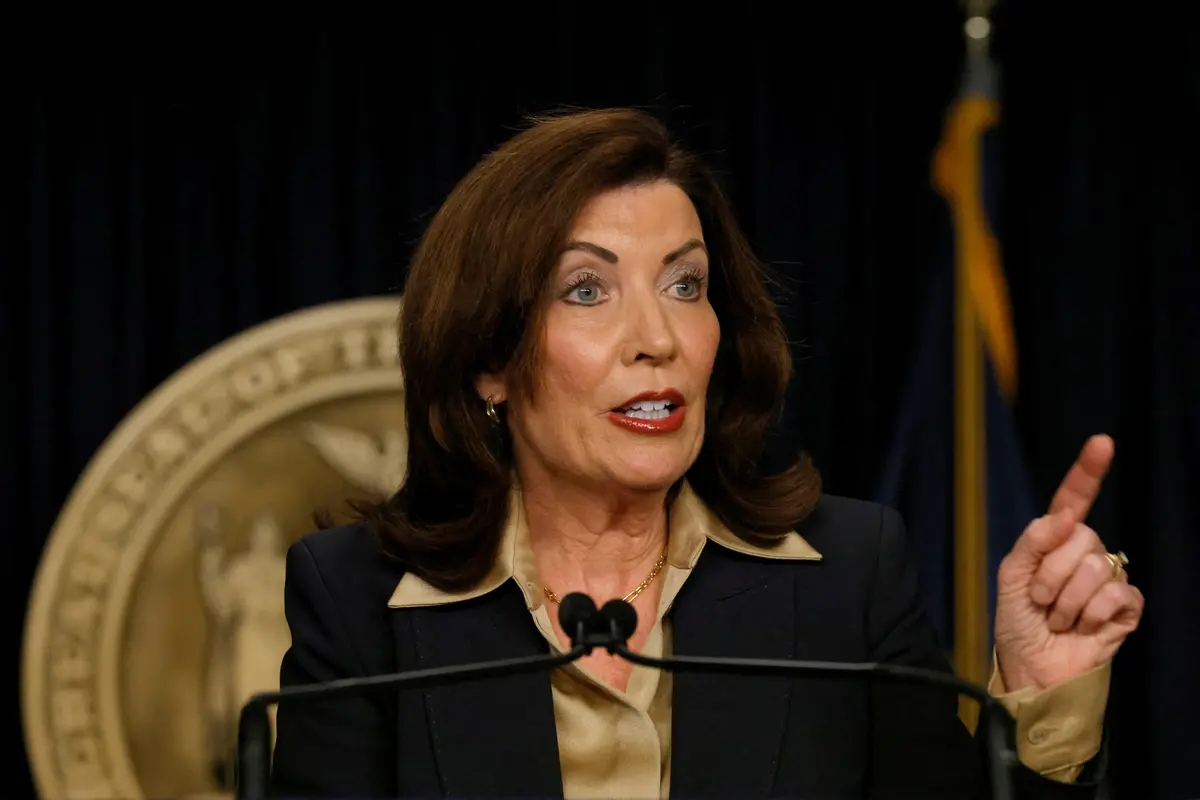
As she announced the ammunition background check law, New York Gov. Kathy Hochul said her state was dedicated to promoting gun safety.
“We know this has nothing to do with lawful gun owners, nothing to do with them at all. These are people who have been convicted of felonies or other categories of people that should be prohibited from firearms and ammunition,” she said.
At the time, President Joe Biden was in the White House and had successfully implemented much of his agenda to increase firearms regulation. The Bipartisan Safer Communities Act, which included funding for violence intervention programs as well as stronger gun control laws, was enacted in 2022.
Biden opened an Office of Gun Violence Prevention in the White House. The Bureau of Alcohol, Tobacco, Firearms, and Explosives was taking a much tougher stand on regulating firearms manufacturers and dealers through its zero-tolerance policy, and he was making strides toward implementing universal background checks.
Gun rights advocates, on the other hand, have been energized by the Supreme Court decisions, as well as what they consider to be a pro-Second Amendment president in Donald Trump.
Trump is currently 18 months into his second term. He closed the office in the White House, dismantled almost all of Biden’s gun control programs and opened a Second Amendment office in the Department of Justice’s Civil Rights Division.
Gun rights activists said there is more to be done. They are calling for the repeal of the National Firearms Act and Gun Control Act, the shutdown of the ATF, and the destruction of billions of gun sales records, which they say the agency is using to build an illegal registry.
The ATF denies it has such a registry.
The experts say that, like all the other constitutional rights, the Second Amendment will continue to be examined and possibly limited or expanded.
Halbrook offered advice for gun owners that could be applied to either side of the debate.
“They have to pay attention to politics, they have to vote, they have to support candidates who are going to be on their side, and they have to vote against those who are against them,” Halbrook said.
“I mean, I think it really boils down to you have to participate in the political system.”