Over the past few years, headshots and the damage resulting from them have become a growing concern for coaches and general managers throughout the NHL.
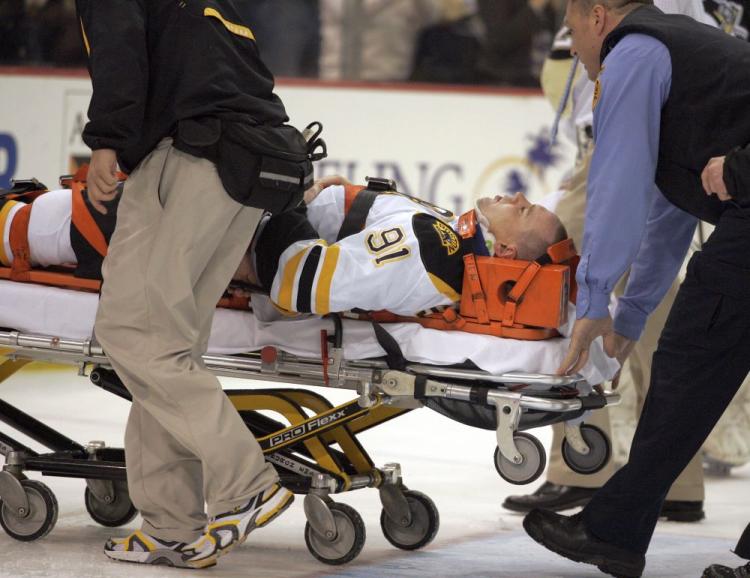
That concern developed into an outcry after Boston Bruins center Marc Savard was knocked unconscious by a blind side hit by Pittsburgh forward Matt Cooke last Sunday in the closing minutes of the third period.
As Savard let off a shot on goal, Cooke skated in from his blind side and smashed his elbow into Savard’s head, causing him to tumble to the ice where he lay motionless for several minutes while team doctors scrambled to his aid.
Luckily for injured Savard, he was able to move his arms and legs after being put on a stretcher. But for the NHL, the brutal hit was the final straw and general managers knew they had to act.
On Wednesday, all 30 general managers voted unanimously to propose a new rule prohibiting blind side hits to the head—calling for players who do deliver such hits to be subject to a minor or major penalty.
Toronto Maple Leafs GM Brian Burke spoke about the proposed rule change with NHL.com, “We need to tell our players what’s acceptable and what’s not going forward. We have to take this hit out of the game.”
For repeat offenders like Cooke, the rule change won’t punish them this season, but next season it will be a much different story.
Cooke’s hit was similar to the one delivered by the Flyers’ Mike Richards on David Booth of the Florida Panthers on Oct. 24. After being crushed by an elbow to the head Booth missed 45 games. Richards was penalized with a five-minute major for interference and a game misconduct, but that was the extent of the punishment.
In Savard’s case, Cooke wasn’t even penalized, which infuriated his Boston teammates and coaches even more.
Over the past four seasons, players have suffered more than 150 concussions due to hits to the head, with over 20 percent of them coming from shoulder hits.
Part of the problem may be attributed to the tinkering done by league officials after the 2004–05 lockout which removed the red line and sped up the game, giving players more freedom across the ice and forcing opposing players to slow them down with hits. However with the increased speed and mobility, it also raised the chances for injury.
Burke commented, “The game has evolved. We’ve made the game faster and created a new hitting area, which is on the back-pressure side.”
NHL Senior Vice President and Director of Hockey Operations Colin Campbell added, “We increased the speed of this game ten-fold, and in doing that we also increased the collision force in these hits.”
Throw in the fact that players today are bigger than they were 20 or 30 years ago, and it’s a recipe for disaster.
Speed of the game aside, there’s also the issue of respect. Do players in today’s sports have less respect for the well being of their opponent than they did years ago? And is this a contributing factor?
For years, players in the NHL seemed to avoid such hits in favor of body checks. Perhaps it’s because they didn’t wear helmets back then and knew that such vicious hits could end someone’s career. Or maybe they just had more respect for the game and other players.
Whatever the reasons, blind side hits have to be removed. And removing them won’t pacify the game. There’s still fighting and plenty of hard hitting to keep things interesting, for certain fans.
Burke assured fans that the game won’t skip a beat, saying, “Anywhere else on the planet you go, there’s not as much hitting as there is in our game. We want to keep that, we want to preserve that. But we want to take out a dangerous hit where a guy targets a guy’s head.”
That concern developed into an outcry after Boston Bruins center Marc Savard was knocked unconscious by a blind side hit by Pittsburgh forward Matt Cooke last Sunday in the closing minutes of the third period.
As Savard let off a shot on goal, Cooke skated in from his blind side and smashed his elbow into Savard’s head, causing him to tumble to the ice where he lay motionless for several minutes while team doctors scrambled to his aid.
Luckily for injured Savard, he was able to move his arms and legs after being put on a stretcher. But for the NHL, the brutal hit was the final straw and general managers knew they had to act.
On Wednesday, all 30 general managers voted unanimously to propose a new rule prohibiting blind side hits to the head—calling for players who do deliver such hits to be subject to a minor or major penalty.
Toronto Maple Leafs GM Brian Burke spoke about the proposed rule change with NHL.com, “We need to tell our players what’s acceptable and what’s not going forward. We have to take this hit out of the game.”
For repeat offenders like Cooke, the rule change won’t punish them this season, but next season it will be a much different story.
Cooke’s hit was similar to the one delivered by the Flyers’ Mike Richards on David Booth of the Florida Panthers on Oct. 24. After being crushed by an elbow to the head Booth missed 45 games. Richards was penalized with a five-minute major for interference and a game misconduct, but that was the extent of the punishment.
In Savard’s case, Cooke wasn’t even penalized, which infuriated his Boston teammates and coaches even more.
Over the past four seasons, players have suffered more than 150 concussions due to hits to the head, with over 20 percent of them coming from shoulder hits.
Part of the problem may be attributed to the tinkering done by league officials after the 2004–05 lockout which removed the red line and sped up the game, giving players more freedom across the ice and forcing opposing players to slow them down with hits. However with the increased speed and mobility, it also raised the chances for injury.
Burke commented, “The game has evolved. We’ve made the game faster and created a new hitting area, which is on the back-pressure side.”
NHL Senior Vice President and Director of Hockey Operations Colin Campbell added, “We increased the speed of this game ten-fold, and in doing that we also increased the collision force in these hits.”
Throw in the fact that players today are bigger than they were 20 or 30 years ago, and it’s a recipe for disaster.
Speed of the game aside, there’s also the issue of respect. Do players in today’s sports have less respect for the well being of their opponent than they did years ago? And is this a contributing factor?
For years, players in the NHL seemed to avoid such hits in favor of body checks. Perhaps it’s because they didn’t wear helmets back then and knew that such vicious hits could end someone’s career. Or maybe they just had more respect for the game and other players.
Whatever the reasons, blind side hits have to be removed. And removing them won’t pacify the game. There’s still fighting and plenty of hard hitting to keep things interesting, for certain fans.
Burke assured fans that the game won’t skip a beat, saying, “Anywhere else on the planet you go, there’s not as much hitting as there is in our game. We want to keep that, we want to preserve that. But we want to take out a dangerous hit where a guy targets a guy’s head.”