The initial objectives of the new offensive against the Taliban in Afghanistan have been achieved with minimal interference from the insurgents, Britain’s Ministry of Defense said on Sunday. The operation took place in the Southern Afghan province of Helmand, the world’s largest opium-producing region, which is an important revenue source for the Taliban.
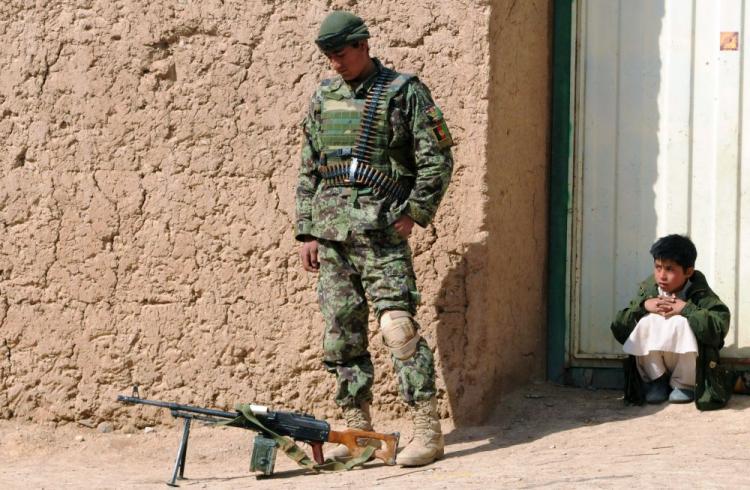
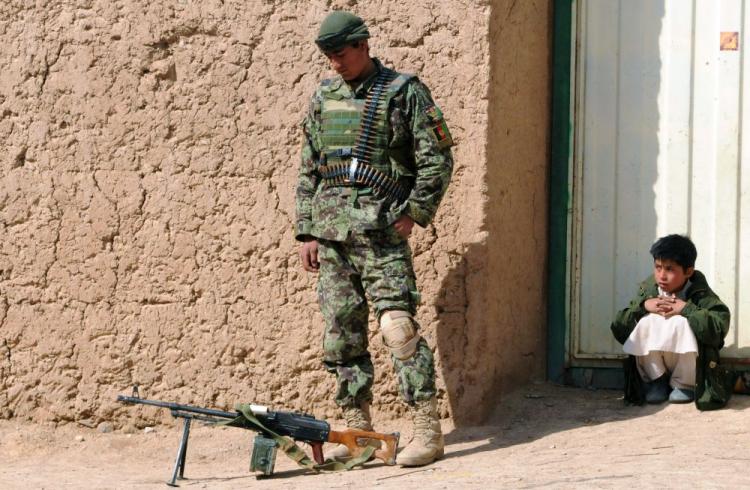
For the first time, the soldiers of the Afghan state army are fighting together with U.S. and British troops in a joint military action called Moshtarak, which means “together” in the local Dari language.
The goal of the largest operation since 2001, when the U.S.-led invasion in Afghanistan started, is to push the Taliban out of the province to establish government control in the area using the local police.
The offensive began on Saturday before dawn, with choppers deploying around 4,000 NATO paratroopers near the city of Marja, one of the Taliban’s strongest bases in the country. About 15,000 Afghan and foreign troops are involved in the operation.
The large number of landmines, which insurgents buried along the roads and inside the city before the offensive took place, slowed down the progress of the coalition forces. The Taliban had several weeks warning to prepare for the offensive since NATO dropped leaflets warning local citizens around Marja that the attack was impending and they should leave the area.
Despite the goal of minimizing civilian casualties during the offensive, NATO confirmed that two U.S. artillery rockets struck a house crowded with civilians, killing 12 people.
“It’s regrettable that in the course of our joint efforts, innocent lives were lost,” said Gen. Stanley McChrystal in a statement, NATO supreme commander in Afghanistan.
The coalition forces said that they killed at least 20 Taliban fighters, and took three casualties of their own. The Taliban leadership in Pakistan said that they choose the tactic of “hit and run” to fight the NATO and Afghan forces.
The Helmand offensive is a major step in the new Afghanistan strategy established at the London conference in January. The plan supported by the Obama’s administration is to progressively handover responsibility for the country’s security to the local army and police, with NATO forces planning to withdraw from Afghanistan in 2011.
For the first time, the soldiers of the Afghan state army are fighting together with U.S. and British troops in a joint military action called Moshtarak, which means “together” in the local Dari language.
The goal of the largest operation since 2001, when the U.S.-led invasion in Afghanistan started, is to push the Taliban out of the province to establish government control in the area using the local police.
The offensive began on Saturday before dawn, with choppers deploying around 4,000 NATO paratroopers near the city of Marja, one of the Taliban’s strongest bases in the country. About 15,000 Afghan and foreign troops are involved in the operation.
The large number of landmines, which insurgents buried along the roads and inside the city before the offensive took place, slowed down the progress of the coalition forces. The Taliban had several weeks warning to prepare for the offensive since NATO dropped leaflets warning local citizens around Marja that the attack was impending and they should leave the area.
Despite the goal of minimizing civilian casualties during the offensive, NATO confirmed that two U.S. artillery rockets struck a house crowded with civilians, killing 12 people.
“It’s regrettable that in the course of our joint efforts, innocent lives were lost,” said Gen. Stanley McChrystal in a statement, NATO supreme commander in Afghanistan.
The coalition forces said that they killed at least 20 Taliban fighters, and took three casualties of their own. The Taliban leadership in Pakistan said that they choose the tactic of “hit and run” to fight the NATO and Afghan forces.
The Helmand offensive is a major step in the new Afghanistan strategy established at the London conference in January. The plan supported by the Obama’s administration is to progressively handover responsibility for the country’s security to the local army and police, with NATO forces planning to withdraw from Afghanistan in 2011.