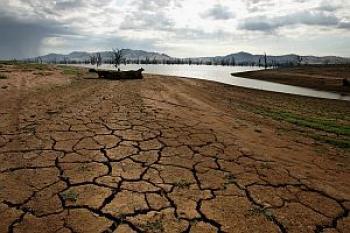
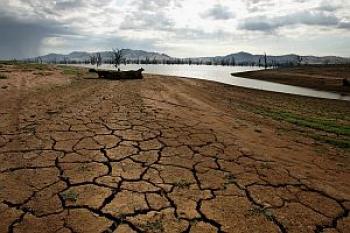
The Murray–Darling Basin, Australia’s vast river system is in crisis, with politicians, environmentalists and agricultural producers wrangling over how to address the problem.
The bigger picture, however, holds valuable lessons, says a specialist in water management, and represents an important reality check on the limitations of man’s control of our natural environment.
“It is symbolically enormously important, because I guess the last 150 to 200 years have been dominated by an idea that we can increase our technological control and technological impact,” said Dr Daniel Connell, a specialist in water management in the Murray–Darling Basin at the Australian National University. “Essentially, what we are talking about here is a major retreat.”
Dr Daniel said a process of over-commitment of water allocations in the Murray–Darling system had coincided with a climate shift resulting in a halving of the amount of water available.
“You have two lines in the grass going in different directions and eventually you have a society caught with a whole lot of demands that can’t be met, and conflict about where to go from here,” he told The Epoch Times.
The Murray–Darling Basin provides water to Australia’s “food bowl”, a vast expanse of land running from Queensland down through the two other eastern states to South Australia.
After seven years of drought combined with increasing agricultural development, the Murray River has fallen to 50 per cent below sea level.