Interpreting Moral Dilemmas in the Business World

Consumers resolve moral dilemmas by practicing “disengagement” when buying products produced in sweatshops.
Interpreting Moral Dilemmas in the Business World
Workers produce the Chinese-made handsets 'Spice' at a semi-hightech factory in Shenzhen, southern China's Guangdong province on December 19, 2008. AFP/Getty Images
|Updated:
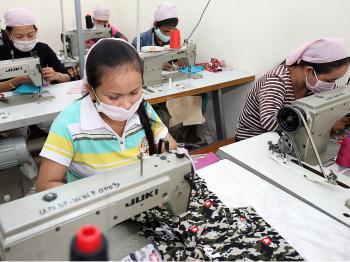
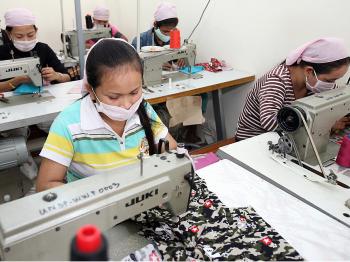
<a href="https://www.theepochtimes.com/assets/uploads/2015/07/pnomh76515244_medium.jpg"><img src="https://www.theepochtimes.com/assets/uploads/2015/07/pnomh76515244_medium.jpg" alt="Cambodian women workers are working at a garment factory in Phnom Penh.  (Tang Chhin Sothy/AFP/Getty Images)" title="Cambodian women workers are working at a garment factory in Phnom Penh.  (Tang Chhin Sothy/AFP/Getty Images)" width="320" class="size-medium wp-image-82466"/></a>
Cambodian women workers are working at a garment factory in Phnom Penh.  (Tang Chhin Sothy/AFP/Getty Images)
Consumers resolve moral dilemmas by practicing “disengagement” when buying products produced in sweatshops or sold by companies that take advantage of loopholes in labor laws.

Desire for products overrides ethical and moral behavior and becomes the norm the longer a consumer practices it, according to researchers in the study titled “Sweatshop Labor is Wrong Unless the Jeans are Cute: Motivated Moral Disengagement,” recently published by Harvard University.

Discounted prices override knowledge that shoes, electronics, toys, jeans, and other products were produced by sweatshop labor, the study found.

“Ethical decisions are biased due to the desire of people to see themselves as moral, competent, and deserving, and thus, not susceptible to conflicts of interest,” researchers suggested in the Harvard University study “The Ethical Mirage: A Temporal Explanation as to Why We Aren’t as Ethical as We Think We Are.”

The “everyone does it” excuse and other morally deceptive reasoning is “setting off a downward spiral of future bad behavior and ever more lenient moral codes … and when bad behavior precedes moral questioning, people bend their moral beliefs to match the preceding action,” researchers claimed in another recent Harvard study.


Wall Street Lacks Morals, Study Says