

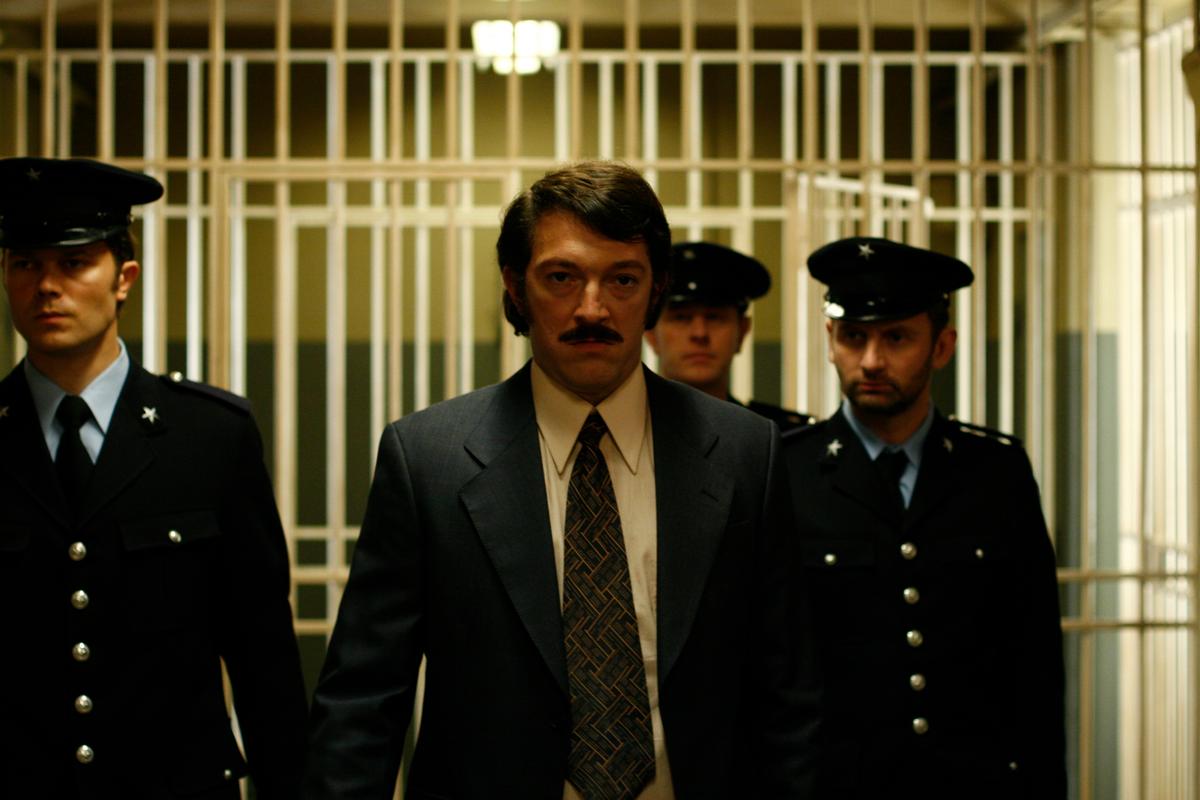
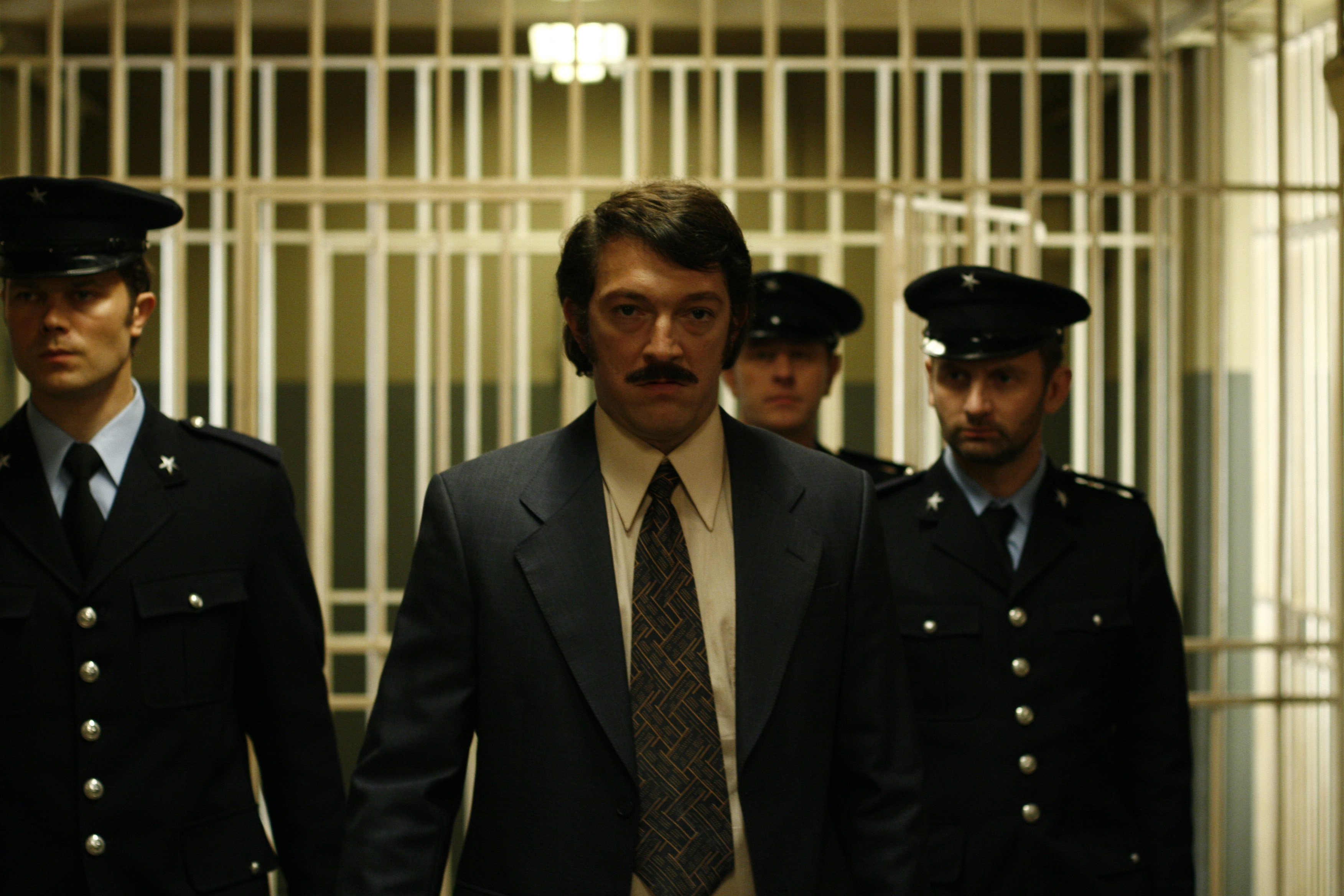
Mesrine: Killer Instinct gloriously emblazons the true story of French gangster Jacques Mesrine across the big screen to stylishly vacuous effect.
The APB on Mesrine (Vincent Cassell – La Haine) reads like this: after returning from a horrific tour of duty in Algeria, disillusioned and unable to find any work, our up-till-now likeable protagonist turns to a friend and part-time petty crook for a few extra francs. Carrying out shady chores for the local crime boss, Guido (Gerard Depardieu), a lifestyle of exotic holidays and even more exotic women quickly increases his penchant for power, and sends him on the way to become France’s most wanted criminal.
Kudos to the set designers, from the Moulin Rouge to the prologue’s Parisian streets, the authenticity of the Gallic settings are fantastically realised. From wardrobes to wigs, to neon-doused winebars, this is a really good-looking movie.
In fact, the aesthetics are a weird hybrid of art house cinema and modern Hollywood sensibilities, director Richet bringing some of the tricks learnt on amiable misfire Assault on Precinct 13 with him. So for every inventive spilt screen shot we also get an ill judged slow motion explosion.
There isn’t much that’s truly original here either, it conforms to the clichés of every gangster movie you’ve ever seen – gangster’s moll goes mad, numerous attempts to go straight, time in prison, hierarchical betrayal, women as a weakness – but it gets away with it because it’s classy, and in Vincent Cassell has one of the most intriguing presences around.
He is magnetic as the ambitious crook, his transformation from reticent but committed soldier into a cocky, generally unlikeable beast is made all the more impressive because he is the driving force of the film. We are offered no “good guys” in pursuit, a la Russell Crowe in American Gangster; we are only in the company of a bad man, and his central performance makes up for the moral imbalance.
Gangster movies also have that distasteful trait of painting very bad men in a light that makes them a gun toting Robin Hood at worst. Mesrine does the admirable job of making Cassell a doubting man at a crossroads in life, but he is never repentant about that path he takes. There is very little pondering of dubious decisions; he knows what he wants and acts on it.
Maybe this approach is what makes proceedings feel rushed? Knowing there is a second part doesn’t excuse the damp squib of an ending, and the journey up to that point has been episodic at best. We are never really sure of Mesrine’s motivations and are left with the assumption that he turns to crime because it’s the easy option. We as viewers should be glad he did.
[etRating value=“ 3”]


