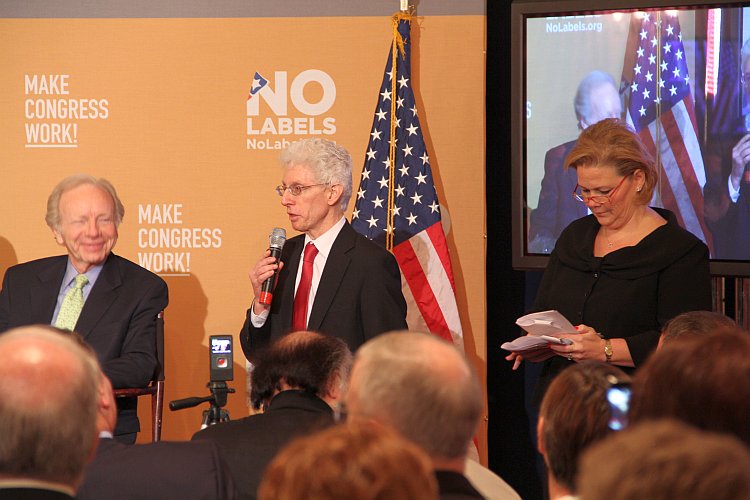
No Virtual Filibustering, No Pledging to outside groups and most importantly, No Budget No Pay are just some of the catchcries of No Labels, a new grass-roots movement aiming to make Congress work.
There are no park camping or banner holding operatives like Occupy Wall Street here. The coalition of 180,000 members including a bipartisan selection of lawmakers, former political staff, independent citizens, and community leaders, has gone straight to the heart of the matter—Capitol Hill.
At a forum on Dec. 13 in the Caucus Room of Cannon House, the oldest congressional office building in Washington, the group laid out their goal, “We want our government to work again.”
William Galston, No Labels spokesperson and senior fellow at the Washington-based think tank, the Brookings Institution, outlined a 12-point action plan the group hopes will achieve three primary objectives. They intend to break the gridlock in Congress, promote constructive debate, and reduce polarization in Congress.
“Nine out of 10 citizens blame Congress for the most pressing problems Americans are facing,” Galston said in a statement.
“We saw from the failure of the supercommittee that gridlock and hyperpartisanship have utterly impeded Congress’s ability to carry out its responsibilities to the American people. We see good people stuck in a rotten system, and we have to change the rules to fix what’s broken,” Galston stated.
A selection of present and former senators and congressman attended the No Labels forum in support.
One of the most notable actions, and one that elicited the most response, was No Budget No Pay, a recommendation that would see members of Congress docked pay for each day they fail to pass the budget.
Congressman Jim Cooper (D-Tenn.) said it was “a tough measure” but America could not afford to pass its budget, noting Congress must be forced into it, otherwise it risks becoming a “headless monster.”
“Do your work or you don’t get paid,” he told the audience to resounding applause.
“Even if it takes six months,” enjoined Sen Dean Heller (R-Nev.), adding there would be no retroactive pay either. More applause.