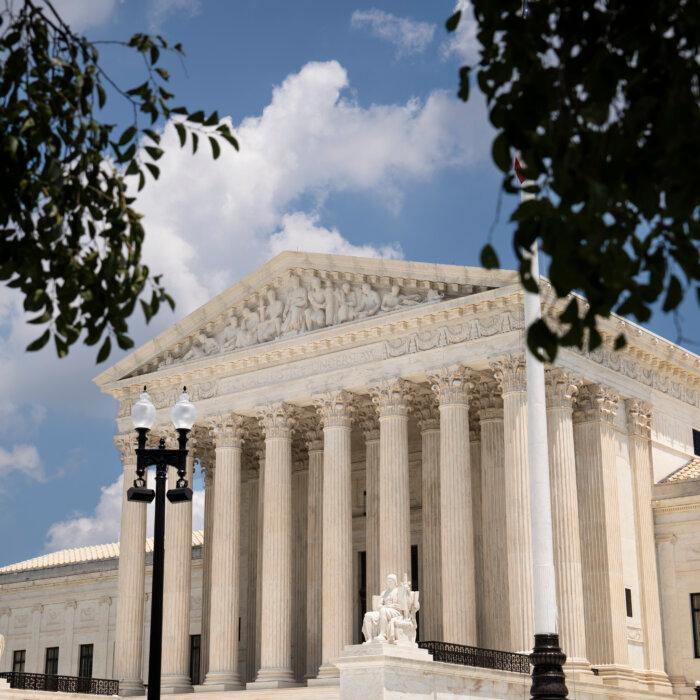
The Supreme Court concluded its 2025–2026 term on June 30 after a series of landmark decisions impacting immigration, President Donald Trump’s agenda, and hot-button social issues.
Among the top decisions were those rejecting Trump’s definition of birthright citizenship, upholding bans on transgender girls in girls’ sports, and striking down Hawaii’s gun control law.
While Trump lost on some critical policies, including his global tariffs, the Supreme Court also granted him and future presidents significant flexibility in immigration enforcement and their ability to fire federal officials.
Here’s a look at some of the consequential decisions this term.
In a landmark ruling, the Supreme Court said that the babies of illegal immigrants and temporary visitors were entitled to citizenship under the Constitution.
The decision marked a significant setback for Trump, who issued an executive order attempting to exclude these children from birthright citizenship.
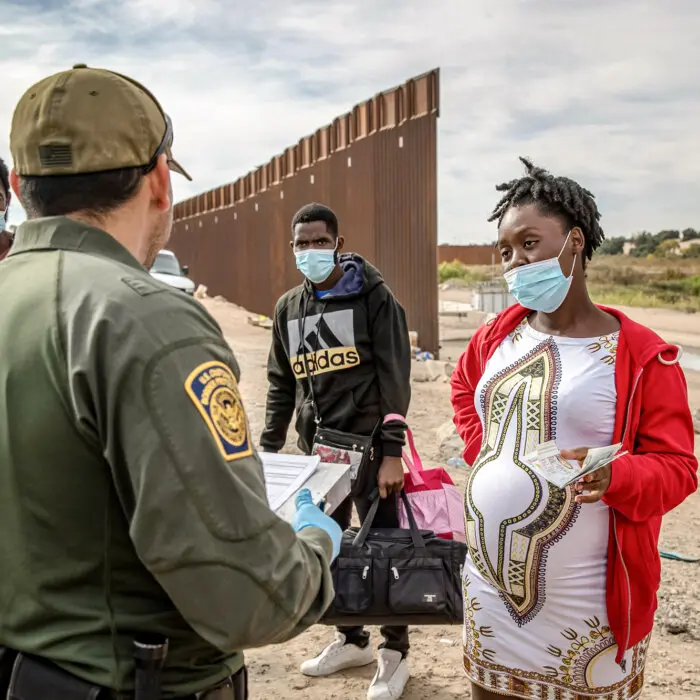
The majority ruled the policy was inconsistent with the Citizenship Clause of the 14th Amendment, which reads, “All persons born or naturalized in the United States, and subject to the jurisdiction thereof, are citizens of the United States and of the state wherein they reside.”
Trump had argued that the 14th Amendment’s focus on “jurisdiction” required that parents have some kind of allegiance to the country before their children received citizenship.
Chief Justice John Roberts rejected that argument as a “dramatically revisionist view” of the amendment’s history.
A majority of the Supreme Court also ruled that large swaths of Trump’s tariffs were unconstitutional.
Although the Constitution gave Congress the power to impose tariffs, Congress passed laws to allow the president to impose tariffs under certain conditions. Trump had attempted to impose reciprocal tariffs under a law allowing the president to regulate imports in the face of emergencies.
In a 6–3 decision, the Supreme Court said that the law’s language did not authorize tariffs, saying Congress would have needed to more explicitly authorize tariffs for Trump to pursue the kind of tariffs he did under the law.
The Supreme Court also expanded the president’s ability to fire the heads of federal entities—but indicated that limits on this power remain in place.
The court affirmed Trump’s power to fire a member of the Federal Trade Commission—overruling a nearly century-old precedent limiting presidential power to fire heads of agencies.
However, the court made clear in another case that this firing power has limits, with the majority refusing to grant Trump’s request to fire Federal Reserve board member Lisa Cook while litigation is ongoing.
States face significantly fewer roadblocks in banning transgender-identifying boys from girls’ sports after a pair of Supreme Court decisions.
The court upheld laws in West Virginia and Idaho, two of 27 states that have enacted laws to maintain separate sports for females in recent years.
The court said the state bans did not violate Title IX or the equal protection clause of the 14th Amendment, overturning multiple appeals courts that had blocked the laws on the basis that those provisions were violated through discrimination based on transgender status and sex.
The Supreme Court disagreed, stating that Title IX, which prevents sex-based discrimination in schools, allows for sex-segregated teams.
The court in April ruled that using race to draw congressional maps violates the equal protection clause of the 14th Amendment, which bars race-based discrimination.
The 6–3 ruling narrowed the way courts have been applying a key provision of the Voting Rights Act.
That provision was meant to prevent state laws from making it harder for minorities to vote, but courts had been using it to force states to create extra mostly-black districts.
Following that ruling, other states such as Tennessee and Alabama have sought to reinstate maps that courts previously struck down.
The Supreme Court also struck down federal limits restricting political parties from coordinating spending with candidates.
Democrats defended the provisions as ways to prevent quid pro quo corruption, or donors funding candidates indirectly in expectation of a future benefit.
Writing for the majority, Justice Brett Kavanaugh said Congress could generally limit expenditures to prevent corruption but that the Federal Election Campaign Act’s limits went too far.
The 6–3 decision saw a dissent from Justice Elena Kagan, who was joined by Justices Sonia Sotomayor and Ketanji Brown Jackson.
She said the court’s decision led the country towards “a legal regime increasingly unable to stop political corruption, and thus to preserve our institutions’ democratic legitimacy.”
The court’s 7–2 decision handed agribusiness Monsanto a significant victory on June 25, overturning a lower court ruling that had opened the company up to billions in liability over its popular weedkiller, Roundup, and its key ingredient glyphosate and alleged cancer risk.
A Missouri man, John Durnell, sued Monsanto when he was diagnosed with cancer after being exposed to Roundup. He blamed the company for failing to warn him about the risks associated with the chemical.
A Missouri jury agreed with him, awarding him millions, but Monsanto appealed to the high court.
The Supreme Court, in Monsanto v. Durnell, agreed with Monsanto’s argument that, because the EPA already approved glyphosate’s use through the Federal Insecticide, Fungicide, and Rodenticide Act (FIFRA) and determined it does not require a cancer warning, states could not require additional ones.
In another key ruling, the Supreme Court authorized the administration’s efforts to end Temporary Protected Status (TPS) for Haitians and Syrians currently residing here. The program allows foreign nationals to stay in the United States for humanitarian reasons.
In a 6–3 decision, the majority said that courts have limited power to review the Department of Homeland Security’s decisions to revoke those protections. It based its decision on a section of the Immigration and Nationality Act that barred judicial review.
The court rejected arguments claiming that the revocation of TPS was racially motivated, citing the administration’s broader opposition to the program.
The decision is expected to affect not just the thousands of Haitians and Syrians on TPS, but also other foreign nationals on the program.
—The Epoch Times Staff
Looks like the 4th of July weekend is going to be a scorcher. Check out Zachary Stieber’s latest to see what’s happening in your neck of the woods.
A U.S. Navy Sea Hawk helicopter went down in the Arabian Sea on Wednesday. Three of the helicopter’s four flight crew members have been recovered, and a search is underway for the fourth.
Judges in Texas on July 1 handed down more jail time for members of Antifa who pleaded guilty to attacking an immigration detention center last year. One of their group was sentenced to 100 years last month.
Iran is insisting it will charge a toll to pass through the Strait of Hormuz after a 60-day grace period expires. Read Tom Ozimek’s latest to find out more.
The Justice Department is suing Virginia over its law banning commonly owned semi-automatic rifles. “Law-abiding Americans should not have to live under threat of criminal sanction for simply exercising their Second Amendment right to possess arms owned by millions of their fellow citizens,” Assistant Attorney General Harmeet K. Dhillon said.
—Stacy Robinson