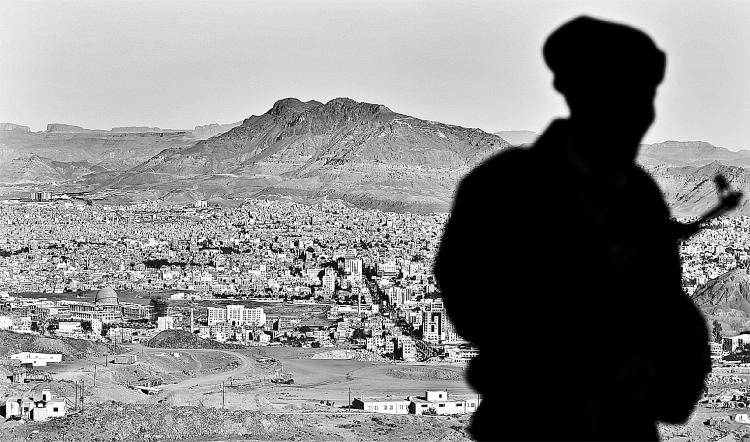
Yemeni security forces killed alleged al-Qaeda leader Abdullah al-Midhar on Tuesday night, the Yemeni state news agency Saba reported.
The terrorists were hiding inside a house in the mountainous region of Shabwa Province, around 370 miles east of the capital in Sana’a.
The government forces besieged a barricaded house and exchanged fire with close to 20 insurgents hiding inside. Several al-Qaeda fighters managed to escaped into the nearby forests, according to a source in the Interior Ministry.
The Yemeni army stepped up its efforts against al-Qaeda in the recent weeks, moving more troops to the eastern region of the country.
The Yemeni government repeated its offer to hold a dialogue with the insurgents, if they abandon violence and lay down their weapons.
The Pentagon increased its military aid to Yemen this year to help with counterterrorism operations, with the hope Sana’a will intensify its crackdown against al-Qaeda in the country.
The group’s resurgence in the Gulf Arab state raised concerns in Yemen and abroad. The radical Islamist organization is guilty of several attacks in Yemen over the last two years, including one that targeted the U.S. Embassy.
Yemen entered the international spotlight after the terrorist organization, al-Qaeda in the Arabian Peninsula, located in the country, claimed responsibility of the thwarted bombing of a U.S. plane bound for Detroit on Christmas Day.
U.S. Senate Armed Services Committee Chairman Carl Levin told AFP on Wednesday that Washington should consider targeting al-Qaeda extremists in Yemen with armed drones, air strikes, or covert operations.
When asked if the U.S. will seek Yemen’s approval for the operations, Mr. Levin reportedly said that “it would be expected that they would either agree privately, or accept without objection privately.”
President Barack Obama recently said in an interview with People Magazine that he doesn’t plan to deploy U.S. ground troops to Yemen.
Yemen is starting to be viewed as a new front in the fight against terrorism, and is trying to convince the West that it is able to fight al-Qaeda. “Our security agencies are capable of tackling terrorist threats,” Foreign Minister Abu Bakr al-Qirbi told Reuters, requesting that the international community will also pay more attention to the economic and development needs of Yemen.
These issues and others are expected to be a subject of a one-day international conference on Yemen, scheduled in London on Jan. 27.
The terrorists were hiding inside a house in the mountainous region of Shabwa Province, around 370 miles east of the capital in Sana’a.
The government forces besieged a barricaded house and exchanged fire with close to 20 insurgents hiding inside. Several al-Qaeda fighters managed to escaped into the nearby forests, according to a source in the Interior Ministry.
The Yemeni army stepped up its efforts against al-Qaeda in the recent weeks, moving more troops to the eastern region of the country.
The Yemeni government repeated its offer to hold a dialogue with the insurgents, if they abandon violence and lay down their weapons.
The Pentagon increased its military aid to Yemen this year to help with counterterrorism operations, with the hope Sana’a will intensify its crackdown against al-Qaeda in the country.
The group’s resurgence in the Gulf Arab state raised concerns in Yemen and abroad. The radical Islamist organization is guilty of several attacks in Yemen over the last two years, including one that targeted the U.S. Embassy.
Yemen entered the international spotlight after the terrorist organization, al-Qaeda in the Arabian Peninsula, located in the country, claimed responsibility of the thwarted bombing of a U.S. plane bound for Detroit on Christmas Day.
U.S. Senate Armed Services Committee Chairman Carl Levin told AFP on Wednesday that Washington should consider targeting al-Qaeda extremists in Yemen with armed drones, air strikes, or covert operations.
When asked if the U.S. will seek Yemen’s approval for the operations, Mr. Levin reportedly said that “it would be expected that they would either agree privately, or accept without objection privately.”
President Barack Obama recently said in an interview with People Magazine that he doesn’t plan to deploy U.S. ground troops to Yemen.
Yemen is starting to be viewed as a new front in the fight against terrorism, and is trying to convince the West that it is able to fight al-Qaeda. “Our security agencies are capable of tackling terrorist threats,” Foreign Minister Abu Bakr al-Qirbi told Reuters, requesting that the international community will also pay more attention to the economic and development needs of Yemen.
These issues and others are expected to be a subject of a one-day international conference on Yemen, scheduled in London on Jan. 27.