


With the recent removal of U.S. troops in Iraq, the United States may find itself a step closer to ending the war on terror.
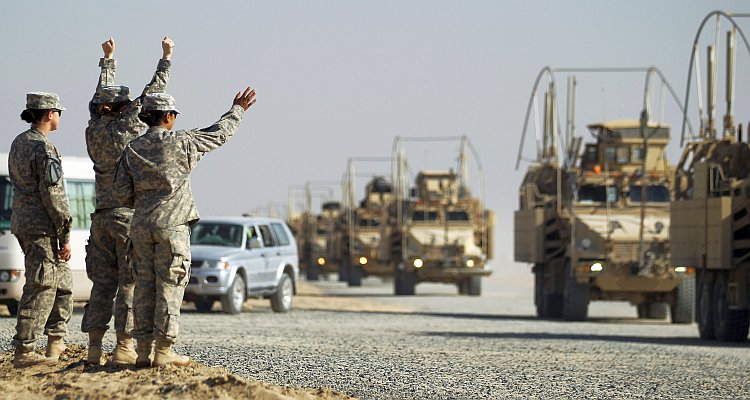
On Sunday, Dec. 18, the last convoy of U.S. troops left Iraq, putting an end to nine years of war in the country and fulfilling President Obama’s campaign promise that he would end the war in Iraq.
Around 500 of the troops drove through the southern Iraqi desert and arrived in Kuwait Sunday morning. Amid hugs and well wishes, soldiers prepared to embark back home to the States, perhaps for some spending the holidays at home with family.
“I just can’t wait to call my wife and kids and let them know I am safe,” said Sgt. 1st Class Rodolfo Ruiz according to reuters.com.
Military personnel will either go home or be reassigned, perhaps to Afghanistan where U.S. forces continue to hold a presence.
U.S. forces launched an attack against then Iraqi President Saddam Hussein in 2003, ushering in a long-term Middle East conflict. The war in Iraq was initially viewed as freeing an oppressed populace from a tyrannical dictator. Strategically, the United States established a foothold in the Middle East to fight terrorist groups such as al-Qaeda and the Taliban after the 9/11 assault.
Political blowback began when weapons-of-mass-destruction, a factor in the invasion of Iraq, were not found. Intense fighting in the mid-2000s brought pressure on the Bush administration, and criticism on the home front.
The fledgling Iraqi democracy now moves forward without heavy American military support. “My heart goes out to the Iraqis,” said Warrant Officer John Jewell, as reported in the NY Times. “The innocent always pay the bill.”
Late Saturday night and early Sunday morning around 500 of the last U.S. soldiers traveled to the southern Kuwaiti border.
The nation and government of Iraq will finally be on its own and with that thought comes a sense of sovereignty for the people of Iraq. But, extremist groups—including Sunni insurgents and contesting Shi'ite militias—still threaten the new democracy and even though the violence peaked in 2007, many fear it will rise in the vacuum of U.S. forces.
Some Iraqis, however, are very optimistic about the future even in the face of obstacles.
“It is a very happy pleasant occasion for all the Iraqi people,” said Iraqi citizen Nabeil Aboud in a reuters.com news video called “Iraqis Optimistic of Future without U.S. Troops.” “This is the day which all Iraqis have been looking forward to. Iraq has restored full sovereignty and Iraq is now considered a free country. We hope that upcoming governments and the present government keep moving forward. We hope that they (politicians) achieve real reconciliation and forget the past.”
The United States will still remain in Iraq with only 150 troops left to train and support the U.S. Embassy. Many domestic U.S. companies are helping to build Iraqi economic forces including hospitals, infrastructure, development, and oil.
“This will be a historic moment where we basically enter a new chapter in Iraq in which we deal with them in a way that represents the kind of normal relationship we have with other countries in the region,” said Defense Secretary Leon E. Panetta at the end of mission ceremonies in Iraq, according to the U.S. Army website. “It was a tremendous effort,” Panetta said, referring to the removal of hundreds of bases, infrastructure, and personnel.


