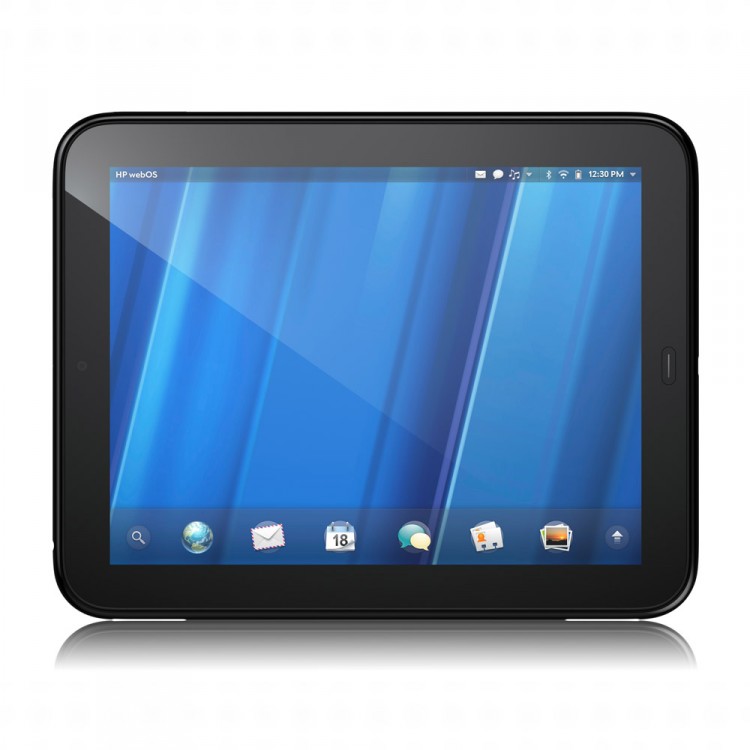
Hewlett-Packard Co. announced last week that it would discontinue its WebOS-based TouchPad tablet after weeks of poor sales. Right after, it also heavily cut prices of its heavily promoted tablet to $99, hoping to sell off any remaining inventory.
The results were much better than HP could have anticipated.
The $99 TouchPad fire sale stoked off a sales frenzy. The much-ballyhoed tablet sold out within an estimated two days after the drop in price, obliterating any remaining inventory. In one city in the U.S., buyers waited outside a Best Buy for hours hoping to get a discounted TouchPad, only to be told by staff when the store opened that it was no longer available. Media reports highlighted that shortly after the tablets sold out, they started appearing on eBay for $300, three times the marked down price. (though it is hard to say how many of these marked-up tablets sold).
And reports are cropping up that programmers are already working on a project called TouchDroid to port the Android operating system to the TouchPad, which would allow it to run more apps.
So does HP’s approach show other tablets how to sell tablets? Probably not. As PC Magazine points out, “HP is taking a major loss on every unit here, and the company doesn’t seem to be hoping to make any of that back.”
But the fact is that HP’s TouchPad sold out at the $99 price. BusinessWeek noted that, “Consumers are willing to pay from $100 to $150 for a product that offers solid basics. The TouchPad certainly has glaring software gaps, but excels at browsing, e-mail, calendar activities, and messaging, to name a few functions.”
Any comparison with tablets and popularity will be incomplete without starting off with the granddaddy of all modern tablets, the Apple iPad, which starts at $499 for a WiFi-only version, and has no problem selling in large volume. The iPad dominated all tablet sales in its first year of sale, accounting for 97 percent of all tablets sold. Its dominance has reduced slightly this year as Android tablets have grown in number of offerings and dropped in price, but the iPad is still the leader of the pack so far.
So, is $100 to $150 a good price point for tablets? Its hard to say.
There have been Android tablets made by vendors such as Coby and Archos that are selling for the same price point, but they have not been marketed heavily, meaning that most of the buyers are probably technology aficionados who are willing to research into and buy a low-cost tablet. There are better marketed Android tablets from makers such as Samsung, HTC, but those are more expensive and it appears, at least so far, that most consumers are willing to invest in an iPad for the same price point.
The tablet wars are just starting. The iPad will probably dominate for a while, but as the price point for Android tablets drop and consumers get more accustomed to an Android tablet, their sales might pick up. And in addition, the fire sale of the $99 TouchPad makes it clear that there is a large market for low-cost, quality tablets.
The results were much better than HP could have anticipated.
The $99 TouchPad fire sale stoked off a sales frenzy. The much-ballyhoed tablet sold out within an estimated two days after the drop in price, obliterating any remaining inventory. In one city in the U.S., buyers waited outside a Best Buy for hours hoping to get a discounted TouchPad, only to be told by staff when the store opened that it was no longer available. Media reports highlighted that shortly after the tablets sold out, they started appearing on eBay for $300, three times the marked down price. (though it is hard to say how many of these marked-up tablets sold).
And reports are cropping up that programmers are already working on a project called TouchDroid to port the Android operating system to the TouchPad, which would allow it to run more apps.
So does HP’s approach show other tablets how to sell tablets? Probably not. As PC Magazine points out, “HP is taking a major loss on every unit here, and the company doesn’t seem to be hoping to make any of that back.”
But the fact is that HP’s TouchPad sold out at the $99 price. BusinessWeek noted that, “Consumers are willing to pay from $100 to $150 for a product that offers solid basics. The TouchPad certainly has glaring software gaps, but excels at browsing, e-mail, calendar activities, and messaging, to name a few functions.”
Any comparison with tablets and popularity will be incomplete without starting off with the granddaddy of all modern tablets, the Apple iPad, which starts at $499 for a WiFi-only version, and has no problem selling in large volume. The iPad dominated all tablet sales in its first year of sale, accounting for 97 percent of all tablets sold. Its dominance has reduced slightly this year as Android tablets have grown in number of offerings and dropped in price, but the iPad is still the leader of the pack so far.
So, is $100 to $150 a good price point for tablets? Its hard to say.
There have been Android tablets made by vendors such as Coby and Archos that are selling for the same price point, but they have not been marketed heavily, meaning that most of the buyers are probably technology aficionados who are willing to research into and buy a low-cost tablet. There are better marketed Android tablets from makers such as Samsung, HTC, but those are more expensive and it appears, at least so far, that most consumers are willing to invest in an iPad for the same price point.
The tablet wars are just starting. The iPad will probably dominate for a while, but as the price point for Android tablets drop and consumers get more accustomed to an Android tablet, their sales might pick up. And in addition, the fire sale of the $99 TouchPad makes it clear that there is a large market for low-cost, quality tablets.