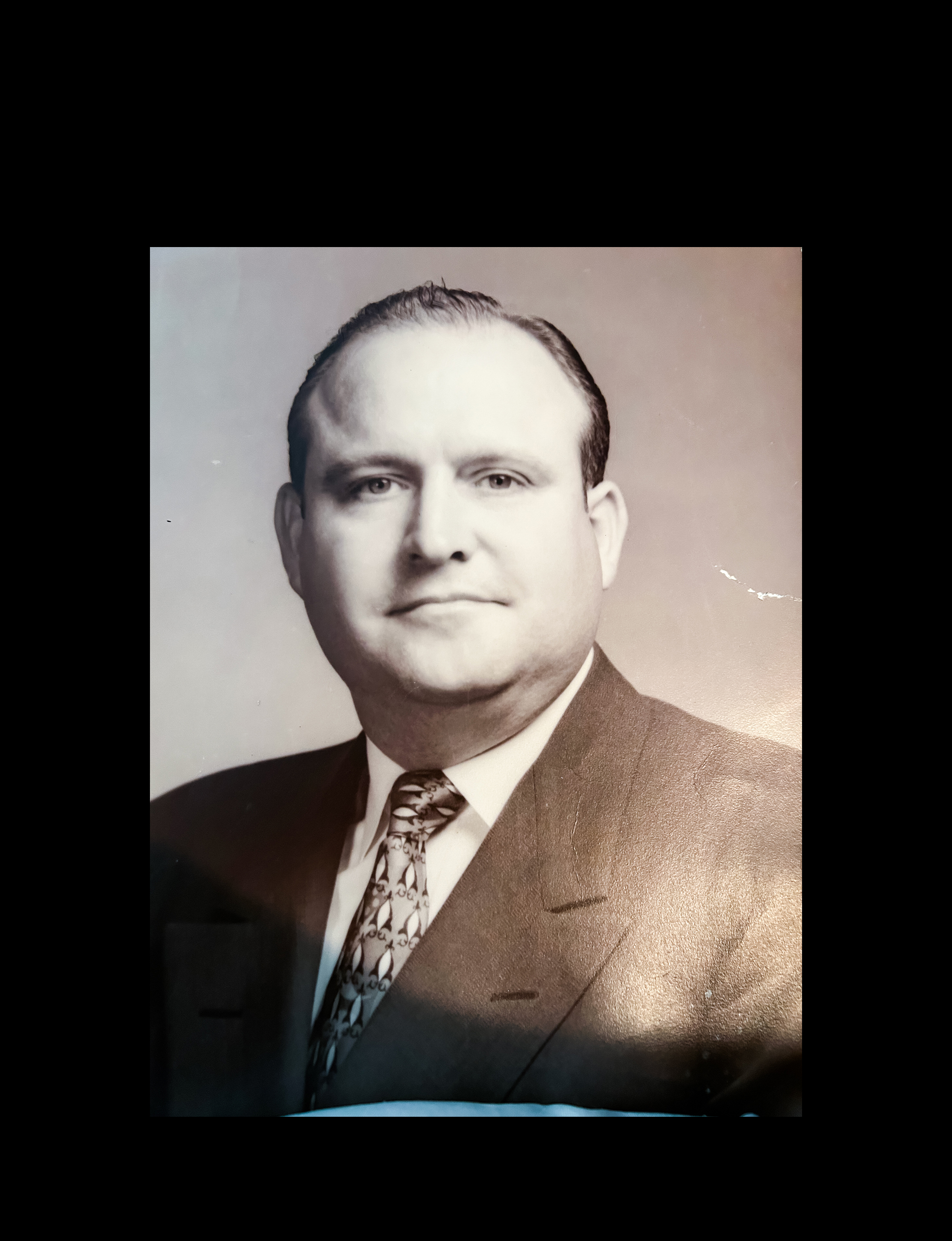
By the summer of 1955, Charlie Sullins had exhausted all legal avenues in Tennessee appealing his death sentence for his role in a fatal armed robbery.
Although his accomplice, Harry Kirkendoll, had fired the shot that killed 63-year-old Ed Collier on March 3, 1953, a jury found Sullins guilty as an accessory in the gas station robbery in Lebanon, Tennessee.
In the eyes of Tennessee’s criminal justice system at the time, it was as if he had pulled the trigger himself.
Both men were sentenced to die by electrocution on Aug. 1, 1955, strapped into the wooden chair dubbed “Old Smokey.”
Seventy years ago, Sullins sat behind the cold bars of death row.
He expressed regret for the crime that determined his fate as he listened to the comforting words of Marshall Roberson, the chaplain at Tennessee’s main prison in Nashville.
Sullins found repentance through faith and a friend in Marshall Roberson, according to Roberson’s son, Eddie.
“It seems that a man’s spiritual condition is paramount right before facing the ultimate consequences of their heinous crime,” Eddie Roberson told The Epoch Times.

On the morning of Aug. 1, 1955, Sullins’s cell door banged open. He and the chaplain started their walk down the Green Mile, named for the green linoleum tiles that led prisoners to the electric chair.
In their final moments together, the chaplain and the condemned prisoner discussed crime, punishment, repentance, and faith.
Two years after the crime that stole an innocent life, Sullins offered his last words, expressing a wish to reunite with everyone in eternity.
Moments later, as a black hood shrouded Sullins’s face, the chaplain ended his prayer with “Amen.”
That was the cue for the execution to proceed.
At 5 a.m., the executioner pulled the switch, sending 2,300 volts through Sullins in Tennessee’s last act of justice in his case.
Marshall Roberson, above all, had kept his word to stay with Sullins until the very end.

Faith of His Father
Eddie Roberson, 72, a Ward 6 Alderman in Hendersonville, Tennessee, said that his father truly lived his faith. He served as a prison chaplain for eight years and witnessed seven executions.All but one inmate admitted to their crimes, Eddie Roberson said. Still, his father never wavered from his official duty under two governors. His calling to rescue fallen souls guided him throughout his life.
The afterlife, family, and confession were common threads in the final hours of the men his father ministered to as a chaplain, Eddie Roberson said.
“You can imagine a minister spending that much time with someone who’s getting ready to go to eternity. He would use a lot of these stories in sermons,” he said.

Nine out of 10 said they had spoken directly with at least a quarter of the inmates where they worked.
“Prison chaplains make the Bill of Rights in the United States Constitution real,” an abstract of the paper reads.
“Chaplaincy has come a long way since the days when community clergy would visit inmates primarily to ‘save souls’ and when the sermons were hollered down the hall to inmates locked in cells.”

The survey revealed that in 2020, the prison system required at least 357 chaplains and 122 helpers to meet a growing demand for religious services.
That same year, the system had 236 chaplains and 64 assistants, which was 30 percent fewer than what bureau rules suggest.
The bureau found that even though it is recommended that each institution have at least one chaplain and one assistant, almost half of the agency’s institutions did not have someone to help with religious services.

‘Prepare to Meet Thy God’
In Tennessee, 41 men and one woman are awaiting execution, according to the Tennessee Department of Corrections.Since March 2000, Tennessee has used lethal injection as its main execution method. Prisoners convicted before Jan. 1, 1999, however, can choose electrocution instead.
Tennessee ended the death penalty for first-degree murder in 1915 but reinstated it four years later.
After a bill to abolish capital punishment in Tennessee in 1965 failed by one vote, Gov. Frank Clement commuted the sentences of everyone on death row.
Eddie Roberson said the former governor took each death penalty case seriously, sometimes with tears in his eyes.
He reviewed every case for mistakes or exonerating evidence, wanting to ensure each person had a fair trial and a just verdict and sentence.
“About 48 hours before someone was to be executed, my dad would receive a call from Governor Clement,” Eddie Roberson told The Epoch Times.
“The governor would say: ‘Preacher, I want you to meet me at death row. I’m going to talk to the condemned convict. Can you meet me there at 4 o‘clock this afternoon?’”
“The governor would actually go to death row,” Eddie Roberson said.

“He would look the inmate in the eyes and say one of two things: ‘Sir, I have reviewed your sentence, and I’m going to commute it.’ Or he would say: ‘Sir, I have read the record of the trial and I cannot find any mistakes in how justice was done.
“‘In the morning at 5 a.m., prepare to meet thy God.’”
Walking Among the Condemned
Eddie Roberson said his father became close friends with Clement and was respected by prison inmates for his honesty and compassion.His father got to know each prisoner on death row and spent as much time with them as he could.
He did not discuss his feelings with his family; instead, he expressed them mostly as cautionary lessons in his sermons.
“As a young boy, I would listen to those examples, and I’m going to tell you, it helped keep me on the straight and narrow way,” Eddie Roberson said.
“I did not want to go to prison one iota.”
Marshall Roberson gained valuable insight and experience working as a pastor at several churches in Tennessee, his son wrote in “Chaplain of Death Row.”
His father later joined the state’s Board of Pardons and Paroles and became its chairman.

On the night before an execution, Roberson said that his father would stay with the prisoner as long as he wanted.
The prisoner would receive a final meal. Then, his head and legs were shaved to help the skin connect more easily with the chair’s electrodes.
Eddie Roberson said that most times, his father never left a prisoner’s side, offering comfort and support and reading scripture to calm the man’s fears.
“He would stay in their cell if they wished—all night long—because the inmate did not go to sleep,” he said.
Uncle Homer
Each execution brought back childhood memories of Marshall Roberson’s uncle, Homer Simpson, who was put to death in Georgia’s electric chair for his role in a capital murder on Sept. 11, 1929.Eddie Roberson said the tragedy cut deeply because his father loved and admired his uncle, who had once served as the police chief in Cleveland, Tennessee.

Simpson did not have strong faith, and poverty led him to make poor choices, the younger Roberson said.
Eddie Roberson said he believes that witnessing Homer’s tragic downfall inspired his father to dedicate his life to helping those on death row as a prison chaplain.
Simpson, a World War I veteran, first ran into trouble after reconnecting with another former soldier who planned to rob the Bank of Kingsland in Georgia.
The former police officer went along with it.
The Last Hours of Charlie Sullins
Eddie Roberson described Sullins’s journey as one marked by regret for his part in a crime, a newfound sense of faith, and deep love for his family.Marshall Roberson convinced the prison warden to make an exception so Sullins could see his wife one last time.
As Sullins made his final walk to the death chamber, Eddie Roberson remembered his father’s recounting that Sullins seemed to find a quiet peace.

At one point, he paused to ask the chaplain one last, hopeful question.
“Preacher, what will heaven be like when I get there?”
The chaplain did his best to paint a picture, using biblical passages, of heaven as a realm filled with splendor and tranquility.
“And then he walked with him on the Green Mile ... down the corridor towards the death chamber,” Eddie Roberson said.
There, Sullins knelt, bowed his head into the electric chair, and whispered a prayer.
Then he got up, looked around, and said, “Fellas, I hope to see all of you in heaven.”
Before his father’s death on June 12, 2019, at age 98, Eddie Roberson asked whether being the chaplain on death row ever bothered him.
To this, his father responded in the fullness of his faith and conviction.
“No, son,” he said, “because they were reaping what they had sown.”