


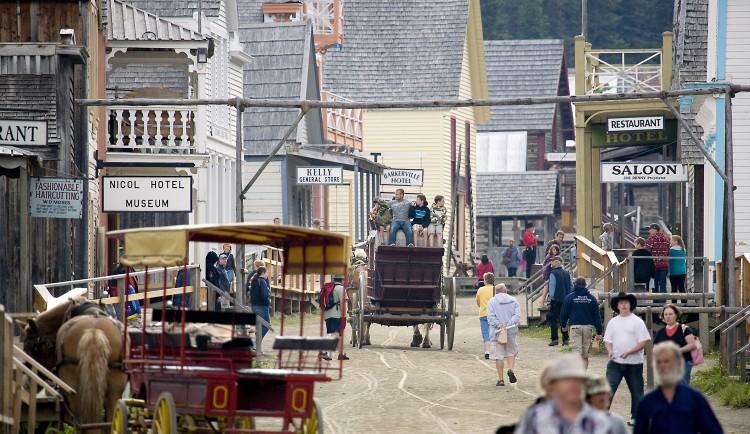
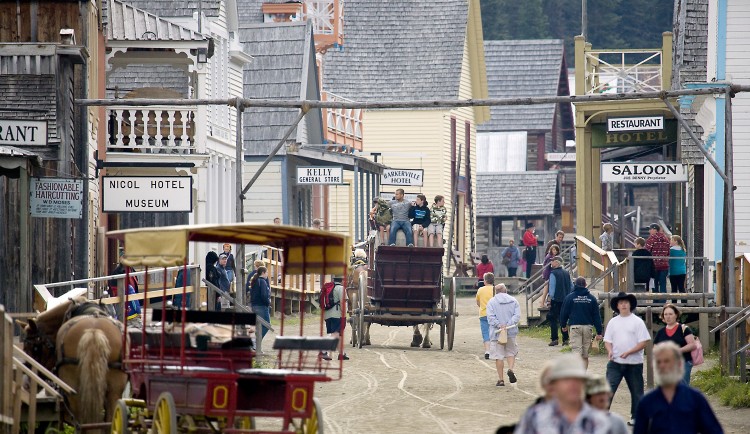
Barkerville, the gold rush town that had much to do with helping build the province of British Columbia, is celebrating its 150th anniversary this year.
Back in 1862, when British prospector Billy Barker first discovered gold in B.C’s Cariboo region, he likely had no idea that a 20-year, multi-billion dollar industrial revolution would result from his find.
In fact, by digging deep in an area that other prospectors had written off, Barker struck what turned out to be the greatest creek-side placer gold deposit the world has seen to date.
“The gold that was coming out of the ground in Barkerville and the surrounding area during the Caribou gold rush was literally in the multi-billions of dollars of value in our money today,” says James Douglas, Barkerville’s manager of visitor experiences.
It was the gold that came from the Barkerville area that gave a boost to what had basically been a stagnating fur-trading territory in the British Empire, explains Douglas.
“The gold rush created an infrastructure and taxation for what became the colony of B.C. and later the province of B.C. It was really what created British Columbia in the way we know it today.”
The boomtown of Barkerville, which sprang up around Barker’s claim, has been preserved as a historic town, and throughout the summer Barkerville Heritage Trust will host events in honour of the town’s 150th anniversary and the beginning of the Cariboo gold rush in 1862.
Visitors will be treated to a series of special activities, including music and theatre performances, storytelling, gold panning, and historical lectures. In addition, the town’s vast collection of artifacts and photographs will be available for public viewing.
The celebrations will include a “Discovery Day” weekend Aug. 11 and 12, whose highlight will be the Canadian National Gold Panning Championships. It was in August 150 years ago that Barker and his crew “struck the lead,” bringing 60 ounces of gold to the surface on the first day alone.
Hard-Won Wealth Soon Gone
With news of Barker’s find, other miners flocked to the area, and as the population grew, merchants and tradespeople also moved to the town to seek their own wealth.


