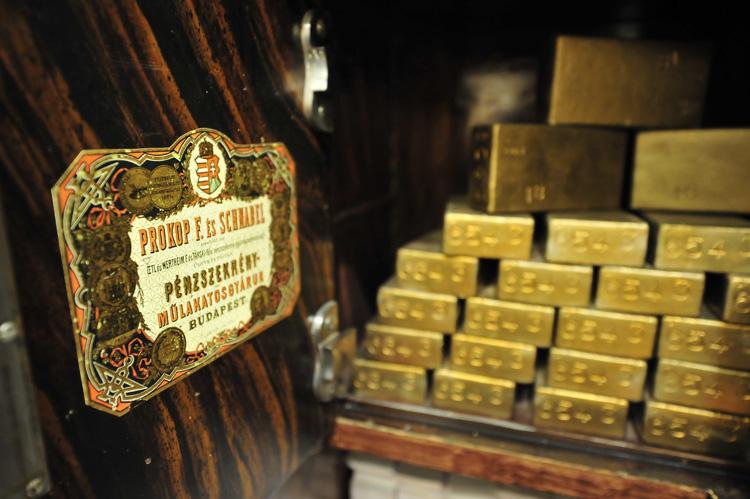
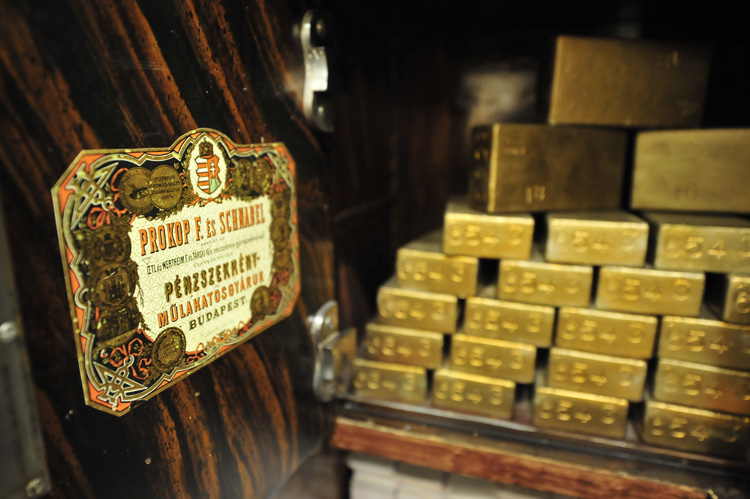
Gold price-watching has become nothing more than a game for some investors, while others are watching intently for the end of the gold bull market. Also, there are those who act as if their entire life and well-being depend on the ups and downs of gold prices.
Many a gold bug refuses to listen to the fact that “gold’s value as an investment requires predicting overall psychological and monetary demand in the future compared to now. It’s essentially impossible to do with anything close to precision. … Specific gold price predictions are essentially crap shoots,” according to a recent article discussing gold price forecasts on the Live Gold Prices website.
What is impeding the mind of many is that they don’t seem to understand that gold has no intrinsic value, does not earn any profits, such as dividends, and unless there is a demand for it in the market, gold will sit idle in some vaults.
“The problem with gold prices, and I’m sure plenty will disagree with this, is that there’s no inherent value other than buyers and sellers. … Gold’s value is based on demand alone, and demand can be a fickle beast,” the Live Gold Prices article said.
Why are people still not walking but running after gold? Some in Europe are on a waiting list for gold to become available, despite the uncertainty. Should the gold price reverse, one would lose a bundle if a sale is necessary.
“The price of gold is rather volatile. As such, investors must consider whether they can stomach the volatility of gold,” according to an article on the Advisor Perspectives website.
Gold Price Predictions an Inexact Science
“I won’t ever predict exactly where I think gold is going to be in the next month, year, or decade,” according to the Live Gold Prices article.
Bull or bear market gold price predictions are based on economics, which is not an exact science. According to a number of websites, economics includes the attempt to predict the future.
Although used by many market experts in their forecasts, a number of indicators, such as inflation, sales, unemployment, and the gross domestic product, are still only predictors and thus fallible.
“One of the biggest myths about economics is that it’s the study of math and money. It’s not. The definition of economics is the study of human behavior, period,” according to another Live Gold Prices article, which discusses gold price predictions.
The article states that the problem with taking forecasts and predictions too seriously and acting on that advice is that investors may lose their shirts by the time they realize that the market has taken a significant downturn or is on the verge of collapse.
Several articles suggest that investors should not completely discard predictions and forecasts, but look at the market as a whole, closely watching movements that could impair one’s investment.
Economic metrics are just tools, and as such, all predictions should be taken lightly. No one should jump headlong into an investment without a proper understanding of the risk involved.
“Only by understanding how pricing works can investors move away from fantasy numbers and playing dice with portfolios. And part of understanding how prices work is understanding that gold prices simply can’t be predicted with any sort of exact consistency,” the Live Gold Prices article advised.
Taking a Closer Look at Gold
“Today’s bullish/bearish gold sentiments are mismatched. Bulls list gold’s preservation and protection strengths, and bears point to its high price,” a March article on the Seeking Alpha website suggested.
According to gold market experts, today’s price of gold is not determined by the mining of gold or how much gold is still underground. But this does not necessarily mean that the gold price doesn’t determine the amount of gold extracted from below the surface, given the cost of extraction.
The overall consent among many experts is that investors and speculators determine today’s price of gold.
Others sniff at the thought of investors and speculators, and as stated in a 2000 article on the Gold-Eagle website, point to “the blatant manipulation of gold prices by world governments and large financial institutions over the last several years, in an effort to save the fiat money system which has been forced on the entire population of the world.”
Some market experts suggest that the valuation methods used to value equities or bonds are useless when it comes to valuing gold price fluctuations. Also, when looking at the value of gold compared to a number of other precious metals that have significant industrial use, gold appears to be vastly overvalued.
“One reason some investors are wary of gold is that they find it difficult to value,” according to an article on the Seeking Alpha website.
Historical Perspectives
In July, the World Gold Council updated its report on the world’s official gold holdings with information from the International Monetary Fund (IMF), but concedes that it is not up to date, as not all countries reported their gold holdings to the IMF. The table indicates that presently there are 31,347.3 tonnes of above-ground gold owned by the world’s governments. Among them, the United States holds 8,133.5 tonnes, followed by Germany with 3,396.3 tonnes.
Website research indicates that between 120,000 tonnes and 140,000 tonnes of above-ground gold reserves exist worldwide. Estimates suggest that about 40 percent of the world’s above-ground gold has not been extracted, and only about 2,600 tonnes are extracted annually.
Gold prices have peaked at their highest ever during this century. In the beginning of this century in the year 2000, the cumulative average was $279.11. By 2005, the cumulative average gold price had reached $444.74. Then by 2010, the price had reached $1,224.53. In 2011, the cumulative average was $1,571.52.
So far this year, the gold price peaked at $1,781.00 on Feb. 28. From then on, gold prices have been on a downward slide with an occasional upward movement, reaching $1,589.75 on July 16.
One needs to focus on the word “speculate” when reading the following quote from a July 10 Seeking Alpha article, “I speculate precious metals will continue to trade down during the upcoming week.”
The article suggests a number of factors that could stop the gold price from rebounding, but most of them are based on speculating if certain factors would or would not happen, such as trade balance changes, increase or decrease in the U.S. producer price index, and the standing of the U.S. dollar against other currencies, especially the euro.
Others agree with the Seeking Alpha article, but look at it from a different perspective: “Gold isn’t in a bull market. It’s essentially been a flat market since September of 2011. This isn’t an inherently bad thing, but it’s unavoidable if we just spend a few seconds looking at essentially any chart of the metal,” according to another article on the Seeking Alpha website.
The Epoch Times publishes in 35 countries and in 19 languages. Subscribe to our e-newsletter.