


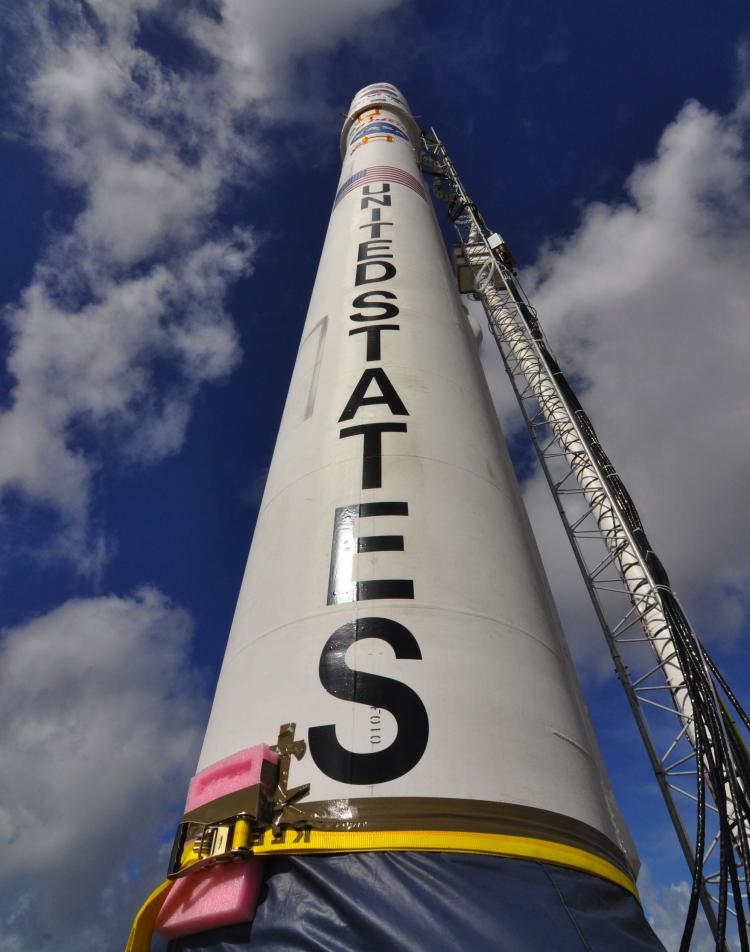
The Glory satellite is believed to have crashed into the Pacific Ocean after the Taurus XL Rocket failed to uncouple due to a faulty fairing, NASA says.
Glory launched from Vandenberg Air Force Base in California early on Friday, March 4, but telemetry indicates that the fairing, or protective cover, did not separate.
The $424 million Earth-observing satellite was meant to improve understanding of Earth’s climate and how it is affected by the sun and aerosols, which are tiny particles in the atmosphere.
Omar Baez, NASA launch director, said according to the video of a press conference on NASA’s website that everything went smoothly until the point when data should have been received indicating that the fairing had separated from the vehicle.
“All indications are that the satellite and rocket are in the southern Pacific Ocean somewhere,” he said.
Ron Grabe, executive vice president of Orbital Sciences Corp., said it had been “a tough night” for all the people involved.
“I think it’s not an understatement to say that tonight we’re all pretty devastated,” Grabe said at the conference. “But we will recover. The team will bounce back because they’re all professionals and Orbital Sciences will bounce back with the Taurus vehicle.”
The team is investigating the cause of the failure and hoping to locate the spacecraft, but it is too early to tell whether it is the same reason as almost two years ago when the Orbiting Carbon Observatory (OCO) satellite crashed into the ocean near Antarctica.
Glory launched from Vandenberg Air Force Base in California early on Friday, March 4, but telemetry indicates that the fairing, or protective cover, did not separate.
The $424 million Earth-observing satellite was meant to improve understanding of Earth’s climate and how it is affected by the sun and aerosols, which are tiny particles in the atmosphere.
Omar Baez, NASA launch director, said according to the video of a press conference on NASA’s website that everything went smoothly until the point when data should have been received indicating that the fairing had separated from the vehicle.
“All indications are that the satellite and rocket are in the southern Pacific Ocean somewhere,” he said.
Ron Grabe, executive vice president of Orbital Sciences Corp., said it had been “a tough night” for all the people involved.
“I think it’s not an understatement to say that tonight we’re all pretty devastated,” Grabe said at the conference. “But we will recover. The team will bounce back because they’re all professionals and Orbital Sciences will bounce back with the Taurus vehicle.”
The team is investigating the cause of the failure and hoping to locate the spacecraft, but it is too early to tell whether it is the same reason as almost two years ago when the Orbiting Carbon Observatory (OCO) satellite crashed into the ocean near Antarctica.


