Thailand’s sprawling, bustling, never-ever-sleeping capital is a city that raises strong emotions in people. But despite visitors’ love/hate reactions, there’s no place like it on earth. The world’s hottest metropolis steams with energy, its many millions of residents seemingly in constant motion. Unless, of course, they are stuck in one of the city’s infamous traffic jams.
This is the best plan: When you arrive in Bangkok, go ahead and embrace the chaos. Wade into the crashing waves of humanity at the markets. Climb into the back of a tuk-tuk and allow the sensory overload—aural, visual, and even olfactory—to wash over you. But make sure to find a little peace, too, at the temples and on the river.
Arrival
When visiting Southeast Asia, it often feels like all roads—and flight routes—lead to Bangkok. The city’s primary place to land, Suvarnabhumi International Airport (BKK), is one of the 10 busiest in Asia. In addition to serving as the main hub for flag carrier Thai Airways International, over 100 other airlines take off from its runways.You can reach almost anywhere in Southeast Asia from BKK. I’ve visited Bangkok perhaps a dozen times, and many of those trips to the city were two- or three-day stopovers en route to other countries like Cambodia, Laos, or Vietnam. Suvarnabhumi receives long-haul, nonstop flights from all over the world. These direct routes include most European capitals, plus a handful of North American cities, including Vancouver and Los Angeles.
You might be tempted to tarry a bit, or arrive early to BKK for your departure flight. Like other Asian airports, Suvarnabhumi offers a number of entertaining and delicious options right within its terminals, including a spa, beauty salon, and plenty of good restaurants. But it’s best to keep moving.
A major expressway connects the airport to the city, and taxis are inexpensive by Western standards. But the best option is probably the Airport Rail Link (ARL), a modern air-conditioned train that zooms over and past all that traffic. They’ll deliver you to a number of convenient stations. The ARL also connects to the BTS Skytrain, an elevated transit system that runs throughout the city. Single-ride tickets on the ARL will set you back only around $1.50 or less.

Morning
There’s no getting around the fact that it takes a long time to fly from North America to Bangkok. Disembarking passengers will often find themselves a little disoriented—and very jet lagged. That is definitely best cured by fresh air and warm breezes off the water.So get out on the Chao Phraya River. Several operators offer tours, and there are public ferries, too. It’s an excellent way to draw back and get some perspective on a city that can sometimes feel a tiny bit overwhelming.

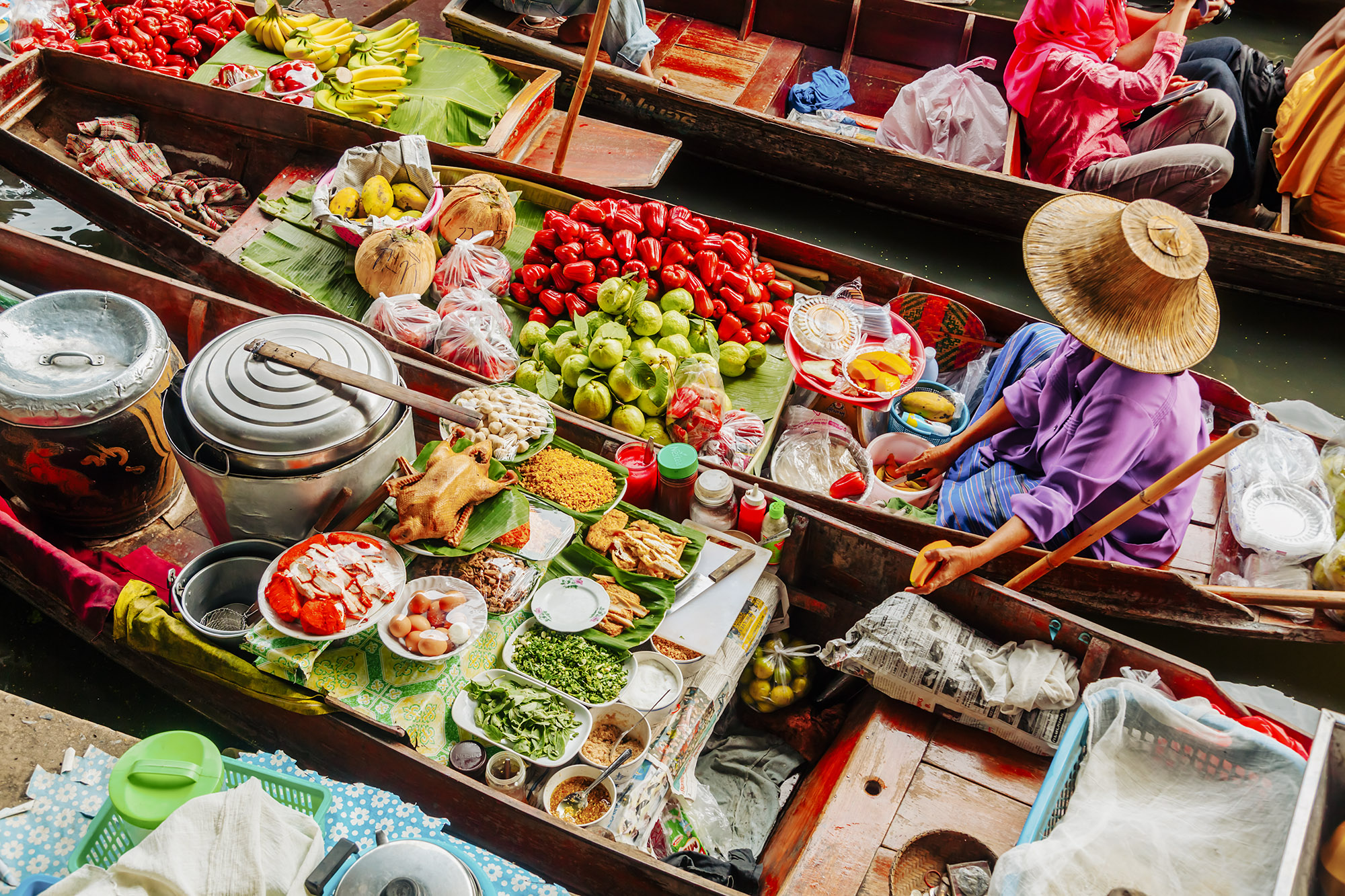
The bends of the Chao Phraya are big, lazy, and busy. All sorts of boats ply these waters, from those laden low with fruits and vegetables to fishing vessels to passenger ships. The waterway serves as a sort of aquatic superhighway. As you float along the “River of Kings,” which runs about 230 miles and eventually empties into the Gulf of Thailand, take in unique views of temples and luxury hotels and the city’s soaring, seemingly endless skyline.
Disembark at the pier in front of Wat Arun, an iconic temple that rises on the west banks of the river. Explore awhile before the day gets too hot. This Buddhist “Temple of the Dawn” was built in the 17th century, and is arguably the most beautiful place of worship in Bangkok.
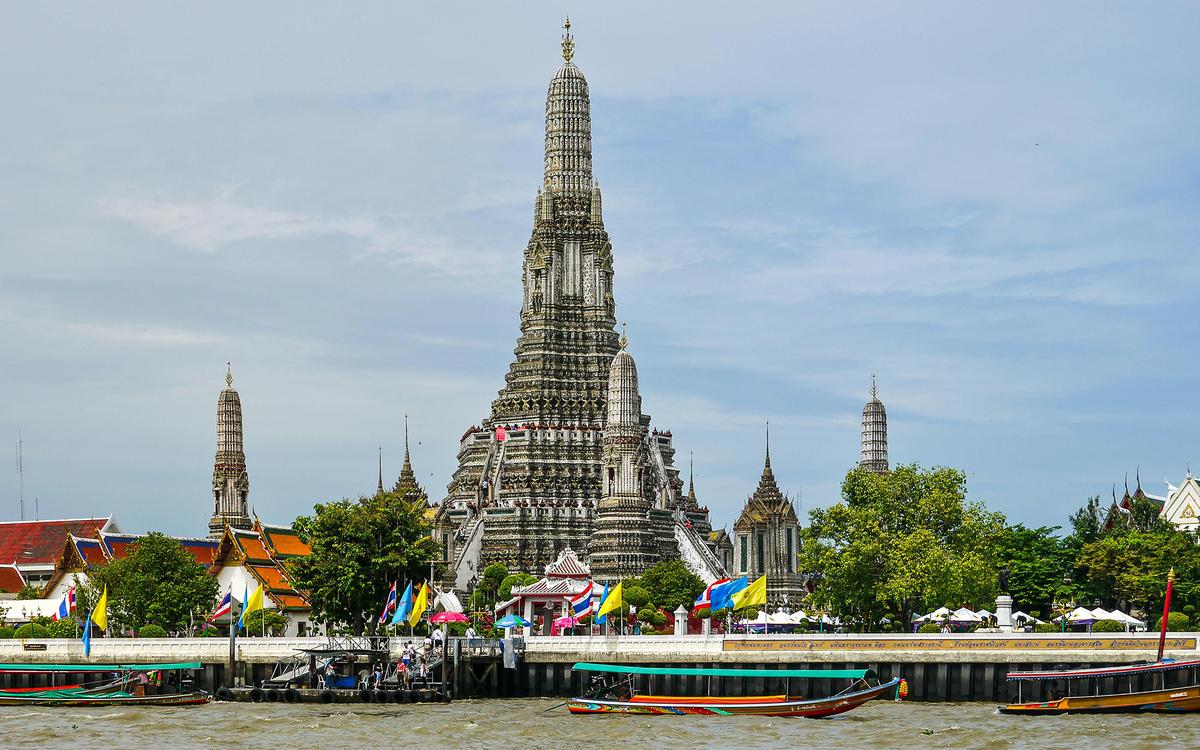

Peer up at the absolutely iconic and ornate porcelain prang (or spire), which rises more than 20 stories. Stroll past the pillars of the ordination hall. Marvel at the golden Buddha statues in the cloister.
As the crowds build and the temperature rises, make the short ferry crossing to Tah Tian pier. At this point, you have options. A whole collection of attractions sits just nearby—enough to fill the entire rest of the afternoon and evening.
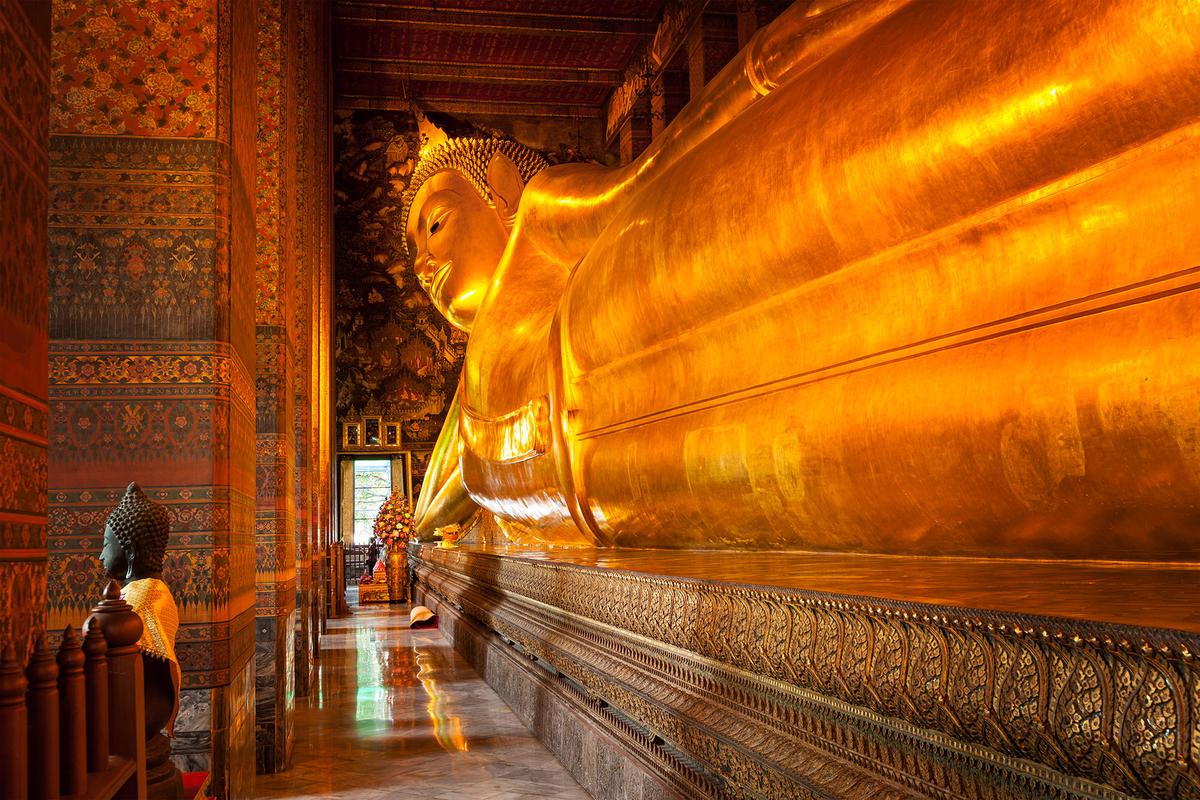
At the very least: Wat Pho and the Reclining Buddha is very close, a few minutes away on foot, and extremely worthwhile. Set in the posture of a reclining lion, the statue is unlike any other Buddha I’ve ever encountered. Laying on his side, he stretches 150 feet long, a depiction of the Buddha just before his entry into Nirvana.
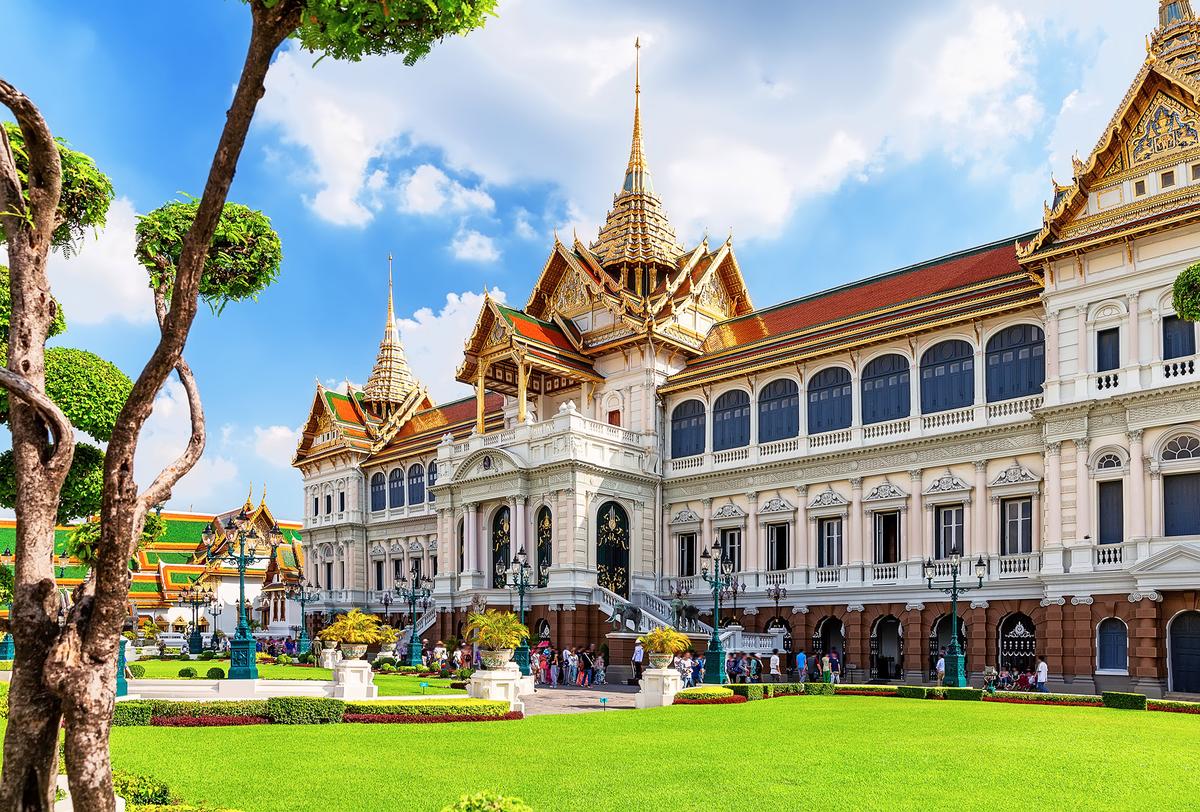
The Grand Palace, which still serves as the official residence of the Thai royal family, sits just beyond. It includes a number of museums, as well as the Temple of the Emerald Buddha, another very worthwhile place to visit.
Afternoon
Time to brave the traffic, find some air conditioning, and eat a late lunch.If you’re ready, willing, and perhaps a wee bit daring, hop into the back of a tuk-tuk and make your way across town. Before making the trip, make your destination clear to the driver, and agree upon a flat-rate price. Every second of the journey will be a revelation as you ride in this open-air vehicle, a staple on the streets of Bangkok.
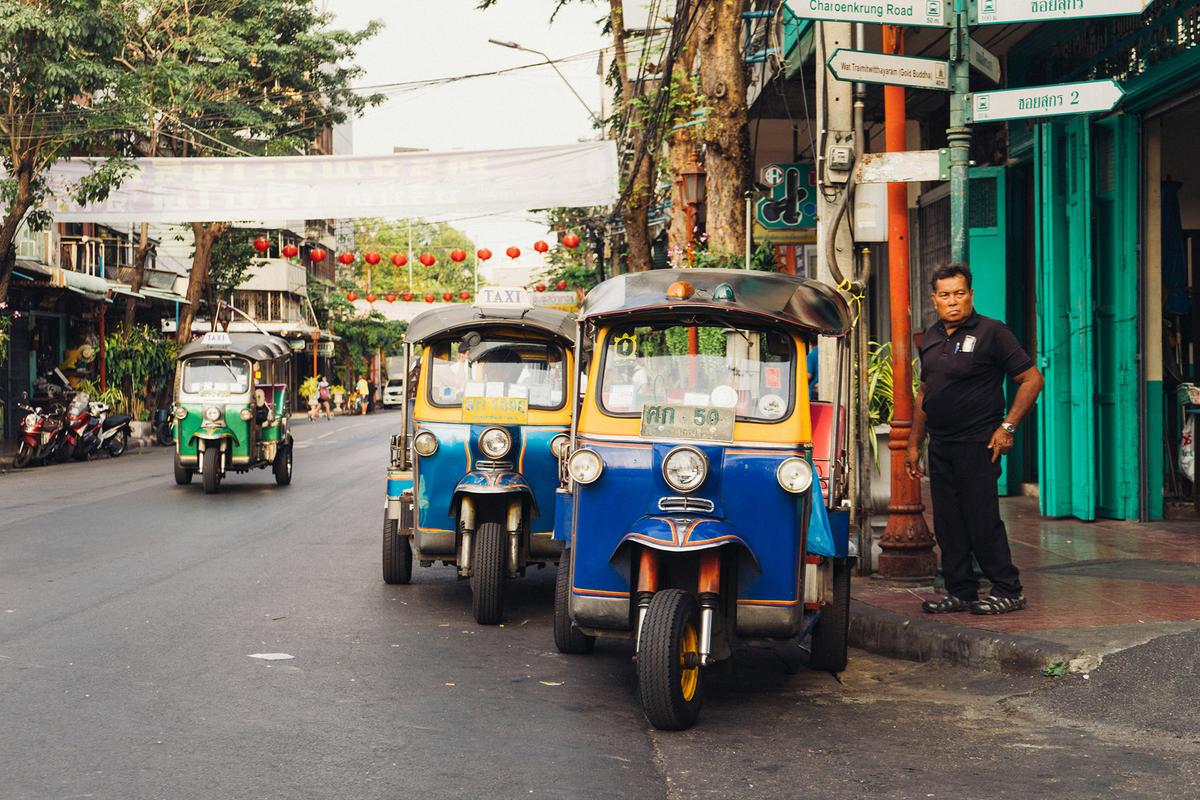
Everything is fascinating. Ad hoc clothing and souvenir markets line the sidewalks along with street food stalls, the aroma of their fragrant offerings wafting over the crammed roadways. A cacophony of sounds will greet you. That means not just honking horns, but also bird calls, temple chimes, and the energetic invitations of street vendors for passersby to purchase whatever they are selling, whether it’s dragon fruit or durian.
Eventually, you’ll arrive at the MBK Center. As strange as it may sound, touring the shopping malls in Bangkok is a rather fascinating experience. Some malls, like Siam Paragon, are upscale and feature luxury brands like Gucci and Prada. Others up the ante with unique attractions, like the floating market at ICONSIAM. Terminal 21 Asok will take you around the world, with each floor replicating a major global city—Rome, Paris, and Tokyo.
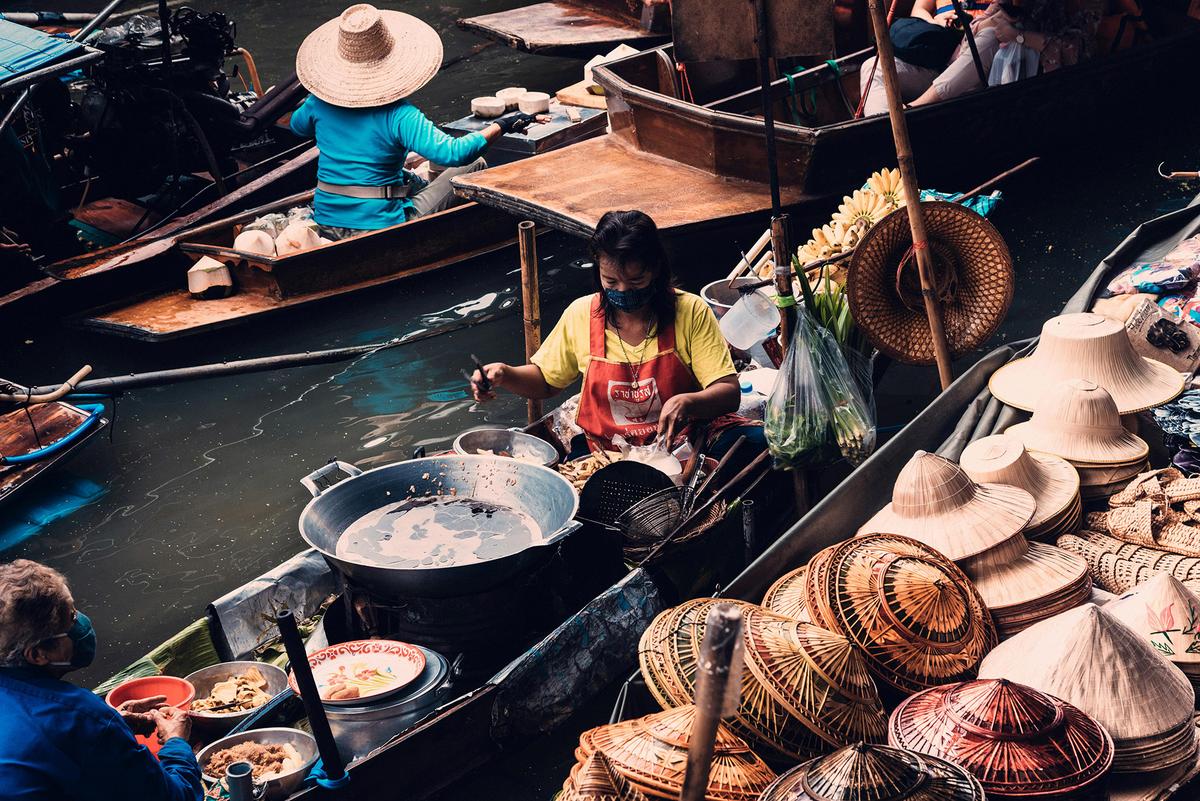
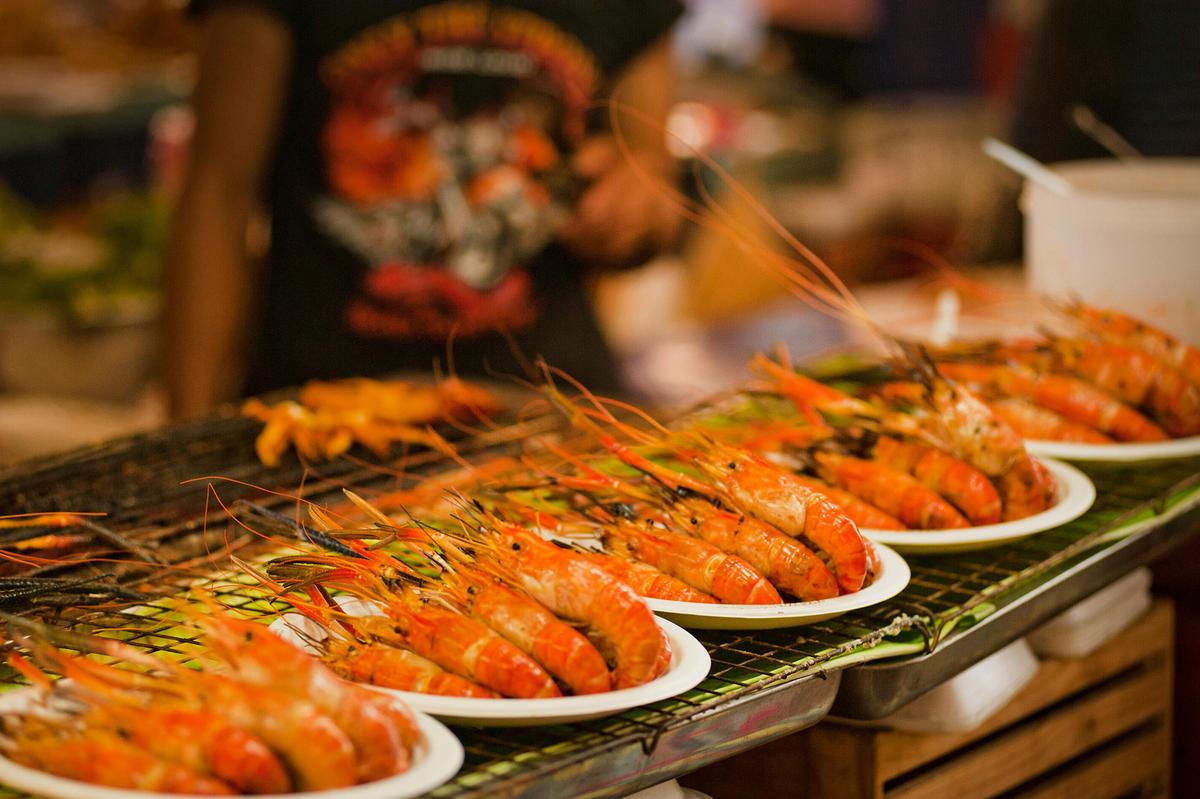
But there’s really nothing quite like MBK (short for “Ma Boon Khrong”), which is home to some 2,000 shops, stores, stalls, cafes, and restaurants. It’s very easy to get lost, although they’ve made things easier by clustering different types of products into specific zones. If you can imagine a specific item—really, almost anything—you’ll find it here. It could be a gold necklace, an iPhone, handmade textiles, or, well, whatever.
There’s food, too. While your Thai dining dreams may not include a mall atmosphere, MBK gives visitors the opportunity to sample dishes from across the country. River prawns, stir-fried crab, and even fish ball noodles, served up at a spot recognized by Michelin as a Bib Gourmand restaurant. Fortify, and then shop until you drop.
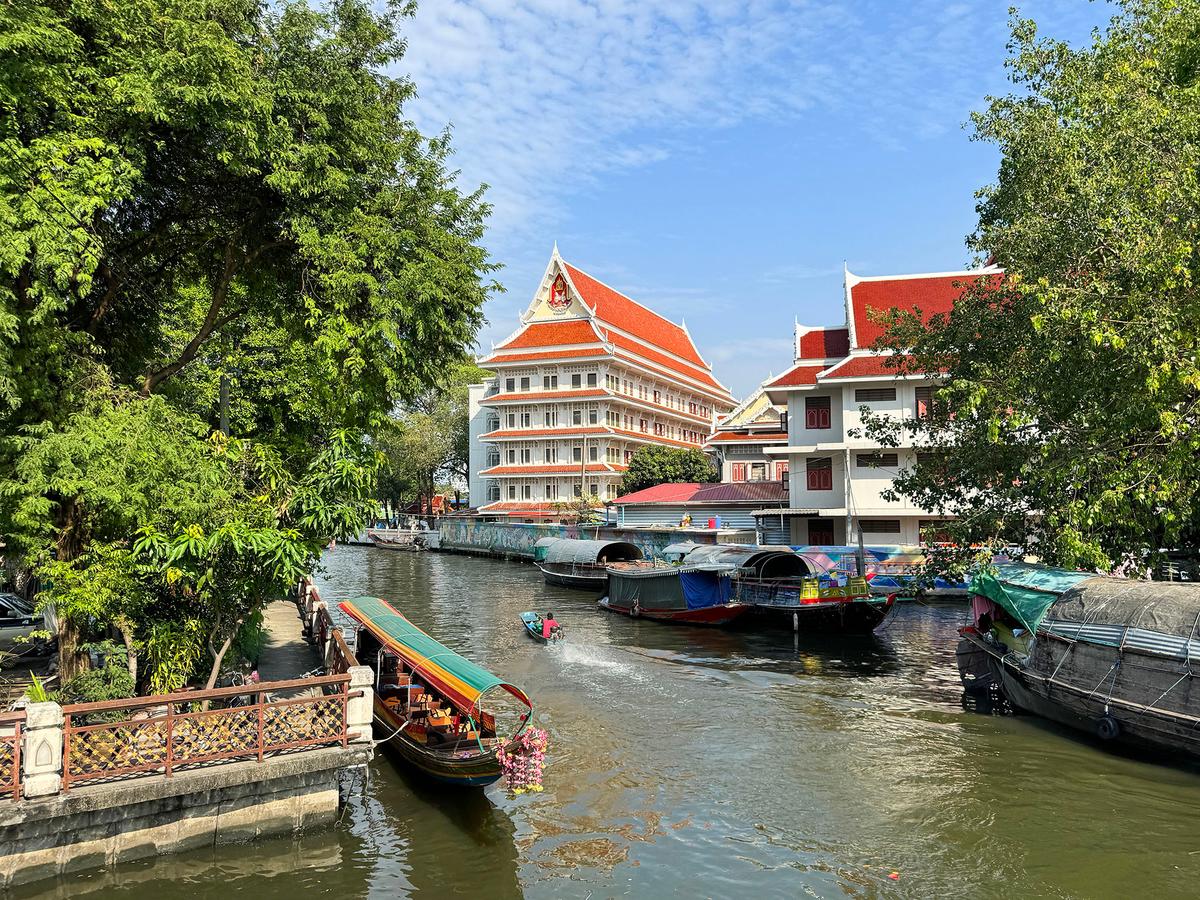
By drop, I mean descend down below street level. A perfect way to ride out the rest of a hot, humid afternoon is to get back on the water, but in a very different way. Bangkok is sometimes called the Venice of the East. It’s crisscrossed by a series of canals that rarely even register on the radar of the casual tourist.
Walk a couple blocks from MBK to the Saphan Hua Chang Pier, then stride down less than a dozen steps to reach the dock. Board one of the long, low wooden boats that pause just long enough for the (mostly local) passengers to jump off and on. A guy moving firmly but delicately up and down the narrow gunnels, like a tightrope walker, will collect the fare.
It’s modest—you’ll probably have enough coins in your pocket to pay it. It doesn’t really matter which direction you choose to sail. Either way, the ride is like seeing a cross-section of the city. There are lush green gardens, bright street art, and little restaurants with tables tucked under umbrellas. It’s a pleasure to sit back and relax under the cloth canopy shielding the boat’s seats from the sun. Then enjoy a secret, back-door view of Bangkok.
Evening
This has been a very busy day. But make sure you save some energy for the night. This is when Bangkok—the real city that never sleeps—really lights up.Disembarking the canal boat at Nana Nua Pier, Sukhumvit Road—essentially the city’s Main Street—is a short walk away. The multi-lane, multi-layered thoroughfare isn’t really an attraction in itself. But rather, the draw here are the dozens and dozens of small, numbered lanes, called “sois,” that branch off both its sides.
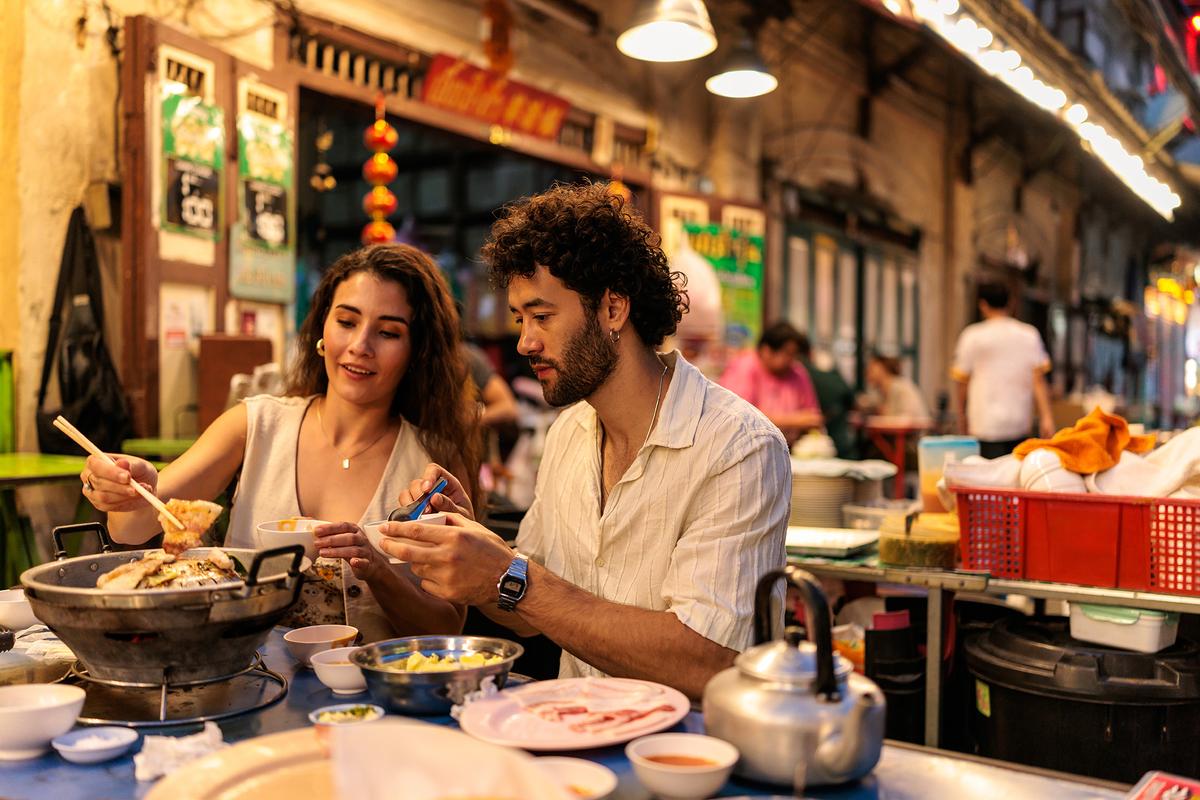
A local chef once told me that each soi specializes in a particular dish. It’s worth asking around to see which one is serving up a meal to fit your mood. On my visit, we visited Soi 8, where the noodles were absolutely top-notch. Grab a steaming bowl, a cold can of Singha beer, and a seat at a cheap plastic table.
Then, the rest of the evening is yours. Find a night market, or head back to the Chao Phraya River for a dinner cruise—the temples along the shores are particularly beautiful, all lit up at night. Or just hang tight, grab another frosty drink, and people-watch, deep in the sois of this huge, almost unknowable city.