The promise of self-government and the conviction that every individual deserves life, liberty, and the pursuit of happiness are evident throughout the founding documents of the United States.
As the nation gears up for its 250th birthday, several treasured historic records will embark on the Freedom Plane, visiting eight American cities for all to see.
On March 2, the Freedom Plane left Washington for Kansas City, Missouri, beginning a six-month journey to bring America’s founding story to communities nationwide.
A specially outfitted Boeing 737 is transporting these original founding-era documents on behalf of the National Archives and Records Administration and the National Archives Foundation (NAF), an independent nonprofit dedicated to preserving the nation’s history.
NAF CEO Patrick Madden said the documents have seldom left the walls of the National Archives Museum in Washington.
The goal is to open up these founding treasures to the public, allowing the nation’s written history to step off the page and into people’s lives, he said.
“And the best way to do that, obviously, is a traveling exhibition,” Madden told The Epoch Times. “What’s great about this exhibit is it’s not a political statement. This is our shared history.
All Aboard Freedom Train
The legendary American Freedom Train, born from the vision of the American Heritage Foundation, sparked the creation of the Freedom Plane 50 years later.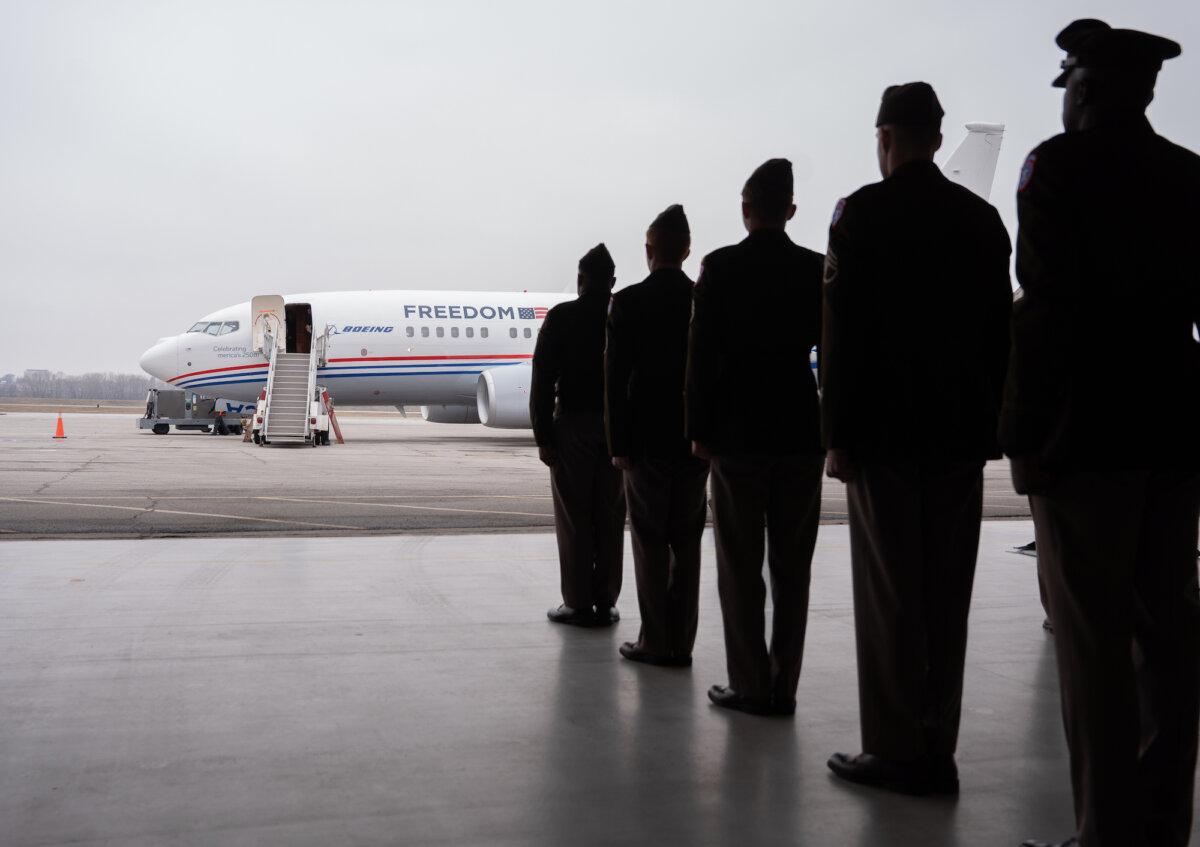
Not long after World War II, the first Freedom Train traveled across the country from 1947 to 1949. On board were the Constitution, the Bill of Rights, and the Declaration of Independence.
As these treasures rolled into towns nationwide, the train became a moving museum, inviting Americans to rediscover the heart of their nation’s ideals through two unforgettable exhibits.
More than 3 million visitors climbed aboard as the train traveled more than 37,000 miles through all 48 contiguous states.
In 1975 and 1976, the Freedom Train set out again, this time to honor America’s 200th birthday and reignite the spirit that first set it in motion.
This time, crowds marveled at treasures such as the original Louisiana Purchase Treaty and rare documents from the National Archives, many of which were displayed for the first time.
The Freedom Plane started its journey on March 2 in Kansas City, Missouri.
Codifying Liberty
Among the seven historic documents is David Brearley Jr.’s 1787 secret printing of the Constitution.“Once the United States was free and independent, individual states retained most governing powers under the Articles of Confederation,” the NAF stated.
“Concerns over their effectiveness soon became evident. The new nation badly needed to pay off its war debts, and there was no method to collect taxes. A supermajority of states was required to pass most laws.”
In 1787, leaders called the Constitutional Convention to address these problems. Delegates met at Independence Hall in Philadelphia and replaced the Articles of Confederation with a new government system outlined in the Constitution.
Delegates received two printed drafts of what would become the Constitution. One copy, owned by New Jersey delegate Brearley, includes his handwritten notes from the debates.
Records showing the Constitutional Convention’s state delegation votes of 1787, which sealed the Constitution’s approval, are also included in the Freedom Plane’s exhibits. They show the spirited debates over the shape of the new government.
The convention’s voting records preserve these pivotal moments in history.
“Eleven of the 13 states voted because Rhode Island did not send delegates to the convention, and two of New York’s three delegates had already departed, thus leaving the delegation without a quorum,” the NAF stated.
After eight years of war, the United States and Great Britain signed the Treaty of Paris on Sept. 3, 1783.
This agreement, also on display in the Freedom Plane exhibit, officially recognized the United States as an independent nation.
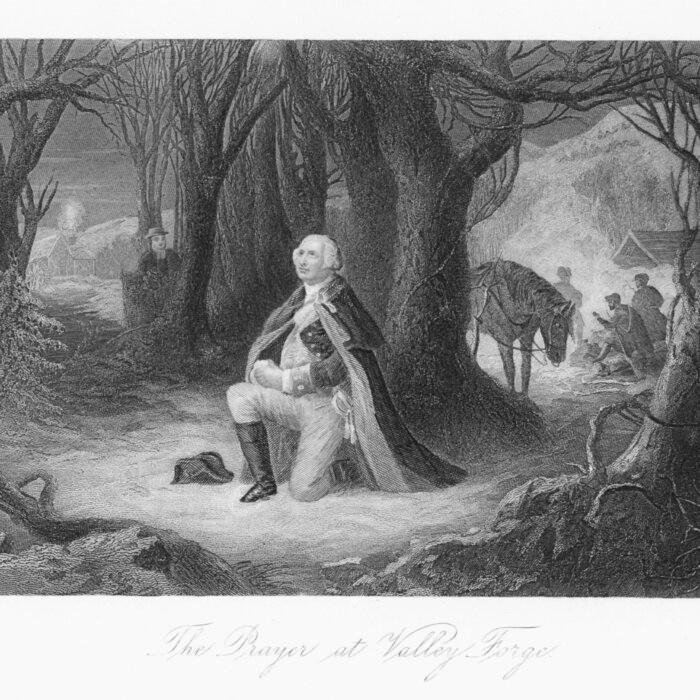
As icy winds blew through Valley Forge, Pennsylvania, in the winter of 1777 to 1778, George Washington’s weary troops gathered in camps for survival.
That February, every officer in the Continental Army was ordered to swear allegiance to Congress.
Documents demonstrating this are found in the National Archives War Department Collection of Revolutionary War Records and in the Freedom Plane exhibit.
Those who took the oath swore, “The United States of America, to be Free, Independent and Sovereign States, and declare that the people thereof owe no allegiance or obedience to George the Third, King of Great Britain.”
After the officers took the oath, they signed it and had it witnessed. About 1,200 of these oaths are still in the National Archives, including ones signed by Washington, Alexander Hamilton, and Aaron Burr.
Protecting History
Madden said the main challenges for the traveling exhibit are maintaining tight security at every stop and protecting the items from damage from light, heat, and humidity.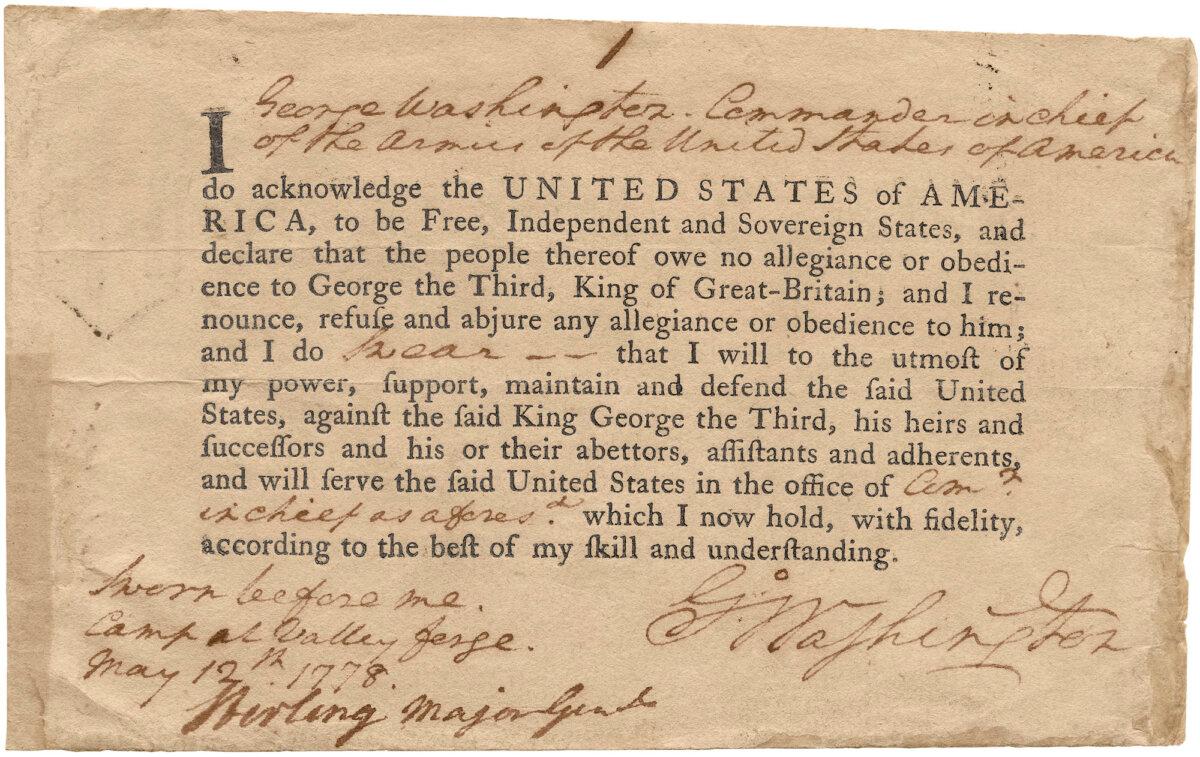
To allow for an extended display, Madden said organizers had to limit how long each site could show the documents, setting a maximum of about 16 days.
Madden said that the main goal of the exhibit is public access, but that it is also important to bring these documents to places west of the original 13 colonies.
“It’s a unique opportunity,” he said.
He said the curators at the National Archives chose documents that tell the story of the early founding period as a “cathedral to democracy.”
“We’re a country that was created off of an idea,” Madden said. “These documents reflect the development of the ideas of what’s in the Declaration of Independence—life, liberty, and the pursuit of happiness, what’s in the Constitution, and the Bill of Rights.
“Hopefully, visitors will see this and be inspired to really think that this is where we started, and how do we maybe get back to that a little bit more?”