Peering at each other from across the Atlantic, the European Union and the United States are increasingly worried about each other’s debt crisis and the impact it will have on their own teetering economies.
While the prospect of the United States defaulting is near unthinkable, still, the Aug. 2 deadline looms when the U.S. Treasury could run out of funds to pay the nation’s bills unless Congress agrees to raise the $14.3 trillion debt ceiling. That agreement has been slow in coming.
European Commissioner for Economic and Monetary Affairs Olli Rehn said at a banking conference organized by Financial Times Deutschland on Tuesday that he is worried about the impact the delay caused by the infighting in Congress is having on European markets.
“The situation concerning the U.S. fiscal deficit and debt is a very serious one, and the Republicans and the Democrats do not seem to be making much progress on an agreement,” said Rehn, according to EurActiv, a leading news website on EU current affairs.
“I hope it finds a deal sooner than later because it has a real monetary impact on the whole world economy and certainly Europe,” Rehn added.
Washington meanwhile, is equally worried about the EU debt crisis, particularly the prospect of Greece defaulting and having a massive impact on the whole eurozone. Currently, the EU and IMF are trying to come up with a plan to restructure Greece’s unwieldy 340 billion euros (US$493 billion) debt.
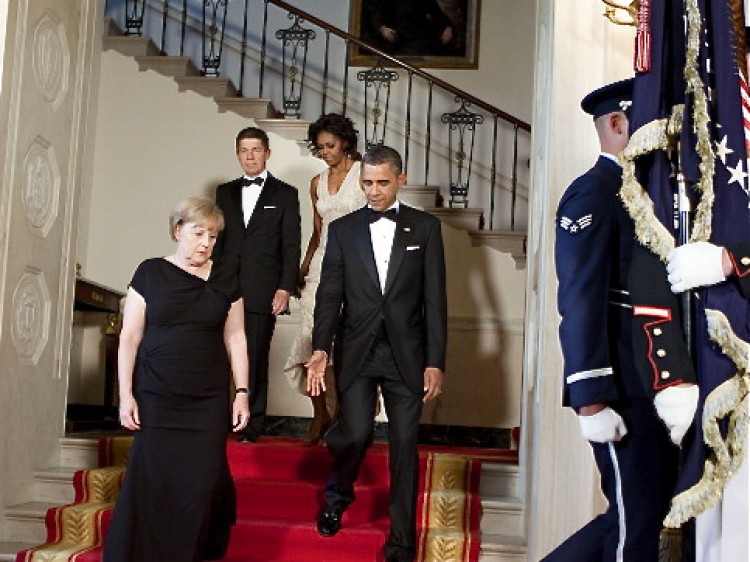
Obama told German Chancellor Angela Merkel, during her visit to D.C. earlier this week, that he is concerned about the repercussions of a Greece default.
“We think that America’s economic growth depends on a sensible resolution of this issue. We think it would be disastrous for us to see an uncontrolled spiral and default in Europe, because that could trigger a whole range of other events,” Obama said at a joint press conference with Merkel on Tuesday.
Obama said that eurozone countries holding Greece’s debt, like Germany, will have to make some big decisions to keep Greece afloat and moreover, create the conditions for its economy to grow.
At the same time, Obama acknowledged how hard that will be politically. Getting the Republicans and Democrats together is tough enough, but the EU has to factor in the internal politics of 27 countries.
“You recall how difficult it was for us to make investments in our own auto industry or to make sure that we didn’t have a financial meltdown here? Well, imagine if you’re having to make those same decisions with 27 other countries with respect to somebody else’s economic problems,” Obama told reporters at the June 7 press conference.
The basic point, as expressed by Merkel at the press conference, is that the mutual concern is warranted. “Through the global financial and economic crisis, we’ve seen how interdependent we are,” she said.
While the prospect of the United States defaulting is near unthinkable, still, the Aug. 2 deadline looms when the U.S. Treasury could run out of funds to pay the nation’s bills unless Congress agrees to raise the $14.3 trillion debt ceiling. That agreement has been slow in coming.
European Commissioner for Economic and Monetary Affairs Olli Rehn said at a banking conference organized by Financial Times Deutschland on Tuesday that he is worried about the impact the delay caused by the infighting in Congress is having on European markets.
“The situation concerning the U.S. fiscal deficit and debt is a very serious one, and the Republicans and the Democrats do not seem to be making much progress on an agreement,” said Rehn, according to EurActiv, a leading news website on EU current affairs.
“I hope it finds a deal sooner than later because it has a real monetary impact on the whole world economy and certainly Europe,” Rehn added.
Washington meanwhile, is equally worried about the EU debt crisis, particularly the prospect of Greece defaulting and having a massive impact on the whole eurozone. Currently, the EU and IMF are trying to come up with a plan to restructure Greece’s unwieldy 340 billion euros (US$493 billion) debt.
Obama told German Chancellor Angela Merkel, during her visit to D.C. earlier this week, that he is concerned about the repercussions of a Greece default.
“We think that America’s economic growth depends on a sensible resolution of this issue. We think it would be disastrous for us to see an uncontrolled spiral and default in Europe, because that could trigger a whole range of other events,” Obama said at a joint press conference with Merkel on Tuesday.
Obama said that eurozone countries holding Greece’s debt, like Germany, will have to make some big decisions to keep Greece afloat and moreover, create the conditions for its economy to grow.
At the same time, Obama acknowledged how hard that will be politically. Getting the Republicans and Democrats together is tough enough, but the EU has to factor in the internal politics of 27 countries.
“You recall how difficult it was for us to make investments in our own auto industry or to make sure that we didn’t have a financial meltdown here? Well, imagine if you’re having to make those same decisions with 27 other countries with respect to somebody else’s economic problems,” Obama told reporters at the June 7 press conference.
The basic point, as expressed by Merkel at the press conference, is that the mutual concern is warranted. “Through the global financial and economic crisis, we’ve seen how interdependent we are,” she said.